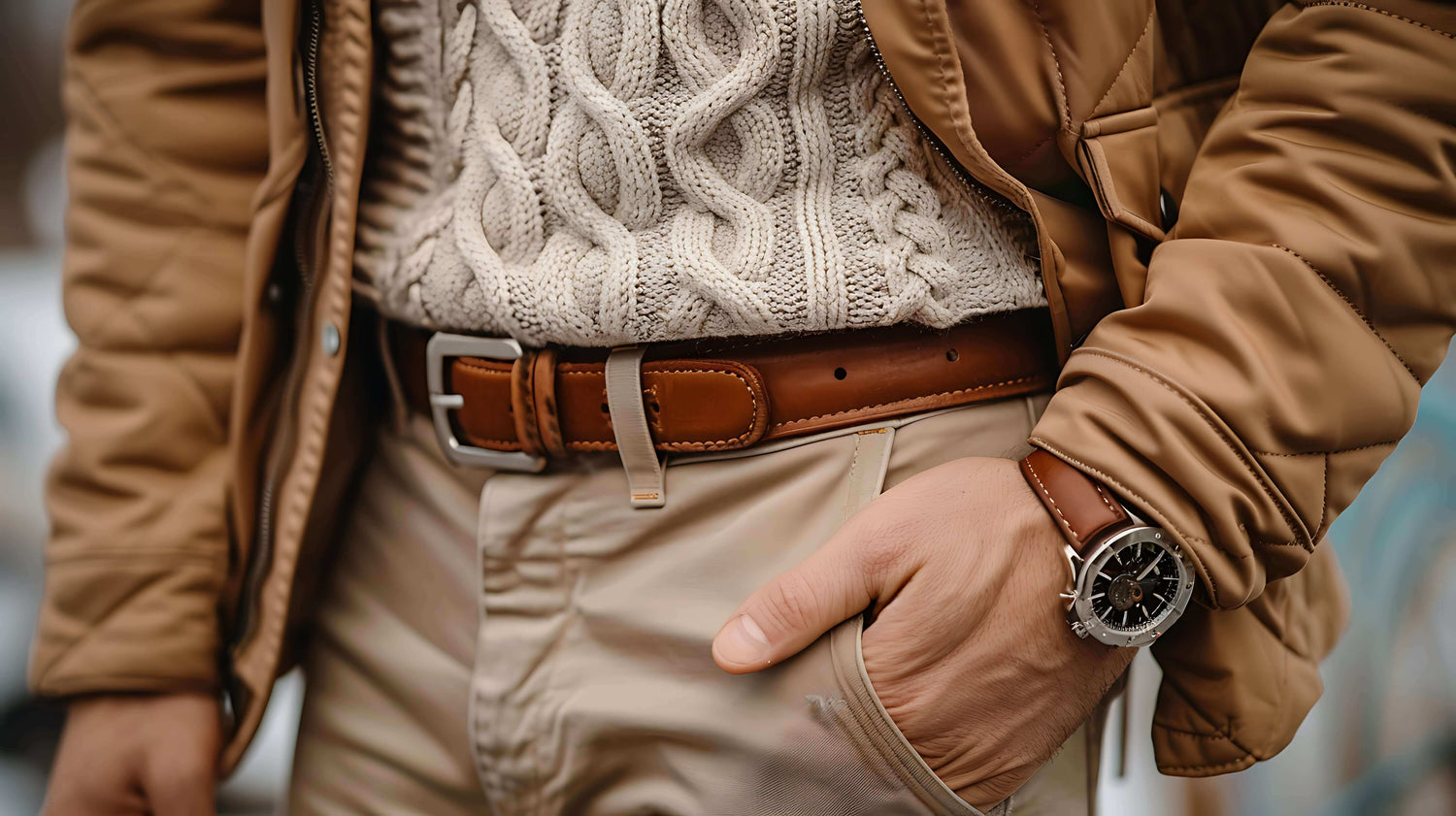


A suit can be expertly tailored, your shoes can be polished, and your shirt collar can sit perfectly - but the wrong belt width still throws the whole look off. If you have ever wondered what belt width for suit wear actually looks right, the short answer is this: most men should choose a belt around 30mm to 35mm wide, with 32mm often hitting the sweet spot for formal dressing.
That width works because a suit is built on clean lines and proportion. A chunky casual belt looks heavy under tailored cloth, while a belt that is too slim can look slight and underpowered unless the outfit is especially sleek or fashion-led. The right belt should support the look, not compete with it.
In this article, I’ll show you how to choose the right belt width to complement your outfit.
What belt width for suit styling works best?
For most business suits, wedding suits and smart evening outfits, a belt between 30mm and 35mm is the safe and polished choice. In practical terms, 32mm is often the most versatile option. It slides neatly through standard trouser loops, sits flat at the waist, and keeps the profile refined.
If you wear traditional office tailoring, 35mm can still work well, especially with slightly sturdier leather and classic lace-up shoes. If your tailoring is slimmer, more contemporary, or cut closer to the body, 30mm to 32mm usually looks sharper. The narrower width feels more elegant and keeps the front of the outfit visually tidy.
Once you move beyond 35mm, you are usually entering casual territory. A 38mm leather belt can look excellent with chinos, dark denim or heavier trousers, but under a suit it often reads too thick, too rugged and too obvious. A suit belt should frame the waist quietly. It is there to finish the outfit, not dominate it.

Why width changes the whole look
Belt width is a small detail with a big visual effect because it affects proportion. Suiting cloth is smoother and more structured than casual wear, so anything bulky at the waist stands out immediately. A formal belt needs to look streamlined against wool, mohair blends or fine cotton suiting.
The buckle matters as much as the strap. A suitable formal belt width is usually paired with a compact buckle in a simple finish such as polished silver-tone, brushed metal or understated black. If the strap is too wide, the buckle usually grows with it, and that is where the outfit starts to lose its discipline.
There is also the question of comfort. A well-made leather belt in the right width feels secure without digging in or bunching under the waistband. Too wide, and it can feel stiff through the loops. Too narrow, and it may feel less substantial, particularly if you carry anything in your pockets and need the belt to keep the line of the trousers clean.
Matching belt width to suit style
Not every suit asks for exactly the same thing. The most reliable way to choose is to look at the weight and cut of the tailoring.
A slim-fit suit usually benefits from a slightly narrower belt. Around 30mm to 32mm keeps the look modern and balanced. This is especially true if the lapels are narrow, the trousers are tapered, and the shoes are sleek.
A classic business suit with more traditional proportions can handle 32mm to 35mm comfortably. If your jacket has broader lapels or your shoes have a rounder, more substantial shape, that extra width can feel right without looking casual.
For very formal occasions, there is another angle. If you are wearing a dinner suit, you should usually skip the belt altogether and wear side adjusters or braces if the trousers allow for it. A visible belt on black tie tends to interrupt the cleaner line that formal eveningwear is meant to create.
For three-piece suits, the same logic applies, but with one practical twist: because the waistcoat covers much of the belt area, the belt becomes less visible. That does not mean width stops mattering. It still affects comfort and the way the trousers sit, even if only a smaller section shows.
What belt width for suit trousers with different loops?
Trouser loops set the limit. If the loops are slim and dress-oriented, forcing through a wider casual belt looks clumsy and can distort the waistband. The belt should pass through smoothly with a little room to spare.
Most suit trousers are made for dress belts, not heavy everyday straps. If your loops are narrow, stay close to 30mm or 32mm. If the loops are slightly larger, 35mm may still look smart. The aim is not to fill the loop completely. You want a clean fit, not a squeezed one.
This is one reason specialist belt shopping matters. A purpose-built dress belt is cut for tailored clothing, while a casual leather belt is often cut for jeans and utility wear. They are not interchangeable just because both are made from leather.
Material and finish matter just as much as width
Width gets the question started, but leather, edge finish and buckle shape decide whether the answer looks expensive or merely acceptable. For a suit, smooth or lightly textured leather is usually the strongest choice. It gives a cleaner surface and reflects light in a controlled way.
A heavily grained belt, a distressed finish or a thick rugged edge can look excellent in casual dress, but with suiting they often feel too raw. Formal belts should have a more disciplined finish - neat edges, a modest buckle, and leather that bends comfortably without looking soft or flimsy.
This is also where trade-offs come in. A stiffer full-grain leather belt can hold its shape beautifully and wear well over time, but if it is cut too thick for dress use, it may feel bulky under a fitted waistband. A softer dress belt can look elegant straight away, though the quality of the construction needs to be good enough to stop stretching or warping with regular wear.
Can a ratchet belt work with a suit?
Yes - if it is designed with formal proportions. A ratchet belt can be an excellent option for suit wear because it offers micro-adjustment and long-day comfort, especially if your waist size shifts slightly between sitting, commuting and standing. The key is choosing one with a slim strap and a restrained buckle.
This is where many people get it wrong. Some ratchet belts are built with a larger, more mechanical buckle face that suits casual or business-casual outfits better than formal tailoring. For a suit, the mechanism should disappear into the design. The belt should still look sleek from the front.
A well-finished leather ratchet belt around 30mm to 35mm wide can give you the precision of no-hole adjustment without sacrificing polish. For professionals who wear tailoring regularly, that extra comfort can make a real difference across a full day.
The easiest rule to follow
If you want one dependable answer, choose a 32mm leather belt with a simple buckle and match it properly to your shoes. Black with black, dark brown with brown, and a finish that aligns with the level of formality in the rest of the outfit. That combination is hard to fault.
If your style is more traditional, 35mm can still serve you well. If your tailoring is sharper and more minimal, edge down to 30mm. But if you stay in that 30mm to 35mm zone, you are already making a better decision than most men who grab the nearest belt in the wardrobe.
At BeltBuy, this is exactly the difference worth paying attention to - a belt is not just there to hold your trousers up. It shapes the line of your outfit, affects comfort through the day, and signals whether your look is properly finished.
A good suit belt should feel almost invisible when you wear it and instantly noticeable when you are not. Get the width right, and everything above and below it looks sharper.