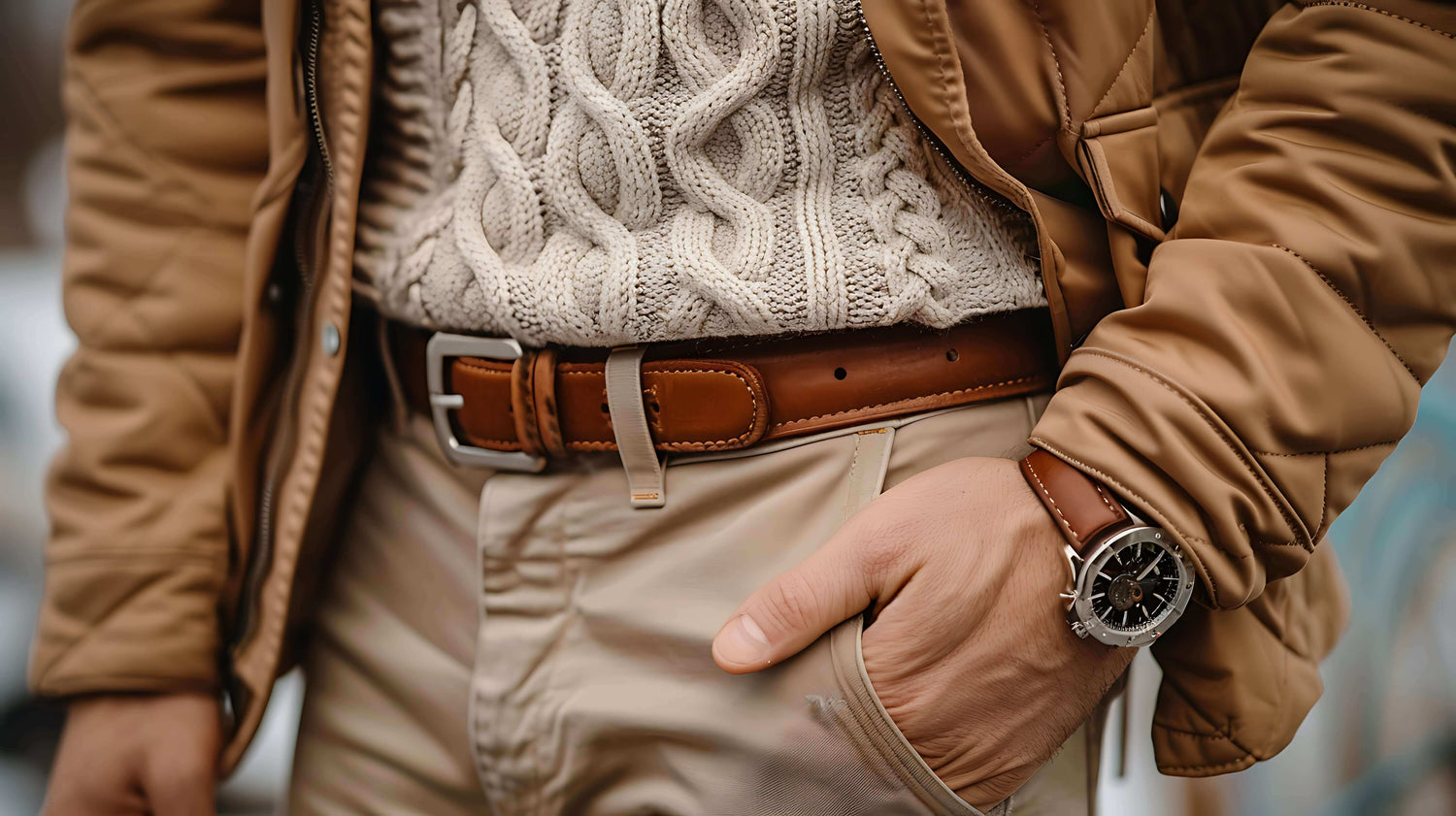


A smart pair of shoes can carry an outfit only so far. If the belt is too chunky, too shiny, too stiff or simply the wrong shade, the whole look feels off. A good men’s leather dress belt does a quieter job. It sharpens the waistline, keeps your trousers sitting properly and finishes formal or business wear without drawing the wrong kind of attention.
That is why choosing one is less about grabbing any black belt from the wardrobe and more about getting a few details right. Leather quality, belt width, buckle shape and even the finish on the edge all affect how polished it looks and how well it wears over time.
What makes a mens leather dress belt different?
A mens leather dress belt is built for cleaner lines and smarter outfits. It is usually slimmer than a casual belt, made from smoother leather and finished with a more refined buckle. The aim is not to stand out like a western belt or work like a tactical belt. It is there to support the outfit and hold its shape day after day.
Most dress belts sit around 30mm to 35mm wide. That width works neatly with suit trousers, tailored chinos and smarter office wear. Once a belt gets much wider, it starts to look more casual and can feel bulky through narrower belt loops.
The leather itself matters just as much. Dress belts tend to use smoother grain, cleaner edges and less visible stitching. You want structure, but not the board-like stiffness that makes a belt awkward to wear. A proper leather finish should feel substantial in the hand while still bending naturally at the waist.

Start with the leather, because it decides the lifespan
If you want a belt that still looks right after months of wear, start with leather quality rather than colour alone. Genuine leather can be a solid choice, but not all leather is processed to the same standard. Better belts use stronger cuts, tidier finishing and more consistent construction, so they resist cracking, stretching and tired-looking edges.
Full grain and top grain leathers are often the better long-term options when you want a premium look and reliable durability. They hold character well and usually age better than heavily corrected leather. That said, the right choice depends on how often you will wear it. If this is your five-days-a-week office belt, it is worth paying for stronger leather and cleaner workmanship. If it is for occasional weddings and formal events, appearance may matter more than heavy-duty wear.
The finish should look even, the edges should be sealed cleanly and the strap should not feel flimsy. A dress belt should feel engineered, not disposable.
Width matters more than most men think
One of the quickest ways to spot the wrong belt is by its width. A thick casual strap paired with tailored trousers throws off the proportions straight away. For smarter dressing, slimmer is usually better.
A 30mm belt often looks the smartest with suits and dress trousers. A 35mm belt gives a little more versatility and still works well in most business-casual settings. If you wear your belt across office outfits during the week and smarter denim at the weekend, 35mm is often the practical middle ground.
This is where use case matters. If your wardrobe leans formal, stay narrow and refined. If you need one belt to cover several roles, a slightly broader dress belt can give you more flexibility without looking clumsy.
The buckle should look clean, not heavy
A dress belt buckle should be neat, balanced and proportionate to the strap. Oversized plaques, thick metal frames and highly decorative hardware belong elsewhere. For business wear or formal dressing, a classic frame-style buckle with a simple finish is the safe choice.
Silver-tone hardware is usually the most versatile, especially if you wear a watch with steel accents. Black or gunmetal can look sharper and more modern, particularly with black shoes and darker tailoring. Gold-tone can work, but it is less forgiving and tends to suit men who already wear warm-toned accessories confidently.
The main thing is restraint. A buckle should complement the belt, not dominate the front of your outfit.
Match the colour to your shoes first
This rule still holds because it works. If your shoes are black, wear a black belt. If your shoes are brown, wear a brown belt that sits in the same family. It does not need to be an exact paint-match, but it should feel intentional.
Black is the easiest option for formal wear, business suits and evening occasions. It looks crisp, disciplined and pairs well with black or charcoal tailoring. Brown offers more range for navy suits, mid-grey trousers, chinos and smart-casual dressing. Dark brown is especially useful because it feels dressy without being as stark as black.
Texture also plays a part. Smooth polished leather suits cleaner, more formal outfits. Slightly textured leather can still look smart, but it tends to feel a touch more relaxed. If you want one belt that covers weddings, office wear and dinner reservations, a smooth dark brown or black leather strap is hard to beat.
Fit is where comfort and appearance meet
Even a premium belt looks wrong if the fit is off. Too short, and you barely make the first hole. Too long, and the tail flaps awkwardly past the belt loop. A properly fitted belt should fasten comfortably around the middle holes and leave a tidy amount of strap after the buckle.
Traditional hole belts are familiar and reliable, but they adjust in fixed increments. That can be fine when your waist measurement is stable. If your fit changes through the day, between workwear and tucked shirts, or across seasons, micro-adjustable systems can feel noticeably better.
That is one reason many men move towards ratchet or slide-style belts for everyday use. They give a more precise fit without relying on fixed holes, which means less pinching, less slack and a cleaner hold at the waist. For a dress setting, this can be especially useful if you want comfort without sacrificing a sharp line. BeltBuy leans into this kind of practical engineering because the difference is obvious once you have worn a belt that adjusts properly.
One belt or two? It depends on your wardrobe
Many men start by looking for a single belt that does everything. Sometimes that works. Sometimes it does not.
If you mostly wear black shoes, dark tailoring and office clothing, one black leather dress belt may cover nearly every smart occasion. If your wardrobe includes navy suits, tan brogues, dark denim and chinos, you will get better results from having both black and dark brown.
This is one of those areas where versatility has limits. A belt that is formal enough for a suit and relaxed enough for weekend denim exists, but it usually does one job better than the other. If appearance matters, it is worth owning the right belt for the right setting rather than forcing one strap into every role.
Details that separate a decent belt from a good one
The difference is often in the finishing. Look at the stitching, the edge paint, the underside and how the buckle is attached. Cleaner construction usually means a belt will keep its shape and look smarter for longer.
A good dress belt should lie flat without twisting. The keeper should feel secure. The buckle should sit straight and move smoothly. If it is a trim-to-fit or adjustable design, the mechanism should hold firmly without slipping under strain. Small build details make a big difference when the belt is worn daily.
Comfort matters as much as appearance. Leather should soften with wear, but it should not collapse. The belt should support the waist without digging in when you sit, walk or drive. That balance between structure and ease is where better belts earn their place.
When to replace your dress belt
A quality leather belt can last well if looked after, but it will not stay sharp forever. If the edges are cracking, the strap has stretched badly, the buckle is loose or the finish has become patchy, it may be time to replace it. That is especially true for dress belts, because formal wear leaves less room for tired accessories.
You do not need to wait until a belt fails completely. If it no longer holds its shape or it makes smart outfits look worn down, it is no longer doing its job.
The best choice is the one you will actually wear
A mens leather dress belt should look sharp on the first wear and still feel dependable months later. Choose the width for your trousers, the colour for your shoes and the leather for the level of wear you expect. Then pay attention to fit, because comfort is what turns a good-looking belt into an everyday essential.
The right belt does not shout for attention. It just holds the outfit together - cleanly, comfortably and with the kind of quiet confidence that never goes out of style.