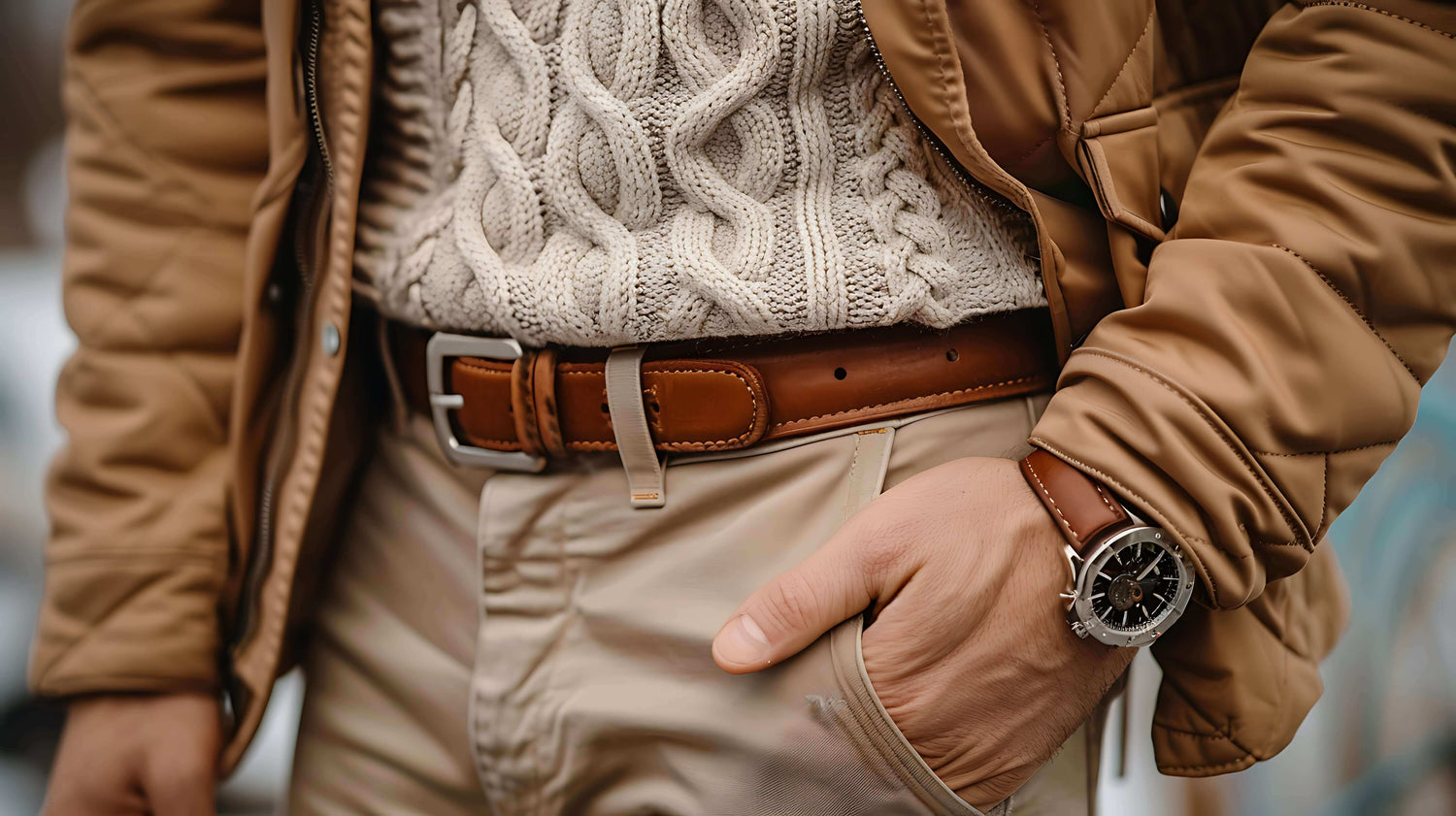


A belt that slips after lunch, digs in on the commute, or leaves you stuck between two holes is doing half a job. That is exactly where a ratchet buckle review becomes useful - not as a gimmick, but as a real test of whether a belt can deliver better fit, better hold, and better comfort over a full day.
For many people, the appeal of a ratchet belt starts with one simple promise: precise adjustment. Instead of relying on fixed holes spaced too far apart, you get a micro-adjustable track system that lets the belt sit where it should. On paper, that sounds like a small improvement. In practice, it changes how a belt feels from morning to evening.
Ratchet buckle review: what actually matters
A good ratchet buckle should do three things well. It should lock firmly, release easily, and stay comfortable under regular wear. If any one of those falls short, the belt quickly starts to feel fussy rather than functional.
The locking mechanism is the first test. With a decent ratchet buckle, the clasp catches the track cleanly and holds tension without slipping. You should hear and feel a crisp click as it tightens. That feedback matters. A belt is an everyday tool, and if the fastening feels vague or weak, confidence in the whole product drops.
Release is just as important. Some lower-grade buckles grip well but become awkward when you actually want to loosen them, especially after long hours of wear. A well-made buckle should release with a simple lever action, without jerking or forcing the strap. That balance between security and ease is where the better products separate themselves.
Then there is comfort. A ratchet system allows smaller adjustments, which means less pressure on the waist. That is particularly useful if your fit shifts through the day, or if you move between sitting, standing and walking for long periods. For office wear, travel, driving, and daily use, that extra flexibility is one of the biggest advantages.
How ratchet buckles compare with traditional pin buckles
Traditional buckles still have their place. They are familiar, simple, and often suit more classic styling. But they come with a built-in limitation: the spacing of the holes. If one hole is too tight and the next is too loose, you are forced to compromise.
That compromise is exactly what ratchet belts are designed to remove. The buckle works with a hidden track on the underside of the strap, giving much smaller adjustment increments. The result is a cleaner fit and usually a cleaner look too, since there are no visible holes stretching over time.
There are trade-offs, though. A pin buckle is mechanically simple, so there is less to go wrong. Ratchet buckles rely on an internal mechanism, and quality matters more because poor construction can lead to sticking, slipping, or faster wear. In other words, a cheap ratchet buckle can be more disappointing than a cheap pin buckle. The concept is strong, but the execution has to be right.
Fit is where a ratchet buckle earns its keep
If there is one area where a ratchet buckle review tends to swing positive, it is fit. A belt is supposed to support your trousers without demanding constant attention. Micro-adjustment gets you much closer to that ideal.
This is especially useful for men who want one belt to work across smart and casual outfits. Trousers with a heavier fabric, tailored pairs, and jeans do not all sit the same way on the waist. A ratchet system makes those small corrections easy. You can tighten for structure, then loosen slightly when comfort matters more.
It also helps if your waist size fluctuates. That might be down to layering in colder weather, changes in posture, time spent sitting, or gradual weight change. A no-hole belt gives you more room to adapt without making the strap look worn or badly fitted.
For buyers who have only ever used standard belts, this can feel like a surprisingly big upgrade. Not dramatic. Just better. And that is often the mark of a well-designed everyday essential.
Build quality makes or breaks the experience
The buckle gets the headline, but the whole belt has to be considered. A solid ratchet buckle attached to a weak strap is still a weak belt.
Look first at the material. Genuine leather offers better texture, better ageing, and usually better long-term wear than synthetic alternatives, provided it is properly finished. Leather should feel dense rather than cardboard-stiff, with enough structure to support the buckle without becoming rigid around the waist. If the strap is too thin, even a good buckle can feel imbalanced.
The buckle itself should feel weighty without being clumsy. A lightweight alloy can still perform well, but it should not rattle or feel hollow. The lever should move cleanly, and the finish should be even. Scratches and wear will happen over time, particularly on belts used daily, but stronger surface finishing helps keep the buckle looking sharp for longer.
Trimmable sizing is another detail worth attention. Many ratchet belts allow you to cut the strap down for a cleaner custom fit. Done properly, this is a major advantage because it removes the bulky excess that often comes with one-size approaches. But the cutting and reattaching process should be straightforward. If the belt is awkward to size, the convenience starts to fade.
Style matters more than some reviews admit
There is a lazy assumption that ratchet belts are purely practical and slightly less refined than classic leather belts. That used to be true more often than it is now.
A well-finished ratchet belt can look sharp with business wear, smart casual outfits, and everyday denim. The cleaner strap face, without visible holes, often creates a more polished line. That works particularly well with black and brown leather in minimal buckle finishes.
Still, it depends on the buckle design. Some are sleek and understated. Others lean too hard into flash, with oversized shapes or overly glossy metalwork that can cheapen the overall look. If you want a belt to move easily between office, dinner, and weekend wear, restrained design usually wins.
That is one reason specialist retailers tend to do better in this category than generic accessories sellers. The details matter - leather grain, buckle profile, edge finishing, sizing clarity - and the best options feel engineered rather than mass-produced.
Who should buy a ratchet belt, and who might not
If comfort, adjustability, and daily wear performance are top priorities, ratchet belts are easy to recommend. They suit professionals who sit for long stretches, drivers, travellers, and anyone tired of belts that never seem to land at the right setting. They are also a strong option for buyers who want a cleaner, more modern fastening system without losing the structure of a proper leather belt.
If you are deeply attached to heritage styling, though, a traditional buckle may still feel more natural. Some people simply prefer the ritual and look of a pin buckle, especially with very classic tailoring or more rugged denim outfits. There is nothing wrong with that. Better does not always mean better for everyone.
It is also fair to say that bargain-basement ratchet belts can create scepticism for the whole category. If someone has tried one with a flimsy buckle and peeling strap, they may assume the system itself is the issue. More often, the problem is poor materials and weak construction.
Final verdict on this ratchet buckle review
Taken on their actual merits, ratchet buckles solve a genuine everyday problem. They give you finer adjustment, better comfort through changing conditions, and a cleaner finish than many standard belts can offer. When paired with quality leather and a dependable mechanism, they feel less like a novelty and more like a smarter way to wear a belt.
That does not mean every ratchet belt is automatically excellent. The wrong buckle can feel clunky, and a cheap strap will let the whole product down. But if you choose carefully, the benefits are hard to ignore.
For anyone weighing up the switch, the real question is not whether the mechanism works. It does. The better question is whether you want your belt to merely fasten your outfit, or actually improve the way it fits and feels all day.