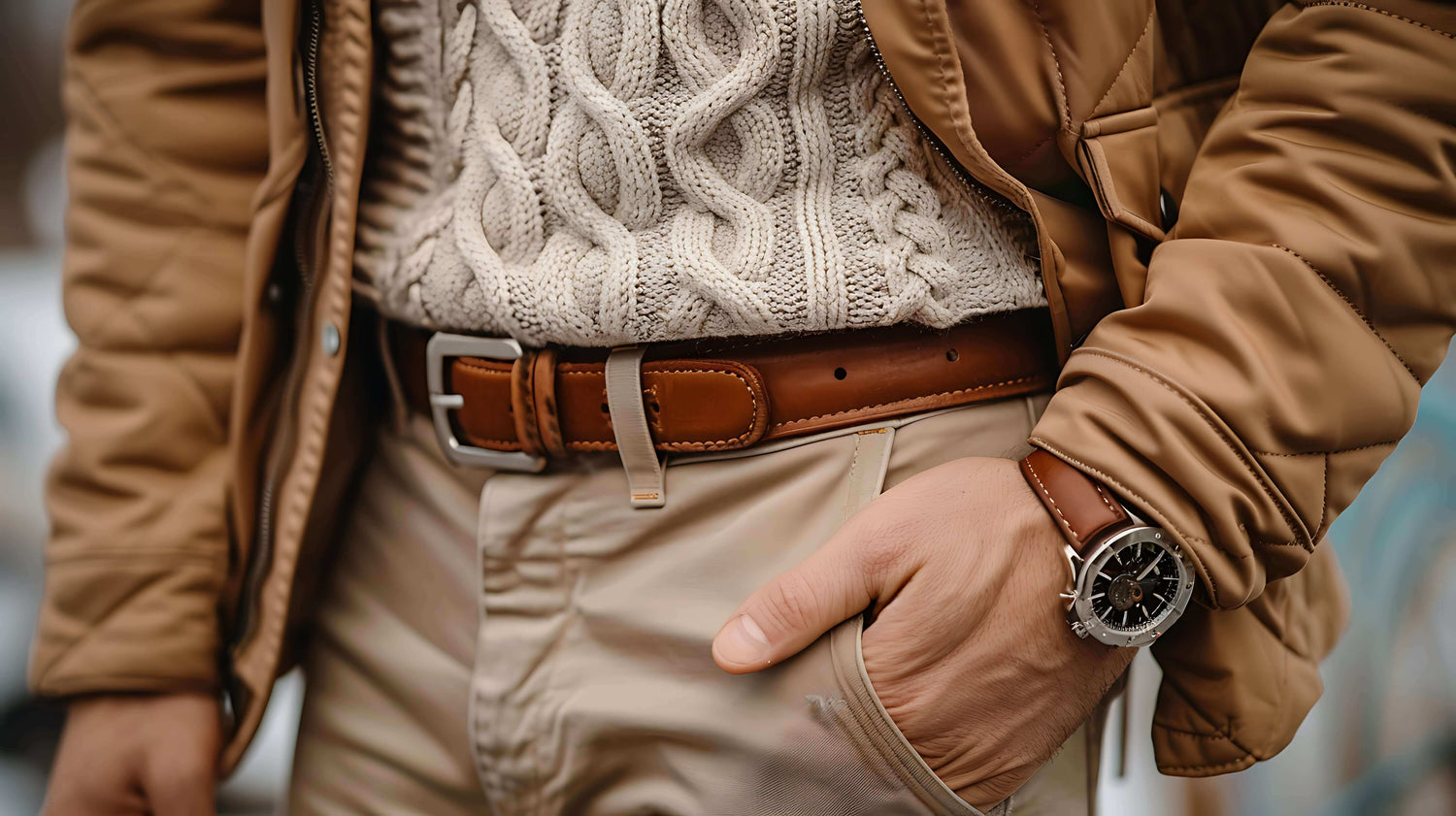


A belt that is too short digs in, twists under tension and never sits right. Too long, and the tail flaps about or throws off the whole look. If you want a belt that feels comfortable from morning to evening and looks sharp with jeans, chinos or tailored trousers, getting the size right matters more than most people think.
The good news is that learning how to measure belt size is straightforward. The better news is that once you know what to check, you are far less likely to waste money on a belt that looks good in the product photos but underperforms the moment you wear it.
How to measure belt size without guessing
The most reliable method is to measure a belt you already own and wear comfortably. Lay it flat on a table and measure from the point where the leather folds around the buckle to the hole you use most often. That measurement, in inches or centimetres, is your true belt size for a traditional pin-buckle belt.
This matters because belt size is not the same as the full length of the belt. If you measure all the way to the tip, you will end up with a number that is too large and not very useful when choosing a replacement.
If your current belt fits well, the hole you use most often tells you far more than the size printed on your trousers. Trouser sizes vary by brand, rise and fabric stretch. A belt has to work in the real world - over a shirt, through loops, across movement and after a full day of wear.
The easiest belt sizing method
If you do not have a belt to measure, use a tape measure through your trouser loops. Put on the trousers you plan to wear with the belt, then thread a soft tape measure through the loops where the belt would naturally sit. Pull it snug, not tight, and note the measurement.
That gives you a realistic waist measurement for that outfit. For most classic leather belts with holes, adding around 2 inches to your trouser waist size often works, but it is still better to measure than rely on rules of thumb. Body shape, trouser rise and where you wear your trousers all affect the result.
A man who wears 34-inch jeans low on the hips may need a different belt size from someone who wears 34-inch tailored trousers at the natural waist. The number on the label does not tell the full story.
How to measure belt size for different belt types
Not all belts fit in the same way. Material, buckle system and intended use change what a good fit looks like.
Traditional leather belts with holes
For a standard leather belt, your best fit usually puts the buckle pin in the middle hole, or close to it. That gives you room to loosen or tighten as needed. Leather softens with wear, and some days your waist sits differently than others, especially if you switch between office trousers and heavier denim.
If you are shopping for a leather belt, aim for a size that gives you a balanced tail length once fastened. A quality belt should feel secure without strain. It should hold shape, not pull awkwardly at the holes or bunch around the buckle.
Ratchet and slide belts
Ratchet belts work differently because they use a track system instead of holes. That means finer adjustment and a cleaner fit. If you are wondering how to measure belt size for a ratchet belt, focus less on hole placement and more on overall strap length.
Many ratchet belts come longer and are designed to be trimmed down. In that case, you measure your waist or your current best-fitting belt, then cut the strap to suit. This is one of the strongest options for men who want all-day comfort, especially if their fit changes slightly throughout the day.
The advantage is precision. Rather than being forced into fixed hole gaps, you get micro-adjustment. That means less pressure after meals, less slipping and a neater line under a shirt.
Tactical belts
Tactical belts are built more for performance than formality. They often carry more weight, use heavy-duty webbing and rely on quick-release or clamp-style buckles. Here, comfort and support matter as much as the raw measurement.
If you are measuring for a tactical belt, wear the trousers you will actually use it with and consider whether you will carry tools, clips or accessories on the belt. A tactical belt may need a little more allowance than a dress belt because the use case is different. Built to hold means fit still comes first.
Women’s fashion belts
For women’s belts, sizing can vary even more because some styles sit at the waist while others sit on the hips. A rhinestone belt worn over a dress may need a completely different measurement from a leather jeans belt.
Measure exactly where the belt will sit on the body. Do not assume your usual dress size translates directly to belt size. A statement belt should define the outfit, not fight it.
Common mistakes when measuring belt size
The biggest mistake is measuring the whole belt from buckle end to tip. That number sounds precise, but it does not reflect where the belt actually fastens. Another common error is relying only on trouser size. It is useful as a starting point, but not a guarantee.
People also forget that belt width affects comfort and fit. A broad casual belt can feel tighter through stiff loops than a slimmer formal belt. Thick full-grain leather also behaves differently from lighter bonded materials. Better leather tends to break in, but it should never start off uncomfortably short.
Then there is the issue of styling. Some shoppers choose a size that leaves far too much extra length because they think bigger means safer. In practice, too much strap can look clumsy and feel awkward, especially with smart outfits.
What if you are between sizes?
If you are between sizes on a traditional belt, it is usually safer to size up rather than down. That gives you more room and a better chance of using the middle holes well. A belt that is slightly longer is often workable. A belt that cannot close comfortably is not.
That said, it depends on the belt style. With ratchet belts or trimmable slide belts, going longer is often ideal because you can customise the fit. With a fixed leather belt, too much extra length can spoil the balance of the look.
This is where product design matters. Better belts are not just strips of material with buckles attached. They are engineered for everyday wear - for comfort, support, clean lines and dependable fastening.
How a properly sized belt should fit
When fastened, the belt should feel secure without pinching. The buckle should sit centred, the strap should lie flat, and the tail should pass neatly through the keeper without excess flapping about. You should be able to sit, stand and move without constantly adjusting it.
For leather belts, expect a little settling over time, but not dramatic stretching. For ratchet belts, the fit should feel immediate and precise. For tactical belts, you want a secure hold with no slipping under load.
A good belt supports more than your trousers. It sharpens the line of an outfit, improves comfort and gives you confidence that the piece will perform all day, not just look decent for ten minutes.
Before you buy, check the sizing details
Even if you know how to measure belt size, always read the brand’s sizing notes. Some retailers size belts by the centre hole, some by full strap length, and some provide waist ranges instead. Ratchet and trim-to-fit systems may follow a different format altogether.
If the sizing guide is clear, the buying decision gets much easier. That is one reason specialist retailers tend to serve customers better than broad fashion marketplaces. At BeltBuy, the focus is on fit, comfort and performance as much as appearance, which is exactly what belt shopping should be.
The right belt should not need constant second-guessing. Measure carefully, match the belt to how you actually wear it, and choose a fit that gives you comfort with clean, dependable hold. A belt is a daily essential - it ought to feel built for the job.