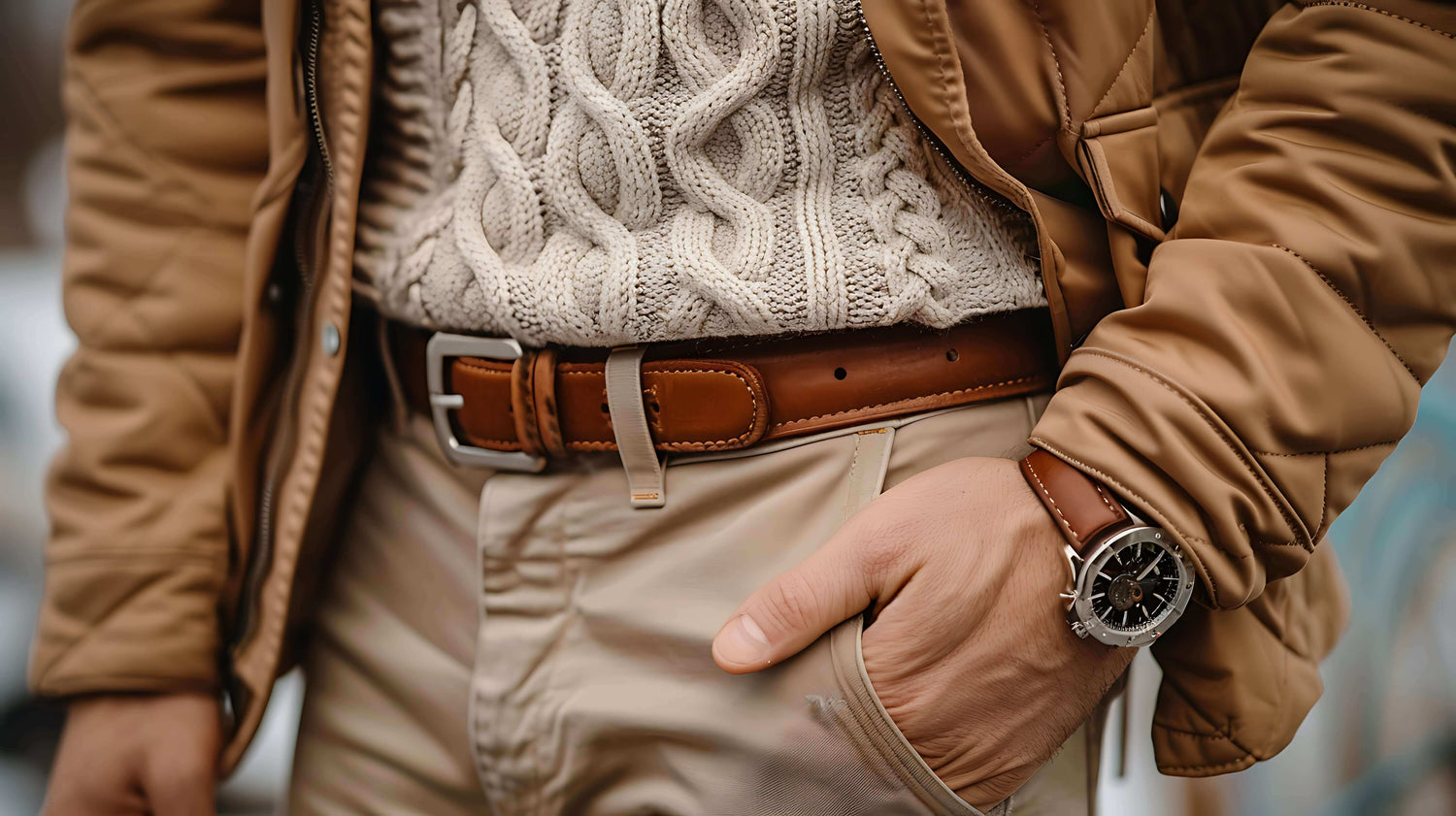


You can usually spot the moment someone gives up on a traditional belt. It happens after the second tug, when the hole is either too tight after lunch or too loose by mid-afternoon. A slide belt fixes that irritation with a much smarter system.
If you have been wondering how does a slide belt work, the short answer is this: instead of using fixed holes, it uses a hidden track and a locking clasp to create small, precise adjustments. That means a neater fit, better comfort and less wear on the strap over time. For anyone who wants a belt that feels engineered rather than improvised, that difference matters.
How does a slide belt work in practice?
A slide belt has two key parts - the strap and the buckle. The strap looks clean on the outside, but on the underside it has a series of small notches or a ratchet track. The buckle contains a locking mechanism, usually a spring-loaded clasp, that grips those notches when the belt is fed through.
When you slide the strap into the buckle, the mechanism catches the track and locks it in place. Each notch represents a tiny size adjustment, often much smaller than the gap between standard belt holes. To tighten it, you simply push the strap through a little further. To loosen or remove it, you press a release lever on the buckle, which lifts the clasp away from the track.
That is the whole principle. No pin. No stretched-out holes. No forcing the belt to sit somewhere between too snug and too slack.
Why slide belts fit better than hole belts
Traditional belts work in larger jumps. You move from one hole to the next and hope one of them feels right. The problem is that real life does not move in one-inch increments. Your fit changes through the day, between outfits and across seasons.
A slide belt gives you micro-adjustment. Instead of committing to a fixed hole, you get a series of close-set positions that let the belt sit exactly where it feels comfortable. That is especially useful if you are sitting for long periods, travelling, carrying tools, or simply moving between smart and casual trousers with different waistband thicknesses.
This is where the design becomes more than a novelty. It is not just a different buckle. It is a better fit system.
The parts of a slide belt
Understanding the components makes it easier to judge quality.
The strap
Most slide belts use leather, reinforced leather, or tactical webbing depending on the intended use. A dressier men’s slide belt will usually feature a leather strap with a refined finish and a firm structure that holds its shape. More utility-led versions may use nylon or canvas-style materials for flexibility and strength.
The underside is where the working detail sits. That hidden ratchet track is what allows the buckle to lock in small increments. A well-made track should feel precise and consistent, not flimsy or uneven.
The buckle
The buckle houses the locking mechanism. On a good slide belt, it should close with a confident click and release smoothly without sticking. This part does the heavy lifting, so build quality matters. A solid buckle feels dependable in the hand and stays secure under daily wear.
Some buckles are more streamlined for office and formal use. Others are chunkier and more rugged, aimed at workwear or tactical settings. The mechanism is similar, but the finish and weight can change the feel of the belt quite a lot.
The release lever
This small feature makes the system practical. Press the lever and the locking teeth disengage, allowing you to loosen or remove the strap. It should be easy to operate but not so loose that it releases by accident.
How to put on a slide belt
Using one is straightforward, even if you have never worn one before. Feed the strap through your belt loops as normal, then slide the loose end into the buckle until it clicks into place. Keep feeding it through until it feels right. If it needs fine-tuning, move it one notch at a time.
To take it off, press the release lever and pull the strap back out. After a day or two, it becomes second nature.
If the belt is trimmable, there is usually an extra step before first wear. Many slide belts are made slightly long so you can cut the strap to your size. That gives you a cleaner fit and avoids excess tail length. The key is to trim carefully and only once, because cutting too much cannot be undone.
What makes slide belts more comfortable?
Comfort comes down to precision and consistency. With a slide belt, you are not locked into one restrictive setting. You can tighten it slightly for support when you are standing and ease it off when you are driving home. That level of control makes a noticeable difference over a long day.
There is also less pressure concentration around a single pinhole. Traditional belts tend to pull hardest at one point, which can distort the leather and create uneven tension. A slide belt spreads that function through the ratchet system instead. The result often feels cleaner and more stable around the waist.
For people whose waist size fluctuates, even slightly, this matters even more. Whether that change comes from layering, posture, meals or gradual size shifts, a micro-adjustable belt is simply more forgiving.
Do slide belts last longer?
They can, but quality decides the answer.
One clear advantage is that there are no visible holes to stretch, crack or fray from repeated use. On a standard leather belt, the favourite hole often shows wear first. Over time, that can spoil both the look and the function. Slide belts avoid that exact failure point.
That said, the buckle mechanism becomes the critical part. If the clasp is weak or cheaply made, the belt can slip or stop locking reliably. A strong strap paired with a poor buckle is still a poor belt. The best results come from durable leather or webbing, a well-cut track and a buckle engineered for repeated use.
So yes, slide belts often wear well, but not all are built to the same standard. Material quality, buckle strength and finishing all matter.
Where slide belts make the biggest difference
For office wear, they offer a cleaner profile. There are no punched holes on show, and the buckle often looks sharper and more modern. That suits tailored trousers, chinos and smart-casual outfits where details count.
For everyday wear, the appeal is comfort. You get a belt that adapts through the day without fuss. It is practical, but it still looks polished.
For tactical or utility use, the no-hole system can be even more useful. When you need secure hold, easy adjustment and reliable support, a ratchet-style belt makes sense. It is functional gear, not just an accessory.
Are there any downsides?
A slide belt is not automatically the right choice for everyone. If you love the heritage look of a classic pin buckle and thick full-grain leather with visible character, a traditional belt may still have more visual appeal. Some people prefer that familiar feel and older styling.
There is also a small learning curve if you have never used a release lever before, though it is brief. And with lower-grade belts, the mechanism can be the weak point. That is why it pays to choose a belt designed for regular wear rather than a cheap imitation focused only on the buckle style.
Trimmable belts also require care during setup. Measure properly before cutting. Done right, the fit is excellent. Done in a rush, it can leave the belt too short.
How to choose a good slide belt
Look first at the strap material. Genuine leather with a firm hand feel works well for smart and everyday use, while sturdy webbing is ideal for more rugged applications. Then check the buckle. It should feel solid, operate cleanly and lock with confidence.
Pay attention to sizing and whether the strap can be trimmed. That feature is a real advantage if you want a more custom fit. Finally, think about where you will wear it most. A sleek black leather slide belt for work is a different purchase from a tactical belt built for utility and heavier use.
At BeltBuy, that is exactly how the range is approached - by function, material and wear case, not just colour and buckle shape. A belt should earn its place in your wardrobe.
So, how does a slide belt work for real life?
It works by replacing crude sizing with precision. The hidden track and locking buckle let you adjust the fit in small increments, so the belt holds where it should, feels better through the day and keeps a cleaner look over time.
That is why slide belts have moved beyond trend status. They solve a real everyday problem with a mechanism that is simple, practical and genuinely more comfortable to wear. If your current belt always feels one hole off, that is not something you have to put up with.