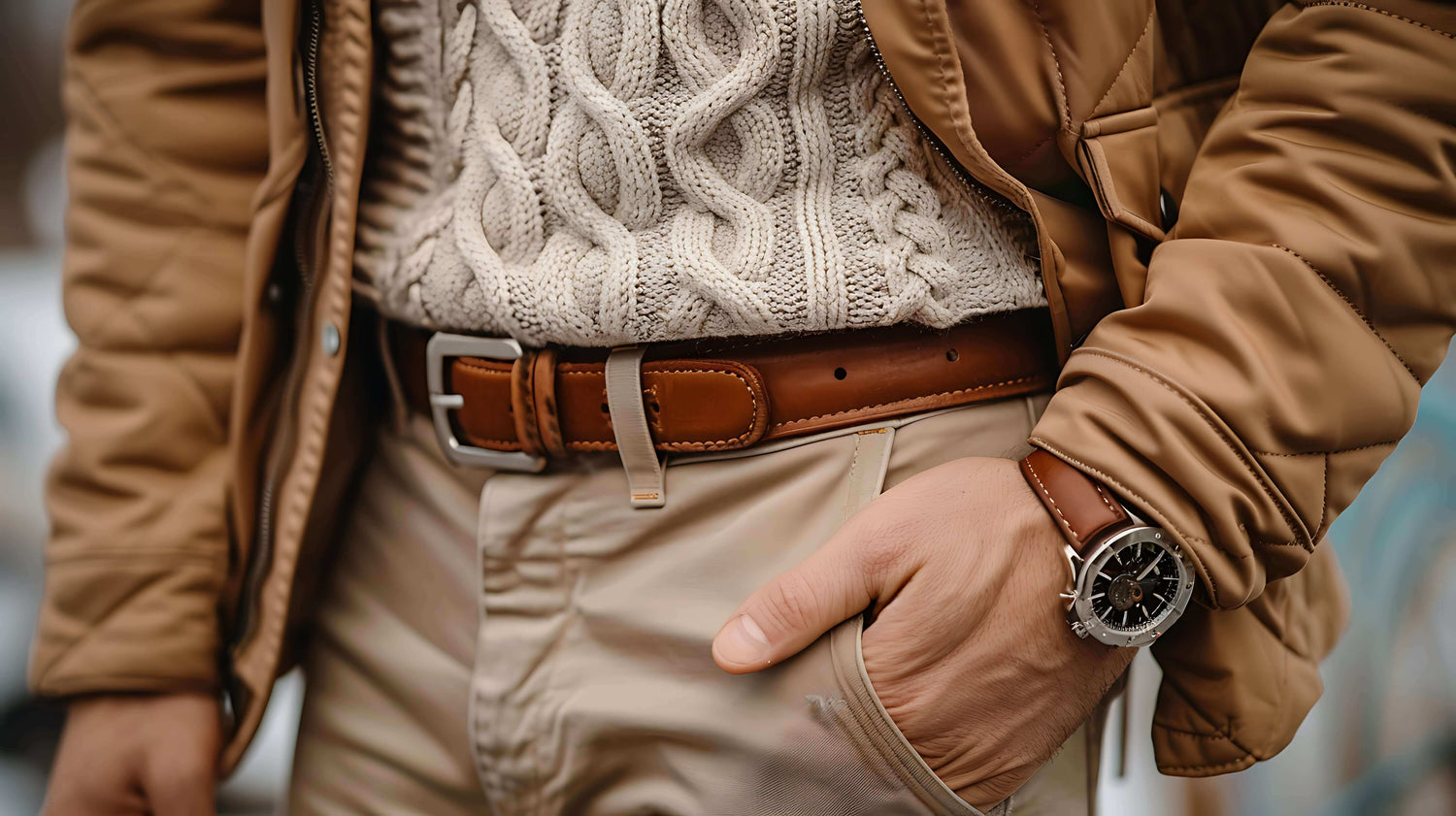


How to choose a leather belt without getting it wrong
A leather belt looks simple until you wear the wrong one for twelve hours. Then you notice everything - the stiff strap digging in when you sit, the buckle that feels too bulky under a shirt, the leather that creases too fast, and the fit that never quite lands where you need it. A good belt should disappear when worn and stand out only when it sharpens the outfit.
That is why choosing properly matters. The best leather belt is not just the one that looks smart in a product photo. It needs to match how you dress, how often you wear it, and how much comfort you expect from it across a full day.
Start with the job your belt needs to do
Before you think about colour or buckle finish, think about use. A belt for office trousers does a different job from one worn with jeans every weekend. If you mainly wear tailored trousers, you will usually want a cleaner, slimmer leather belt with a refined buckle and a smoother finish. If your wardrobe leans casual, a slightly wider strap with more grain and presence often looks more natural.
This is where many people buy badly. They choose one belt and expect it to cover every outfit. Sometimes that works, but often it leaves you with a belt that is too formal for denim and too chunky for smartwear. If you want one do-it-all option, aim for balance - medium width, classic buckle, clean leather, and a colour that works across most of your shoes.
If performance matters as much as appearance, pay attention to comfort features as well. A belt that holds securely but adjusts only in large jumps can feel fine in the morning and restrictive by evening. For people whose fit changes during the day, micro-adjustable systems can make a real difference.
Leather quality matters more than flashy details
If you are wondering how to choose a leather belt that actually lasts, start with the strap itself. Good leather has substance. It should feel firm but not cardboard-stiff, with enough body to hold shape over time. Cheap bonded leather often looks tidy at first, then cracks, peels or softens unevenly with regular use.
Genuine leather can be a useful starting point, but the label alone does not tell the whole story. What matters is how the belt feels, how it is finished, and how well it is built. Full grain and top grain leathers are often stronger long-term choices because they retain more of the hide's natural strength and character. They also tend to age better, developing wear that looks richer rather than tired.
There is a trade-off here. Softer, highly polished leather can look more formal straight away, while thicker, more textured leather usually brings a tougher, everyday character. Neither is automatically better. It depends whether you want boardroom neatness, off-duty durability, or something in between.
Signs of a better leather belt
Look for a strap with consistent thickness, a clean edge finish, and stitching that feels secure rather than decorative. The underside should feel considered, not rough or unfinished. A belt built for regular wear should show quality in the small details, because those details often decide whether it stays comfortable and structured after months of use.
A strong smell of chemicals or an overly plasticky surface can be a warning sign. Leather should feel natural, substantial and well processed, not synthetic with a leather label attached.
Get the width right for your wardrobe
Width changes the whole character of a belt. A narrow belt usually reads smarter and more understated. A wider belt feels more casual, more rugged, and better suited to heavier fabrics.
For most men, around 3 to 3.5 cm is the safest everyday range. It sits comfortably in standard trouser loops, works with chinos and jeans, and does not look out of place with smart-casual outfits. If you dress formally most of the week, something slimmer can look sharper with tailored trousers. If you wear denim and workwear-style clothing, a wider belt may suit both the look and the belt loops better.
For women, width depends even more on styling. A slim leather belt can define the waist over dresses or knitwear, while a broader style makes more of a statement with jeans, high-waisted trousers or layered outfits. The key is proportion. The belt should support the outfit, not fight it.
The buckle should match the belt's purpose
The buckle is not just a finishing touch. It affects comfort, profile, adjustability and the overall tone of the belt. A classic frame buckle remains the most versatile option for traditional leather belts. It is familiar, easy to wear, and works well for both smart and casual outfits depending on the finish.
If precise fit is high on your list, ratchet and slide systems are worth serious attention. These no-hole designs allow smaller adjustments, which means less pinching, less sagging, and a more exact fit through the day. For anyone who spends long hours sitting, drives regularly, or wants a cleaner look without stretched holes, that added control is more than a gimmick.
The trade-off is style preference. Some buyers prefer the heritage feel of a pin buckle and the visible wear marks that come with a traditional leather belt. Others care more about all-day comfort and a cleaner front profile. Neither choice is wrong. It comes down to whether you value classic character or engineered convenience more.
Colour should follow your shoes, but not blindly
Black and brown are the backbone of most leather belt wardrobes for good reason. Black is sharper, cooler and more formal. Brown brings warmth and usually feels more relaxed, especially with denim, tan footwear and earthy tones.
The old rule about matching your belt exactly to your shoes still helps, but you do not need to treat it as law. The goal is harmony, not forensic colour matching. A dark brown belt can work across several shades of brown footwear. A black belt can pair well with other dark accessories and keep a smart outfit looking clean.
If you only want one leather belt, dark brown is often the most flexible choice for everyday wear in the UK. It handles jeans, chinos and many smart-casual combinations with ease. If your wardrobe is more formal or mostly monochrome, black may do more work for you.
Sizing is where comfort is won or lost
A beautifully made belt still fails if the fit is wrong. Most people know the feeling of being stuck between too tight and too loose, especially after meals, long commutes or warmer days. Your belt should secure your trousers without forcing your waist into one fixed position.
With a traditional belt, the ideal fit usually puts you near the middle hole, not the first or last. That gives you room to adjust either way. If you are buying online, use the brand's size guidance properly rather than guessing from your trouser size. Belt sizing can vary, and assuming too much is one of the quickest ways to get a poor fit.
With ratchet belts, sizing can be even more forgiving because many are trimmable and designed for incremental adjustment. That makes them especially useful if your waist fluctuates, if you prefer exact comfort, or if you want a cleaner, more customised fit straight out of the box.
Pay attention to how the belt is finished
A belt is handled every day, bent repeatedly and pulled under tension. That is why construction matters. Better belts tend to hold their shape, keep their edges neater and resist stretching where cheaper belts quickly lose structure.
Look at the stitching, the edge paint or burnishing, the keeper loop, and the buckle attachment. A solid fastening at the buckle end is essential. If that part loosens, the whole belt starts to feel unreliable. Hardware should feel weighty enough to inspire confidence without becoming bulky.
This is also where style and longevity meet. A cleanly finished leather belt often looks better for longer, because wear appears as character rather than damage.
Choose for real life, not just the product photo
It is easy to be drawn in by a polished image, but the best belt for you is the one that fits your routine. If you need a belt for long office days, comfort and a low-profile buckle matter. If you wear jeans most of the week, durability, grain and width matter more. If your wardrobe moves between smart and casual, versatility matters most.
At BeltBuy, that practical difference sits at the centre of the choice. A belt is not there to simply fill belt loops. It should hold securely, wear comfortably, and sharpen your look without asking for constant adjustment.
If you choose leather with substance, a width that suits your clothes, a buckle that matches your needs, and a fit that gives you room to breathe, you will feel the difference every time you fasten it. The right belt does not shout for attention - it just gets better the more you rely on it.