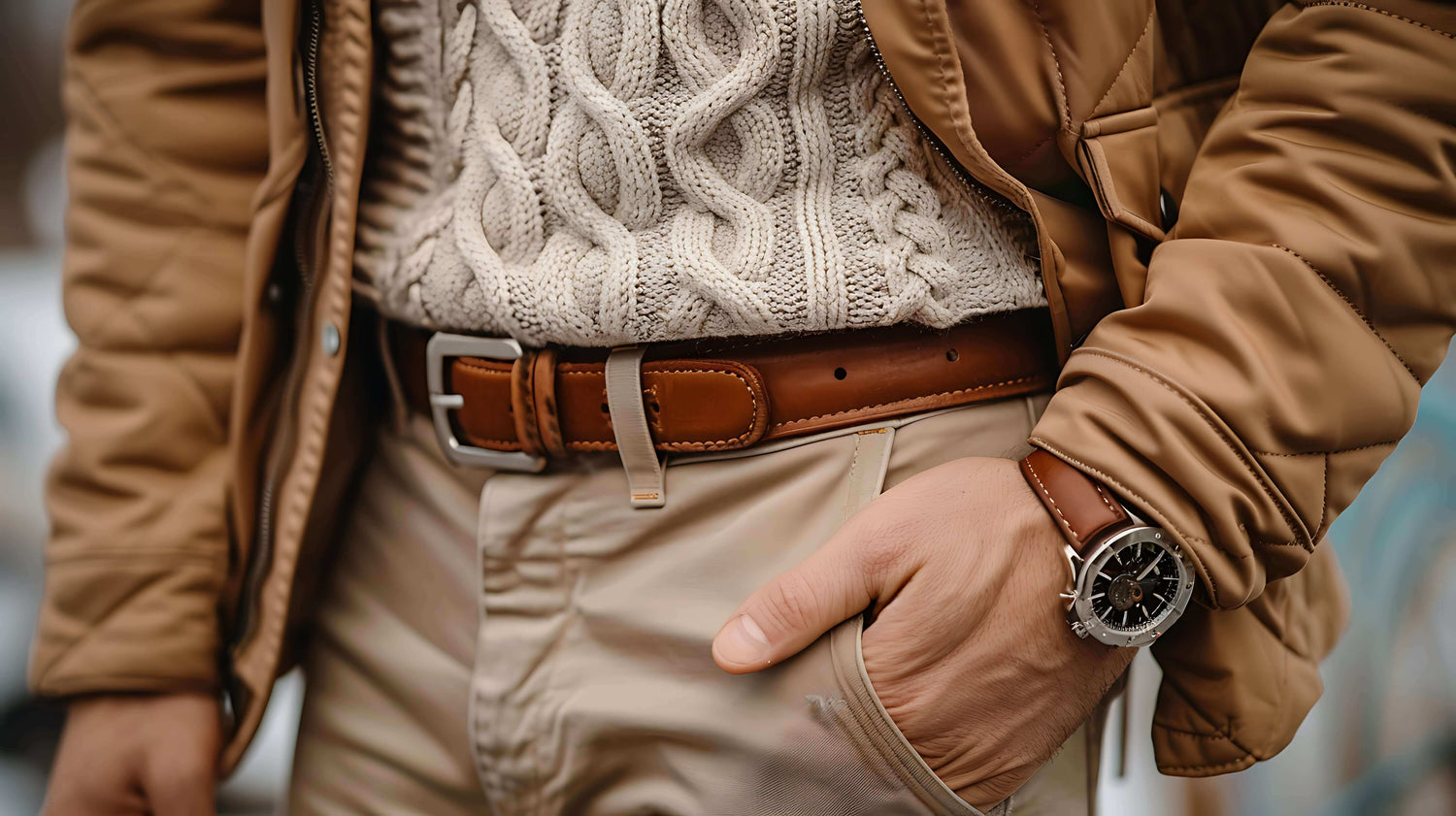


A belt usually gives you fair warning before it gives up completely. The trouble is, most people wait until the leather cracks, the buckle slips or the fit turns awkward halfway through the day. If you are asking when should you replace belts, the answer is not simply “when they break”. A good belt should hold securely, feel comfortable and still look sharp. Once it stops doing those jobs, it is past its best.
When should you replace belts for everyday wear?
For most people, the right time to replace a belt comes down to performance as much as appearance. A belt is not just a finishing touch. It is part of how your trousers sit, how comfortable you feel, and how polished the whole outfit looks from morning to evening.
If your belt has started stretching unevenly, fastening less securely or digging in at certain points, that is usually a stronger signal than a bit of surface wear. Daily-use belts take more punishment than most accessories. They bend every time you sit down, tighten under tension and absorb friction from belt loops, desk edges and regular movement. Even a well-made belt will eventually show fatigue.
A quality leather belt worn in rotation may last years. A cheap synthetic belt worn every day might lose its shape much sooner. The key difference is not just age. It is whether the belt still does its job properly.
The clearest signs it is time for a new belt
The most obvious sign is cracking. If the leather surface is drying out and splitting, the belt is already moving beyond normal wear into structural decline. Fine creases are expected, especially with genuine leather, but visible cracks near the holes, along the edges or where the strap folds by the buckle usually mean replacement is the smart move.
Stretching is another common issue. Traditional pin belts can become distorted around the most-used hole, which changes the fit and leaves the belt sitting awkwardly. You may notice that your usual setting no longer feels consistent. One day it is too tight, the next it feels loose. That lack of control matters more than people realise.
The buckle also tells a story. If it feels loose, misaligned or scratches badly enough to spoil the look of the belt, replacement starts to make sense. On ratchet and slide belts, the mechanism should lock cleanly and release smoothly. If the track is worn or the clasp slips under pressure, you are no longer getting the secure hold that makes those systems worth wearing.
Then there is appearance. A belt does not need to look box-fresh forever, but if the finish is peeling, the edges are fraying or the whole thing has gone limp and tired, it can drag down an otherwise smart outfit. A belt sits at the centre of your silhouette. People notice more than they think.
Fit problems are often the real issue
Many people replace belts too late because they focus on damage instead of fit. If your body shape has changed, even slightly, an old belt may still fasten but no longer wear well. That can show up as pinching after meals, awkward bunching at the waistband, or the tail sticking out in a way that looks untidy.
This is where modern micro-adjustable belts have a real advantage. Instead of forcing you into fixed holes, they let you fine-tune the fit through the day. If your current belt feels like it only ever fits “close enough”, replacing it is less about failure and more about upgrading comfort.
How long should a belt last?
There is no single lifespan because it depends on material, construction and how often you wear it. A solid leather belt used a few times a week and stored properly can last for years. A belt worn daily with work trousers, jeans and smarter outfits without any rotation will age faster, however good it was at the start.
Leather belts and slide belts often hold their fit better over time because they do not rely on a handful of punched holes. That reduces visible stress in one area. Tactical belts designed for harder wear may also outlast fashion-led belts because they are built around support, tension and abrasion resistance. On the other hand, statement belts such as rhinestone styles can remain in excellent condition for years if worn occasionally, but lose their appeal quickly if stones loosen or plating dulls.
In practical terms, replace your belt when the wear becomes noticeable in use, not just in a close-up inspection. If it still holds, sits well and looks intentional, it may have plenty of life left. If it is becoming unreliable, it is finished, even if it has not snapped.
Material matters more than most shoppers think
Leather ages differently from bonded materials or lower-grade synthetics. Full-grain and high-quality genuine leather tend to develop character before they develop problems. You will see softening, natural creasing and a more lived-in finish. That is wear with dignity.
Cheaper belts often do the opposite. They can look fine at first, then fail all at once - peeling outer layers, split edges, weak stitching and stiffness that turns brittle. This is why replacing a low-quality belt every year is rarely better value than buying one properly made in the first place.
Construction matters too. A belt with neat stitching, a solid buckle and cleanly finished edges usually keeps its shape longer. A trimmable ratchet belt with a dependable clasp can also give you extra lifespan because the fit stays precise even if your waist shifts over time.
When repair is worth it, and when it is not
Not every tired belt needs binning. If the buckle has minor wear, the leather is still strong and the issue is cosmetic, a simple clean or conditioning treatment may be enough. Some belts can be refreshed with edge care, buckle replacement or a trim adjustment.
But repair only makes sense if the core structure is sound. Once the strap is cracking through, the fastening no longer holds properly or the belt has stretched out of shape, patching it up becomes false economy. You still end up with a belt that cannot be trusted through a full day.
Style is part of the replacement decision
A belt can be technically wearable and still past its moment. If the finish has become dull, the profile looks bulky against modern tailoring or the design no longer fits the way you dress, replacement is reasonable. Belts do real visual work. They sharpen formalwear, steady casual looks and add edge or polish depending on the style.
For men, this often means moving from a tired old pin belt to a cleaner leather ratchet or slide belt that gives a neater line under shirts and knitwear. For utility wear, a tactical belt that offers stronger support and dependable hold can be a practical improvement. For women, a statement belt that has lost its sparkle or structure can flatten an outfit instead of elevating it.
Replacing a belt is sometimes less about damage and more about getting the right finish, fit and confidence back into your wardrobe.
When should you replace belts instead of rotating them?
Rotation helps, but only if the belt still deserves a place in the line-up. If you have one belt you never reach for because it feels stiff, slips slightly or looks worn at the buckle, that is already your answer. A belt you avoid wearing has effectively expired.
The best wardrobe belts earn regular use because they solve a problem well. They fit cleanly, feel comfortable and work across more than one outfit. If your current belt creates small annoyances every time you put it on, replacing it is not indulgent. It is sensible kit management.
That is especially true if you rely on one belt for work, commuting and evenings out. Daily accessories should not feel like compromises.
Choosing the right replacement
A replacement belt should correct the weakness of the old one. If your previous belt stretched around the holes, consider a ratchet design. If it felt rigid and bulky, look for better leather and cleaner finishing. If the buckle scratched easily or looked flimsy, prioritise stronger hardware.
It also helps to think in terms of use case rather than just colour. An everyday office belt needs different strengths from a casual weekend belt or a tactical option. The right replacement feels better from day one and keeps proving itself after months of wear.
At BeltBuy, that is the difference we focus on - belts that hold their shape, fit with precision and still bring style to the outfit rather than simply filling the loops.
A belt should never be the weak link in what you wear. If it is no longer comfortable, dependable or sharp enough to finish the job, replace it before it lets the rest of your look down.