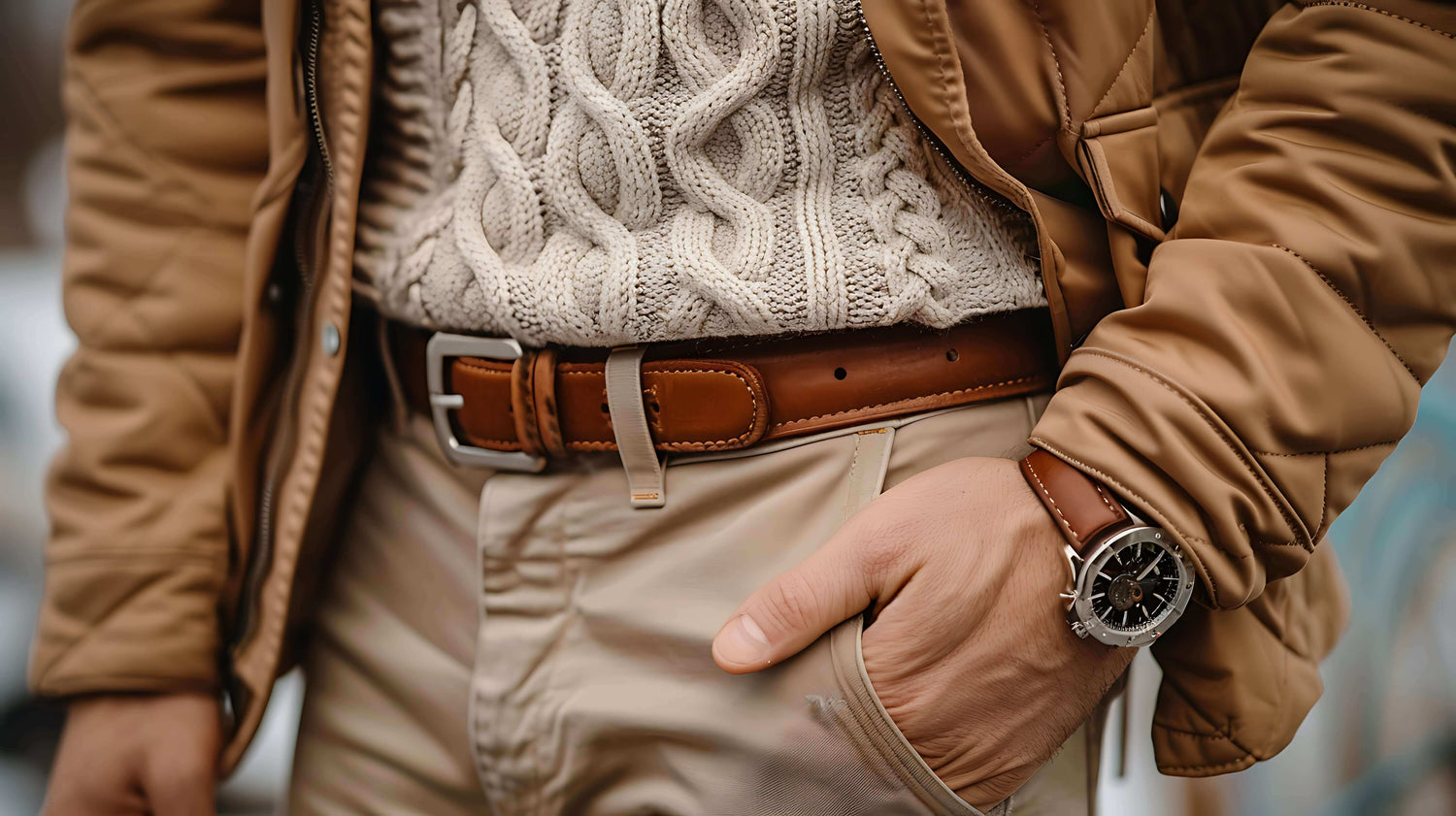


Choosing the wrong leather belt usually does not feel like a big mistake on day one. Six months later, when the finish starts looking tired or the strap has lost its character, it does. That is why Top Grain Vs Full Grain matters. If you want a belt that looks sharp, feels right at the waist, and stands up to regular wear, the leather grade changes the whole experience.
For belt buyers, this is not just a materials debate. It affects how the belt breaks in, how it handles friction from loops and buckles, how it ages with jeans or tailoring, and whether it still looks worth wearing after a long stretch of daily use.
Top Grain Vs Full Grain: what is the actual difference?
Both top grain and full grain come from the outer layer of the hide, which is the strongest part. That is the good news. Neither is bargain-basement bonded leather, and neither sits in the same category as heavily reconstituted material made from scraps.
The key difference is what happens to the surface.
Full grain leather keeps the natural outermost surface intact. The grain remains largely untouched, so you see more natural texture, markings, and variation. Because that surface stays in place, full grain is often seen as the most durable and character-rich option.
Top grain leather starts from a strong part of the hide too, but the surface is sanded or corrected to remove imperfections. It is then often finished with coatings or treatments to create a more even look. That makes it smoother, more consistent, and sometimes more refined straight out of the box.
If you want the short version, full grain leans more natural and rugged, while top grain leans more polished and uniform.
Why this matters in a belt, not just a leather sample
A belt gets dragged through loops, bent at the same stress points, tightened and loosened repeatedly, and rubbed against denim, chinos, suit trousers, office chairs and car seats. Leather that looks impressive in a swatch can behave very differently once it is built into an everyday belt.
That is why belt performance matters as much as leather grade. A good belt is not only about surface prestige. It is about how the strap holds shape, how comfortable it feels over long wear, and how it ages under pressure.
With belts, full grain often appeals to buyers who want visible character and long-term patina. Top grain tends to suit those who prefer a cleaner finish and easier styling with smarter outfits. Neither is automatically better in every case. The right choice depends on how you wear it.
Full grain belts: where they shine
Full grain leather belts are built for people who like substance. The untouched grain gives the strap a more natural look, and over time it usually develops a richer patina rather than simply looking worn out. That ageing is part of the appeal.
This type of belt often works especially well with casual and smart-casual wardrobes. Think denim, boots, heavier chinos, overshirts and textured layers. In those outfits, a bit of grain, natural variation and depth makes the belt feel more authentic.
There is also a durability argument. Because the outer layer remains intact, full grain leather can be extremely hard-wearing when the hide quality and construction are good. It tends to resist tearing and can keep a strong presence even after years of regular use.
The trade-off is that full grain is not always the neatest or softest option straight away. Some straps feel firmer at first and may take more time to break in. If that is a concern, our guide on How to Soften a Stiff Belt Properly can help.
Top grain belts: where they make sense
Top grain leather belts are often underestimated because people hear "not full grain" and assume it means second best in every respect. That is too simplistic.
A quality top grain belt can look excellent, feel smoother, and deliver a more consistent finish across the strap. For buyers who want a belt to sit neatly with office wear, tailoring or a cleaner everyday look, top grain can be a very smart choice.
The corrected surface also means fewer visible imperfections. If you prefer sleek leather with a more controlled appearance, top grain often gives you that without stepping into low-grade territory.
In practical wear, top grain belts can also feel more forgiving from the start. They may have a softer, more flexible hand feel, which some people prefer for daily comfort. If your priority is a belt that looks tidy and polished with minimal visual variation, top grain has real advantages.
For a closer look at how this leather performs in the real world, see our Top Grain Belt Review: Is It Worth It?.
Durability: full grain usually wins, but not by default
If all other factors are equal, full grain normally has the edge for long-term durability. The intact surface gives it strength, and it often ages in a way that adds character instead of exposing weakness.
But belts are not judged in a laboratory. Construction matters. Stitching, edge finishing, backing material, buckle quality and thickness all affect lifespan. A poorly made full grain belt can still disappoint, while a well-made top grain belt can give years of reliable wear.
That matters for shoppers because leather grade should never be the only line on the label you care about. Ask how the belt is built. Is the strap thickness right for its use? Does the buckle feel solid? Is the design intended for heavy everyday wear, smarter styling, or occasional use?
A belt is a working accessory. Built to hold means more than the leather name alone.
Appearance: natural character vs cleaner finish
This is where many buying decisions are really made.
Full grain tends to show more individuality. You may see pores, subtle marks, tonal shifts and grain variation. For many buyers, that is the point. It looks genuine because it is not trying to appear flawless.
Top grain usually offers a smoother, more even presentation. It can look sharper with formal trousers and easier to match when you want a belt that blends cleanly into the outfit rather than becoming a talking point.
Neither look is more stylish on principle. It depends on the role of the belt. If it is a rugged everyday staple, full grain has strong appeal. If it is a smart belt for office wear or occasions, top grain can feel more precise.
If you are still building a reliable belt wardrobe, our Men's Belt Materials Guide for Daily Wear covers how different materials suit different jobs.
Comfort and break-in
Many people assume tougher leather means uncomfortable leather. Sometimes that is true at first, but not always over time.
Full grain belts can feel firmer initially, especially when the strap is thick and built for structure. The upside is that, once broken in, they often mould nicely to your shape and develop a more personal fit.
Top grain belts may feel smoother and easier earlier on. For someone who wants a belt that wears comfortably from the start, that can be a strong selling point.
Still, comfort is not only about leather grade. Belt design matters just as much. A heavy pin buckle belt behaves differently from a micro-adjustable strap, and fit plays a major role in all-day wear. If comfort is your main priority, it is worth comparing leather with closure system too, especially for long office days or fluctuating waist size.
Which gives better value?
Full grain usually carries more prestige, and often a higher price. In many cases, that premium is justified by durability, hide quality and ageing potential. If you wear one belt heavily and want it to earn character over years, the value can be excellent.
Top grain can also represent strong value, especially when you want a polished leather belt without paying for the highest grade available. A good top grain belt often hits a sweet spot between appearance, comfort and price.
The wrong way to think about value is to assume full grain is always worth stretching for. The better question is whether the belt suits your actual use. A full grain casual belt may be a poor buy if what you really need is a sleek black belt for suits and office wear.
So, which should you buy?
Choose full grain if you want maximum character, strong long-term wear, and a belt that gets better-looking as it ages. It suits buyers who appreciate natural texture and do not mind a bit more break-in.
Choose top grain if you want a smarter, more even finish, easier early comfort, and a belt that looks polished across regular daily wear. It is especially appealing if your wardrobe leans cleaner and sharper.
For many people, the best answer is not one or the other forever. It is one of each for different jobs. A full grain brown belt for denim and boots. A refined top grain black belt for tailored outfits and weekday polish.
The smartest belt purchase is the one that matches your wear pattern, not the one with the most impressive label. When leather, construction and fit all line up, that is when a belt stops being an accessory and starts earning its place every single day.