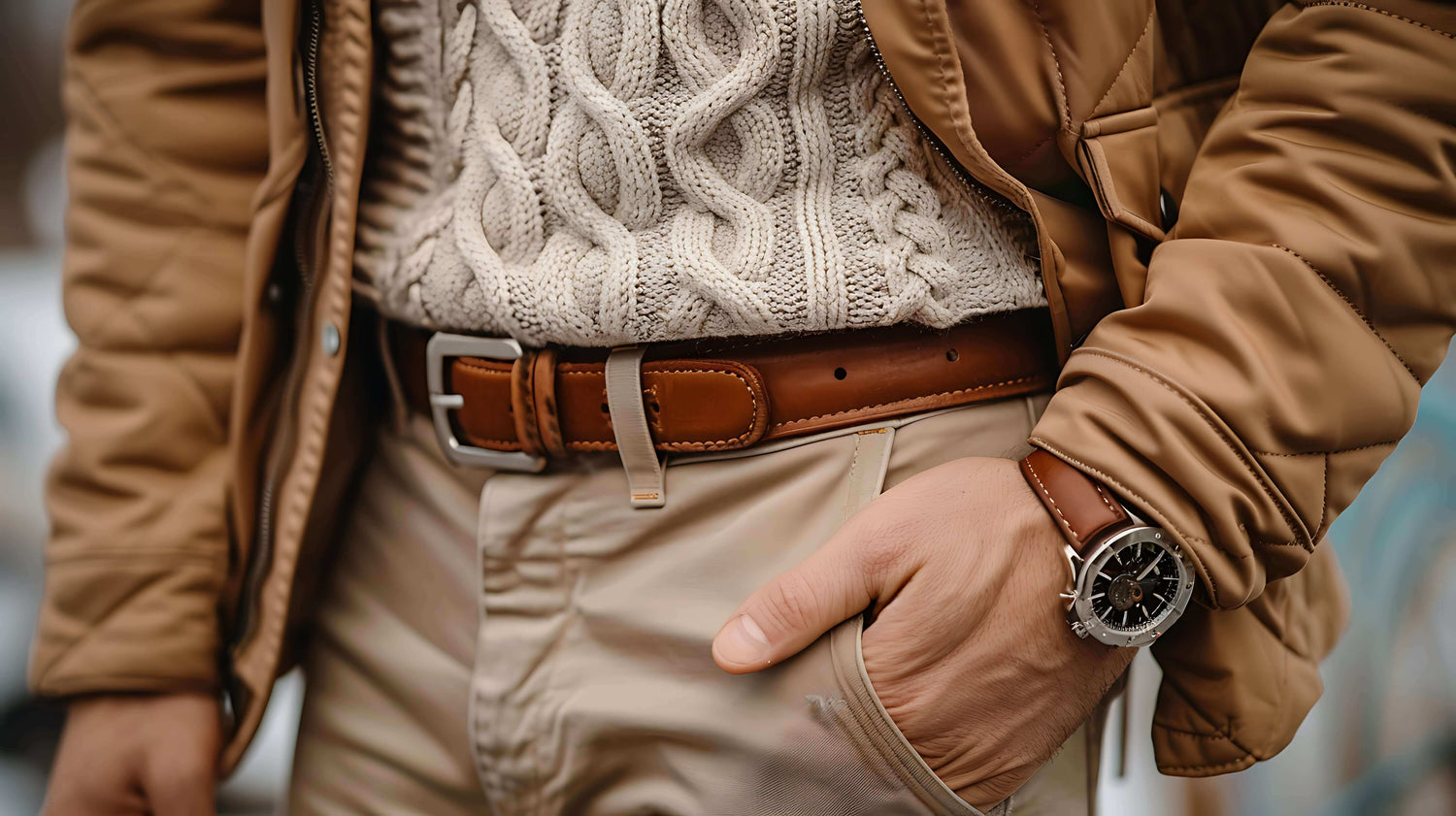


We commonly refer to a micro-adjustable belt as a ratchet belt. It allows for extremely flexible size adjustment, which is particularly useful after a meal when your stomach has expanded. If you were to wear a traditional belt at such times, it would feel very uncomfortable — this is where the micro-adjustable belt comes into its own. It is a highly innovative design.
This micro adjustable belt guide is for anyone who is tired of living between belt holes. If you want cleaner fit, better comfort and a belt that works with real daily movement, the no-hole system is worth understanding properly.
What a micro-adjustable belt actually is
A micro-adjustable belt replaces the old fixed-hole system with a track or ratchet mechanism built into the strap. Instead of jumping from one hole to the next, you get much smaller fit increments. In practice, that means you can tighten or loosen the belt by tiny amounts until it sits exactly where it should.
The difference sounds minor until you wear one for a full day. Traditional belts often force a compromise. One hole can feel snug, while the next feels slightly loose. A micro-adjustable design removes most of that guesswork and gives you a neater, more controlled fit.
It also changes the look of the belt. With no visible holes across the leather, the strap stays cleaner and smarter. On dress belts especially, that detail matters more than people expect.
Why the fit feels better
The biggest advantage is simple comfort. A better-fitting belt puts less pressure on your waist while still holding your trousers where they need to sit. You are not relying on broad spacing between holes, so you can respond to small changes through the day instead of tolerating them.
That matters if your routine is varied. Office workers spend hours seated. Tradesmen and utility-minded wearers move, lift and bend. Travellers deal with long periods of sitting followed by walking. A belt that adjusts in small steps works across all of that more naturally than a standard pin buckle.
There is also less strain on the strap itself. Traditional holes take repeated pressure in the same places, which can stretch and wear the leather over time. A ratchet or track system avoids that pattern of damage, helping the belt keep its shape for longer.
Micro adjustable belt guide to the mechanism
Most micro-adjustable belts use a buckle with an internal catch and a hidden track on the underside of the strap. You feed the belt through the buckle, and the mechanism locks into place as the track clicks forward. To release it, you use a small lever or catch on the buckle.
Good versions feel crisp rather than fiddly. The belt should slide in smoothly, lock firmly and release without force. If the mechanism feels rough, overly stiff or inconsistent, that usually points to weaker construction rather than a fault with the design itself.
This is where materials and finishing matter. A well-made buckle should feel solid in the hand, and the strap should have enough structure to glide cleanly without feeling plasticky. Genuine leather options tend to give the best balance of polish, durability and everyday wearability, especially if you want one belt to cover work and social use.
Choosing the right strap material
Leather is still the strongest all-round choice for most people. It looks smarter, ages better and feels more natural against daily wear. If you are buying for office use, events, dinners or general everyday dressing, leather gives you the broadest styling range.
That said, not every leather belt performs the same way. A good strap should feel substantial without turning rigid. If it is too soft, it can lose structure. If it is too stiff, comfort suffers. The best ones strike a middle ground - flexible enough to move with you, strong enough to hold shape.
For more rugged use, tactical-style micro-adjustable belts can make sense. These are better suited to utility dressing, outdoor wear and situations where toughness matters more than a refined finish. They are practical, but they will not always suit tailored clothing or smarter outfits.
Getting the sizing right
A micro-adjustable belt gives you more room to fine-tune fit, but sizing still matters. Many no-hole belts are designed to be trimmed, which is one of their strongest practical advantages. You buy within a size range, remove the buckle, cut the strap to fit, then reattach the buckle.
That makes life easier if you are between sizes or buying as a gift, but it does mean you should trim carefully. Cut too much and there is no easy fix. The safest approach is to shorten in small stages and test the fit as you go.
If your waist changes through the year, that trimmable design is particularly useful. It gives you a cleaner starting point and leaves the micro-adjustment system to handle day-to-day movement rather than major size mismatch.
Where a micro-adjustable belt works best
For everyday workwear, this system is hard to beat. It gives a cleaner line under shirts and knitwear, sits neatly with chinos and tailored trousers, and stays comfortable during long seated periods. If you move between meetings, commuting and evening plans, it suits the pace of a full day.
It also performs well with jeans and smart-casual outfits. A sleeker buckle and refined leather strap can sharpen a simple outfit without looking flashy. If you prefer clothes that work hard without shouting about themselves, that matters.
For formal wear, it depends on the buckle design. Some micro-adjustable belts are polished enough for suits, while others look more obviously engineered. There is nothing wrong with that, but the more visible or chunky the mechanism, the less suited it may feel for black tie or very traditional tailoring.
What to look for before you buy
The buckle should lock securely and release cleanly. That is non-negotiable. A micro-adjustable belt only feels premium when the mechanism is dependable. If it slips under pressure, the whole point is lost.
Next, look at the underside of the strap. The track should be neatly finished, not crude or overly exposed. On better belts, the engineering is discreet. You get the benefit of the mechanism without sacrificing appearance.
Pay attention to the leather finish too. Full grain and high-quality genuine leather options tend to wear better than overly processed straps with a synthetic feel. The surface should look rich, not shiny in a cheap way, and the edges should be finished cleanly.
Finally, consider how the buckle shape matches your wardrobe. A minimal buckle works across more outfits. A bolder buckle has more personality, but may narrow where and how often you wear it.
The trade-offs to know
No belt system is perfect for everyone. If you like the heritage feel of a classic pin buckle, a micro-adjustable belt may feel more modern and mechanical than you want. Some people enjoy the simplicity of traditional leather belts and do not mind the wider spacing between holes.
There is also a quality gap in this category. Cheap no-hole belts can feel brilliant for a week, then start slipping or wearing badly. The concept is strong, but execution matters. Better materials, stronger buckle components and cleaner construction make a noticeable difference.
And while these belts are excellent for comfort, style still comes down to design. Not every ratchet belt looks refined. If appearance matters to you, choose one that balances engineering with understated finish.
Is it worth switching?
If you have ever settled for a belt that was almost right, then yes, it probably is. The appeal is not novelty. It is control. Better fit in smaller increments, less pressure through the day, cleaner leather presentation and easier sizing all add up to a better everyday experience.
That is why this category has moved well beyond gimmick status. A properly made micro-adjustable belt is not just another accessory. It is a practical upgrade to something you wear constantly and rely on without thinking.
For shoppers who want a belt to do more than simply hold up trousers, the no-hole design makes a compelling case. It brings comfort, performance and a sharper finish into the same piece. Built to hold. Made to last.
If you are choosing your next belt with fit as seriously as style, start with the mechanism, trust the materials, and buy one you will actually want to wear from morning to late evening.