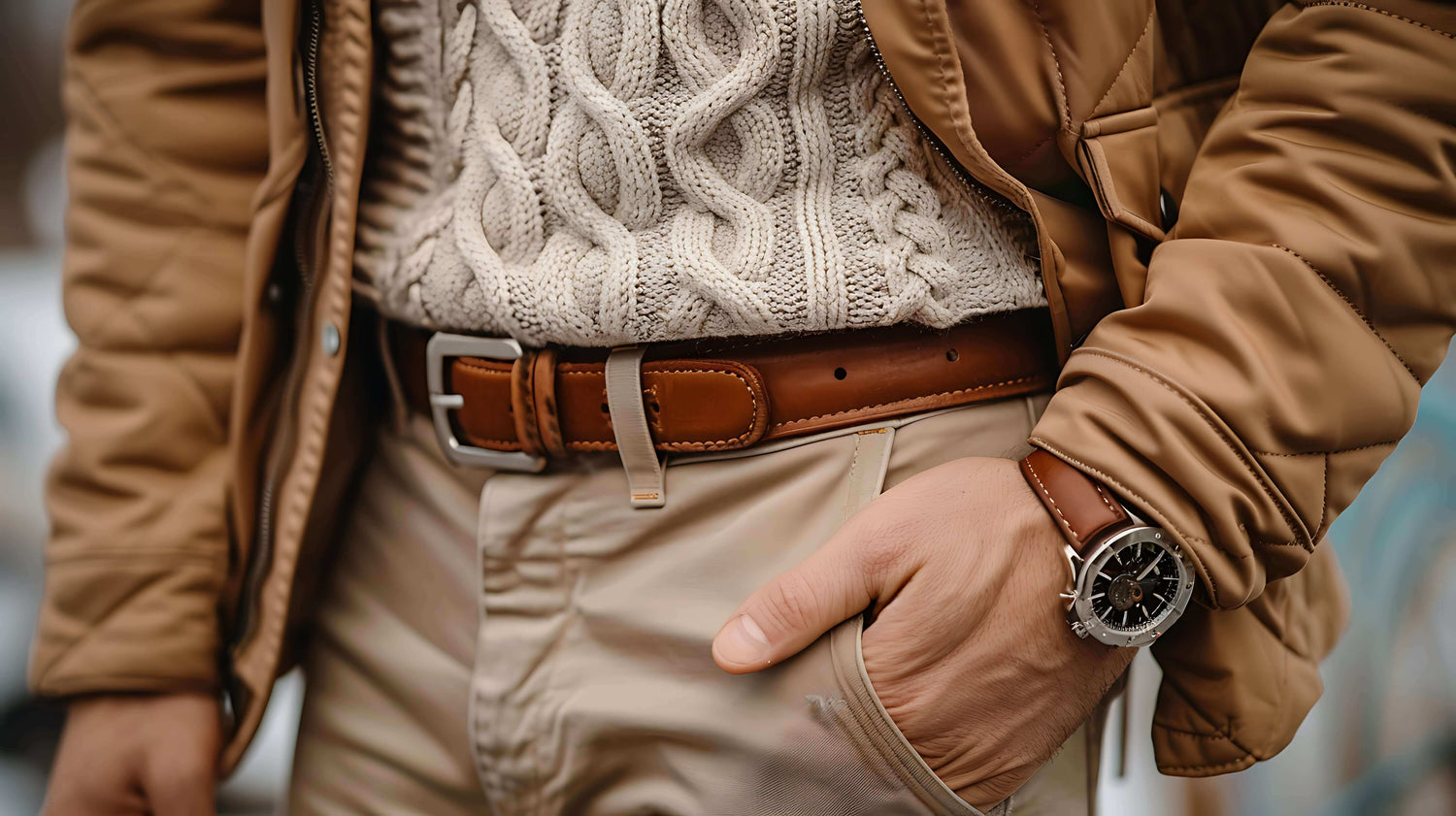


Leather belts are an indispensable part of our daily lives; we simply must have one, as we need them for all sorts of occasions, such as formal events, social gatherings and leisure activities. However, we are often faced with a choice between two options: leather belts and synthetic belts.
If you are weighing up a leather belt vs synthetic option, the right answer depends on how you wear it, how often you wear it and what you expect after six months of use. Some belts are built for long wear and a cleaner finish. Others are made for lower upfront cost, easy care or occasional use. The trick is knowing where each one genuinely performs well.
Leather belt vs synthetic: the real difference
At a glance, both can do the same basic job. They hold your trousers in place and finish an outfit. But once you wear them day after day, the gap becomes obvious.
Leather has natural structure, grain and flexibility. A good leather belt tends to mould to your shape over time, developing character rather than simply wearing out. It feels substantial in the hand and usually looks sharper with age if the hide and finish are decent.
Synthetic belts are made from man-made materials such as PU or other coated fabrics. They can imitate the look of leather surprisingly well at first, especially online or under softer lighting. They are often lighter, cheaper and easier to wipe clean. For short-term use or trend-led styling, that can be enough.
The difference shows up in longevity, feel and how the belt ages. Leather usually softens and settles. Synthetic often cracks, peels or loses its finish once the outer layer starts to break down.
Durability is where leather usually pulls ahead
For everyday wear, leather is hard to beat. A proper leather belt can handle repeated bending, tension at the buckle and the friction that comes from being worn through belt loops all week. It does not just survive wear - it often looks better once it has broken in.
That matters if you want one belt to cover work, weekends and smarter occasions without looking cheap after a season. Men who wear belts daily with chinos, denim or tailored trousers tend to notice this quickly. A belt is under constant strain, especially if you sit for long periods, drive often or carry weight in your pockets.
Synthetic belts can still be useful, but durability is more variable. Some hold up reasonably well for light use. Others start showing fatigue early, especially around the holes, keeper loop or buckle fold. Once the surface coating starts to split, there is no patina to rescue it.
If your priority is long-term value rather than the lowest ticket price, leather usually comes out ahead.
Comfort depends on construction, not just material
People often assume softer means more comfortable. It is not that simple.
A leather belt that is too stiff at the start can feel firm for the first few wears, but once it shapes to your waist it often becomes the more comfortable option. It flexes where it needs to flex and keeps enough body to support a clean fit throughout the day.
Synthetic belts can feel lighter and more pliable early on, which some people prefer straight away. But lower-grade synthetic can also feel sweaty, plasticky or rigid in the wrong areas. Instead of adapting naturally, it can crease in fixed spots and create pressure points.
Comfort also comes down to the fastening system. Traditional pin belts rely on spaced holes, so the fit can be slightly too tight or slightly too loose. Micro-adjustable ratchet and slide belts solve that problem well, especially for long office days, driving, meals out or fluctuating waist size. In those systems, the strap material still matters, but the fit mechanism plays a huge role in all-day comfort.
Style and finish: leather looks more convincing because it is
This is where leather earns its reputation.
A well-finished leather belt adds polish without trying too hard. The grain, edge finishing and natural texture give it depth that synthetic usually struggles to copy. With formalwear, business-casual outfits or smart denim, leather tends to look more grounded and more expensive.
Brown leather brings warmth and versatility. Black leather stays clean and sharp for office wear, events and evening use. Even more expressive styles - western details, richer textures or statement buckles - tend to look better when the base material has real substance.
Synthetic has its place if you want a fashion-led look without a bigger spend. It can work for occasional outfits, novelty finishes or trend pieces you do not plan to wear heavily. Some women’s styles, particularly statement belts designed around sparkle or decorative detail, may lean on synthetic components where visual impact matters more than ageing beautifully.
Still, if your goal is everyday style with staying power, leather wins because it looks authentic up close as well as from a distance.
Cost matters, but so does cost per wear
A synthetic belt usually costs less upfront. That makes it appealing if you need a quick replacement, want a backup colour or are buying for occasional use. If the belt only comes out a few times a year, synthetic can be perfectly reasonable.
But price alone can be misleading. If a synthetic belt needs replacing two or three times while one leather belt is still going strong, the cheaper option stops looking like the better value.
This is where cost per wear matters. A belt you wear four or five days a week needs to justify itself over time. Leather often does that because it holds its shape, keeps its finish longer and stays presentable through heavier rotation.
Buyers who care about value usually do best when they match the material to the job. Use synthetic for occasional styling or low-commitment spend. Choose leather for daily wear, repeat use and wardrobes built around fewer, better pieces.
When synthetic makes more sense
Leather is not automatically the right answer for every shopper.
Synthetic can be the better pick if you want a low-maintenance belt for occasional wear, a fashion colour that may not stay in rotation, or a lower-cost option for travel, uniforms or backup use. It may also suit buyers who prefer non-animal materials.
There is also a convenience factor. Synthetic belts are often less fussy about water marks and surface care. If your belt is likely to be exposed to rough treatment and you are not bothered about long-term ageing, synthetic can do the job.
The key is buying it with the right expectations. It is usually a shorter-term solution, not a future favourite.
When leather is the better investment
If you want one belt that does more than one job, leather is usually the smarter buy.
It works for office wear, jeans, dinner plans and events without looking out of place. It wears in rather than falling apart. It feels more substantial, and it tends to keep delivering that sense of quality every time you fasten it.
For men building a dependable everyday rotation, a strong leather belt is wardrobe infrastructure. It is not just there to hold up your trousers. It supports fit, sharpens the line of an outfit and saves you from replacing poor belts again and again.
That is also why specialist belt retailers such as BeltBuy focus so heavily on leather, fit systems and wear performance rather than treating belts as an afterthought.
How to choose the right one for your use
If you are still stuck on leather belt vs synthetic, stop thinking in abstract terms and think about your week.
If you wear a belt most days, want it to last, and care how it looks with smarter clothes, go leather. If you want a belt for occasional use, trend styling or a tighter budget, synthetic may be enough.
Then check the details. Look at the strap thickness, buckle quality, edge finish and adjustment system. A poor leather belt can still disappoint, and a decent synthetic belt can still serve a purpose. Material matters, but construction decides whether the belt feels solid or flimsy in daily wear.
Also consider your fit habits. If standard holes never quite land where you want them, a ratchet or slide design can make a bigger difference than you expect. Better adjustment often means better comfort, less strain on the strap and a neater silhouette.
The smarter question is not which is cheaper
The smarter question is which belt will still feel worth wearing after months of real use.
A synthetic belt can be practical, and sometimes that is exactly what you need. But if you want durability, richer texture, stronger style and better long-term value, leather still sets the standard. Built to hold. Made to last.
Choose the one that fits your life, not just your basket today.