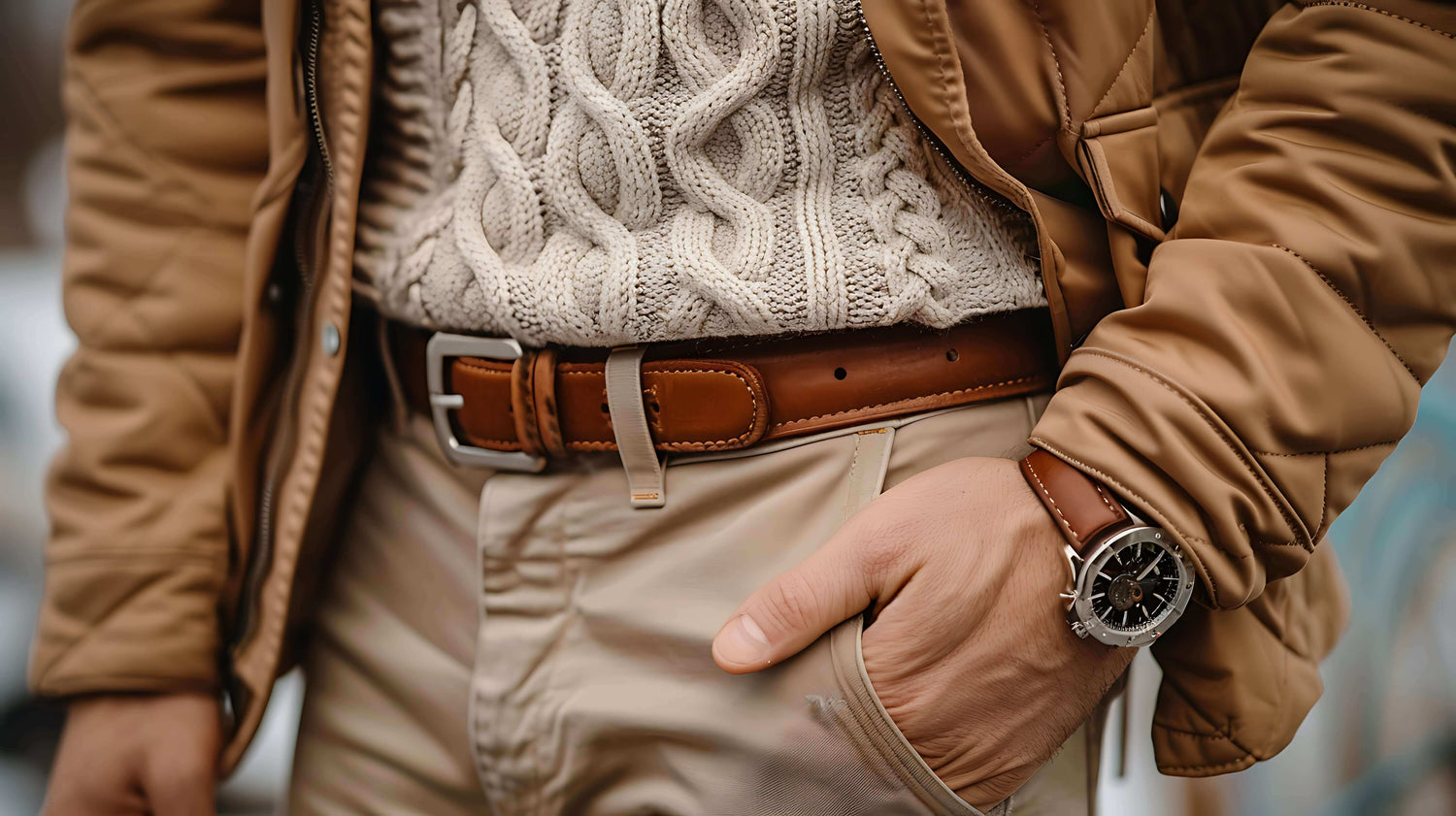


A western belt should look intentional, not costume
A good western belt brings edge, structure and character in one move. The problem is that it can also tip too far, too fast. Too much metal, a buckle that fights the rest of your outfit, or denim that already has enough going on, and the whole look starts to feel more fancy dress than everyday style.
That is why knowing how to style a western belt matters. Done properly, it works like any strong accessory should. It anchors the outfit, sharpens the waist, adds texture through leather, and gives even simple clothes a bit more authority. You do not need a full rodeo-inspired wardrobe. You just need balance.
How to style a western belt without overdoing it
The easiest way to get it right is to let the belt be the statement and keep the rest of the outfit disciplined. Western belts already carry detail through embossed leather, contrast stitching, antique hardware or a larger buckle. If your shirt, jacket and footwear are all shouting too, the belt loses its impact.
Start with clean foundations. Straight-leg jeans, dark denim, a plain white tee, a fitted knit, a simple Oxford shirt, a denim shirt with restrained wash, or a black dress all give a western belt room to do its job. You are not trying to recreate a theme. You are using one heritage piece to add shape and confidence.
Scale matters as well. A belt with a heavily engraved buckle and bright metalwork is stronger visually than a slimmer leather strap with a brushed finish. If the buckle is bold, keep jewellery lighter and avoid oversized prints. If the belt itself is quieter, you can be slightly more relaxed elsewhere.
Western belts with jeans is the easiest win
If you are wondering how to style a western belt for daily wear, jeans are the safest starting point. It is the most natural pairing because both pieces share that rugged, workwear-rooted feel. The key is choosing denim that looks polished enough to support the belt rather than compete with it.
Dark blue or black jeans usually make the belt look more premium. The leather texture stands out better, and the buckle reads as deliberate rather than flashy. Mid-wash denim can work too, especially with tan or brown leather, but distressed jeans and a heavily detailed belt often push the outfit too far.
For men, a western belt with straight or slim-straight jeans, boots and a tucked tee is hard to beat. Add an overshirt or suede jacket and the look feels grounded, not forced. If you are dressing it up slightly, swap the tee for a crisp shirt and keep the buckle finish in the same family as your watch hardware.
For women, high-waisted jeans are especially effective because they give the belt a clear role. A tucked vest, fitted blouse or lightweight knit lets the waist detail show properly. If the belt has rhinestones or brighter hardware, a simpler top keeps the outfit sharp.
Boots help, but they are not compulsory
Western belts naturally sit well with boots because the materials and attitude match. Leather with leather always has a certain logic to it. That does not mean you must wear cowboy boots every time.
Chelsea boots, clean ankle boots and even a sturdy loafer can work with a western belt if the outfit is otherwise clean. What matters most is consistency in finish. A polished black belt with a sleek black boot looks intentional. A rough tan belt with scuffed, casual boots feels more relaxed and rugged.
Cowboy boots can absolutely work in the UK, but they need restraint elsewhere. If both the boots and belt are highly decorative, tone the rest right down. Plain denim and a simple shirt will keep the outfit wearable. If your boots are understated, the belt can afford to have more personality.
Smart-casual looks need a cleaner western belt
A western belt can move beyond casual wear, but only if the detailing is controlled. This is where many people get it wrong. They try to force a heavily embellished belt into a smart outfit, and the contrast feels awkward.
If you want to wear one with chinos, tailored trousers or a blazer, choose quality leather, a slimmer profile and a buckle with less visual noise. You still get the western influence through shape, stitching or tooling, but the finish stays refined.
For men, try a dark brown western belt with stone chinos, a tucked Oxford shirt and suede boots. It adds character without breaking the outfit. Black leather can work with charcoal trousers and a knit, especially if the buckle is antique silver rather than bright polished metal.
For women, a western belt over tailored trousers and a tucked silk-look blouse can look strong and modern. The belt gives structure and stops the outfit feeling too soft. A blazer over the top makes it even better, as long as the belt remains visible enough to justify itself.
Dresses and skirts benefit from the structure
One of the best answers to how to style a western belt is to use it where it does more than decorate. Dresses and skirts are ideal because the belt can shape the silhouette as well as add detail.
A western belt works especially well with shirt dresses, denim dresses, tiered midi dresses and simple black dresses. The contrast between softer fabric and strong leather creates balance. You get shape at the waist and a more finished look overall.
If the dress already has prints, ruffles or statement sleeves, go for a quieter belt. If the dress is plain, you can afford more buckle and more texture. That trade-off matters. It is the difference between styled and overloaded.
With skirts, think about proportion. A wider western belt can look excellent with a midi skirt and tucked knit because it gives the waist real definition. A slimmer belt is better with lighter fabrics or shorter hems where too much hardware would dominate.
Colour and hardware should work with the rest of the outfit
Leather tone is not a small detail. It is often what makes the belt feel integrated rather than random. Brown western belts are usually the most versatile, particularly in tan, chestnut and darker chocolate shades. They work with blue denim, cream knitwear, olive jackets and most boot leathers.
Black western belts feel sharper and slightly more urban. They pair well with black jeans, monochrome outfits and sleeker footwear. If your wardrobe leans dark and minimal, black is often the smarter choice.
Hardware should echo, not clash. Silver-toned buckles tend to feel more classic on western belts, but antique brass can look excellent with warmer brown leather. Try to keep metal finishes reasonably aligned with watches, jewellery or bag hardware. Perfect matching is not necessary, but obvious conflict rarely looks polished.
Fit matters more than people think
A western belt is a focal point, so poor fit is obvious. If the strap is too long, the tail can stick out awkwardly and distract from the buckle. If it is too short, the whole thing looks strained. The belt should sit comfortably, hold securely and leave a neat amount of strap beyond the buckle.
This is where build quality really shows. Good leather keeps its shape better, sits flatter through the loops and wears in with character rather than collapsing. A belt should not just look good on day one. It should handle regular wear without stretching, cracking or losing structure.
If comfort matters to you as much as style, it is worth paying attention to construction and finish, not just the buckle design. A western belt still has a practical job to do. Looking the part is only half of it.
The outfits that usually work best
The strongest western belt outfits tend to follow one rule - one hero piece, solid supporting cast. A brown tooled leather belt with dark jeans and boots. A black western belt over a simple midi dress. A slimmer engraved belt with chinos and a tucked shirt. These combinations work because they are clear.
Where people go wrong is stacking too many signals at once. Heavy belt, loud shirt, distressed denim, statement boots, big hat. Each piece may be good on its own, but together they start competing. Western style is at its best when it feels grounded and worn with confidence, not assembled for effect.
If you are building the look from scratch, start with one belt you will actually wear often. Choose real leather, a buckle with enough presence to stand out, and a finish that suits the colours you already own. That makes styling easier from the first wear and gives you more value over time. If you want to browse options that balance heritage style with everyday wearability, BeltBuy keeps the focus where it belongs - on craftsmanship, comfort and belts built to hold.
A western belt should make your outfit feel tighter, stronger and more self-assured. When the leather is right, the fit is clean and the rest of the look knows its role, you do not need anything louder than that.