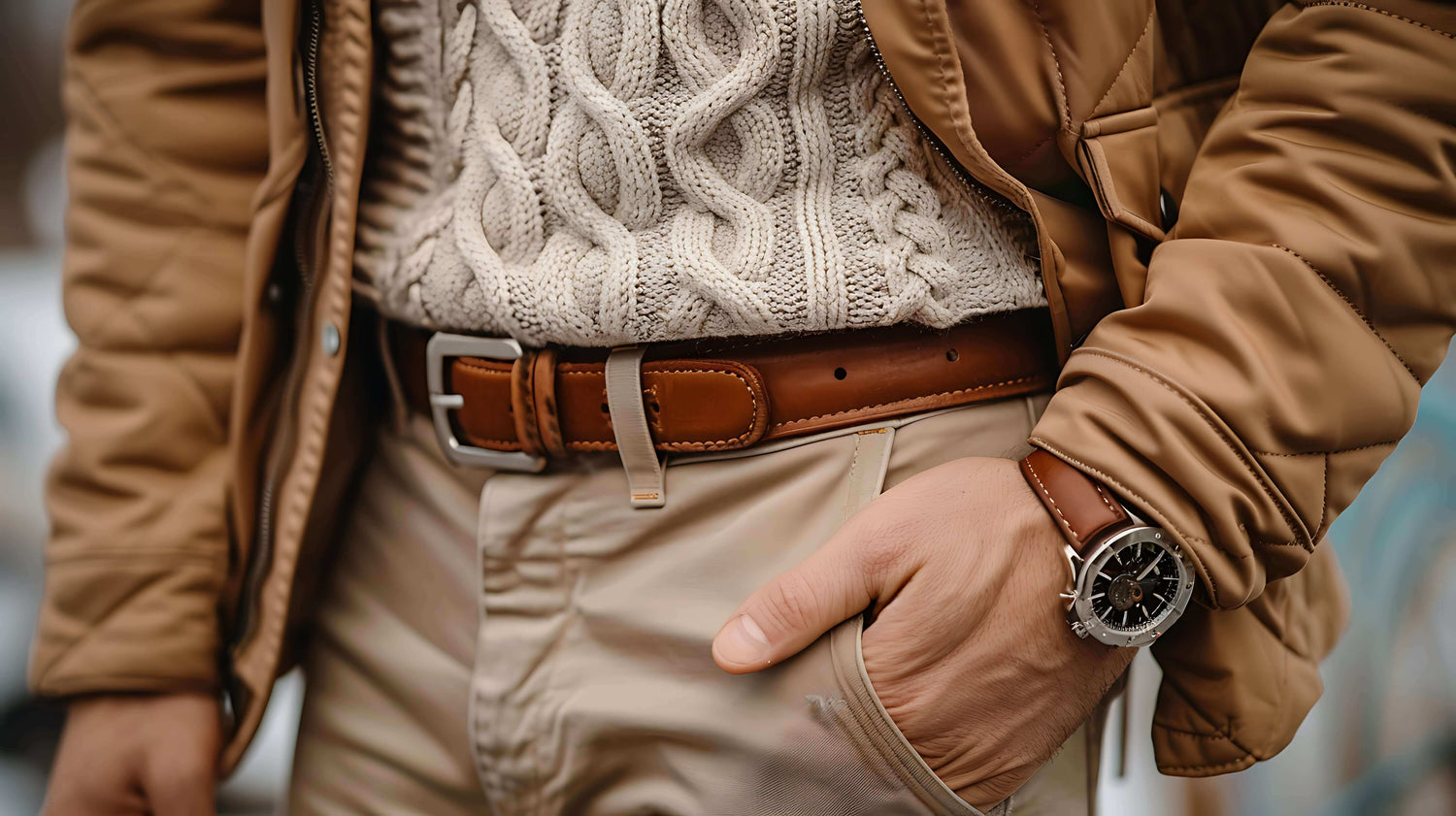


A leather belt can make an outfit look finished - or make it look like an afterthought. The difference usually comes down to fit, leather quality and how well the belt matches the rest of what you are wearing. If you are wondering how to wear a leather belt well, start by treating it as part of the outfit’s structure, not just something that keeps your trousers up.
A good belt does two jobs at once. It supports your waistband comfortably through the day, and it sharpens your overall look. That matters whether you are dressing for the office, a wedding, a pub lunch or everyday wear in jeans and boots.
How to wear a leather belt without getting it wrong
The first rule is simple: wear a leather belt when your outfit benefits from both support and polish. Tailored trousers, chinos, dark denim and most smart-casual looks all sit better with a proper leather belt. Very casual drawstring trousers or formal eveningwear are different - in those cases, a belt may be unnecessary or the wrong choice altogether.
Fit matters more than people think. A leather belt should fasten comfortably around your natural waistband without pinching, digging in or leaving too much excess strap hanging past the buckle. As a general guide, the tip of the belt should pass through the first belt loop after the buckle and sit neatly, not flap halfway round your hip. Too short looks strained. Too long looks sloppy.
This is where belt construction makes a real difference. Traditional pin-buckle belts give you a fixed set of holes, which works well if one of those positions suits you exactly. Ratchet and slide systems offer a more precise fit, especially if your waist changes through the week or you spend long hours sitting, standing and travelling. Micro-adjustment is not a gimmick when you actually wear your belt all day - it is often the difference between tolerable and genuinely comfortable.
Match the leather to the outfit
The easiest way to get a leather belt right is to match the formality of the belt to the formality of the clothes. A sleek leather belt with a clean buckle belongs with smarter outfits. A thicker, more textured belt with a heavier buckle works better with denim, boots and casual layers.
Black leather is the simplest option for smart wear. It works with black shoes, charcoal tailoring, dark trousers and most office wardrobes. If your shoes are polished and minimal, your belt should follow suit. Keep the strap clean, the buckle tidy and the finish refined.
Brown leather gives you more range in casual and smart-casual dressing. Dark brown is especially versatile with navy chinos, indigo denim, tweed, tan brogues and brown boots. Lighter brown, chestnut and more rugged finishes can bring warmth and character, but they look best when the rest of the outfit has some texture too.
There is some flexibility here. You do not need a perfect paint-chart match between belt and shoes, but they should feel related. Black with black is safe. Brown with brown is easy. If the leather tones are slightly different yet the finish and level of formality are similar, the outfit will usually still work.
Choose the right width and buckle
Width changes the whole feel of a leather belt. A narrower belt tends to look smarter and cleaner, which is why it suits formal trousers and office wear. A wider belt has more presence and usually sits better with jeans, workwear-inspired outfits and chunkier footwear.
The buckle should support that same message. A slim, understated buckle looks sharp with tailoring and fitted chinos. A larger buckle can suit casual looks, especially if the belt itself has a rugged grain or thicker strap. What rarely works is mixing signals - pairing a heavy, bold buckle with fine dress trousers, for example, or a very sleek minimalist belt with heavily distressed denim and work boots.
If practicality is high on your list, ratchet belts are worth serious attention. They give a cleaner strap front with no visible holes, and the fit can be adjusted in much smaller increments. For men who move between desk work, driving and walking through the day, that extra control feels less like a detail and more like proper engineering.
How to wear a leather belt with jeans, chinos and suits
With jeans
Jeans are where a leather belt often earns its keep. Dark denim with a brown or black leather belt is dependable, masculine and easy to style. If the jeans are clean and fitted, keep the belt equally sharp. If the denim is more rugged, you have more room for texture, thicker leather and a more substantial buckle.
Boots and belt should make sense together. Black boots with a tan belt can work in a fashion-led look, but for most everyday outfits it is cleaner to keep them in the same family. If you want a belt that works hard across multiple denim outfits, dark brown is usually the safest buy.
With chinos
Chinos sit in the middle ground, which means your belt choice does more visible work. A leather belt can dress chinos up for a shirt and blazer or keep them relaxed with a polo or knitwear. Brown leather is often the easiest choice here because it softens the outfit and works across navy, stone, olive and beige.
The cleaner the chinos, the cleaner the belt should be. If the trousers are sharply pressed and the shirt is tucked in, go for smooth leather and a neat buckle. If the look is more weekend casual, a lightly textured strap can add depth without trying too hard.
With a suit
A leather belt with a suit should be simple, high-quality and almost quiet. This is not the place for oversized buckles, contrast stitching or distressed finishes. Black leather remains the standard with black or charcoal suits, while dark brown can work beautifully with navy or mid-grey if your shoes support it.
That said, not every suit needs a belt. Some tailored trousers are designed to sit cleaner without one. If the waistband has side adjusters or the fit is precise enough on its own, skipping the belt can look more elegant than forcing one in.
The details people notice
A belt gets seen most when your shirt is tucked in, but it still affects the outfit when it is not. The line at your waist changes how your trousers sit and how your proportions read. A well-fitted belt creates a cleaner break between upper and lower half. A poor one bunches fabric, twists belt loops and drags the whole look down.
Leather condition matters too. Cracked edges, deep creases and a buckle covered in scratches make even good clothes look tired. If you want your wardrobe to feel sharper without replacing everything, start with the accessories you wear most often.
It also pays to think about comfort in practical terms. A belt should hold firm, not clamp down. If you are constantly loosening it after meals or adjusting it in the car, the sizing or fastening system is wrong for your day-to-day wear. Better leather, better flexibility and a more precise fastening solve a lot of that frustration.
Common mistakes when wearing a leather belt
The biggest mistake is choosing a belt purely by appearance and ignoring fit. Good leather can only do so much if the length is wrong or the fastening point is awkward. The second mistake is wearing one belt for every possible outfit. A glossy dress belt and a casual jeans belt are not the same job.
Another common issue is overcomplicating the match. You do not need to coordinate every metal detail from watch case to belt buckle to shoe eyelets with military precision. Keep the overall tone consistent and the outfit will look considered without feeling forced.
Finally, do not overlook quality. Cheap bonded leather often looks acceptable at first, then cracks, peels or loses shape under regular wear. Full-grain or genuine leather with solid construction lasts longer, feels better and sits more naturally at the waist. That is especially true if you wear a belt most days.
When a leather belt is the best choice
A leather belt is strongest when you want one piece to bring structure, comfort and style together. It is ideal for work wardrobes, smarter casual dressing, travel days, dinners out and everyday jeans-and-boots wear. It is less useful when the outfit is built to be ultra-relaxed or highly formal without belt loops.
If you are building a wardrobe from the ground up, start with one dependable black leather belt and one dark brown leather belt. That covers most situations without overbuying. From there, you can add a ratchet style for long-day comfort or a more rugged option for denim and boots, depending on how you dress most often.
At BeltBuy, that is exactly how we think about belts - not as filler, but as hard-working essentials built to hold, made to last, and designed to look right every time you fasten them.
A leather belt should feel reliable the moment you put it on. Get the fit right, match it to the clothes, and it stops being a small detail. It becomes the part that pulls the whole outfit into line.