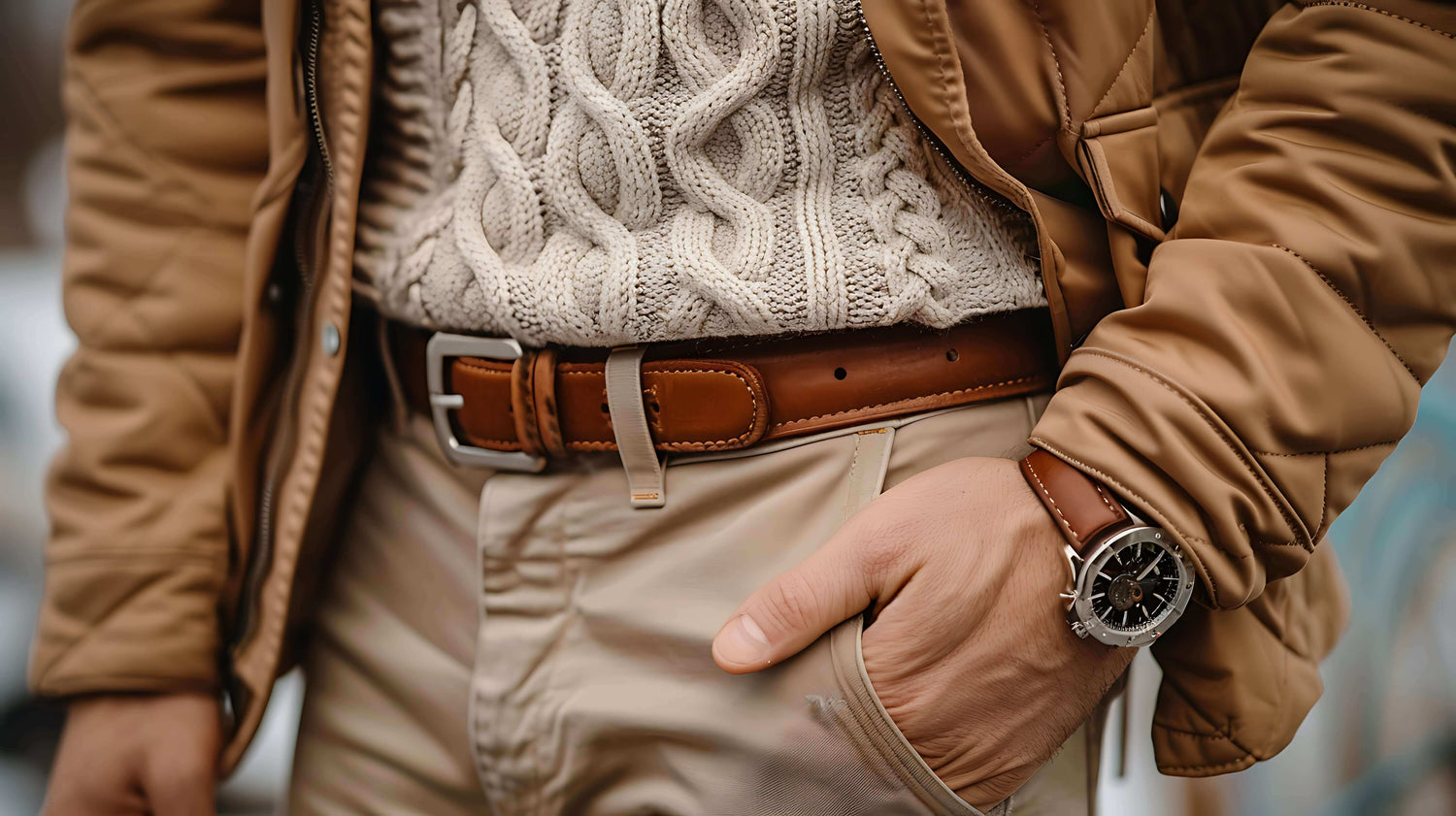


Chinos sit in that awkward middle ground where the wrong belt shows up immediately. Too formal, and the outfit looks stiff. Too casual, and it feels unfinished. If you wear chinos for work, weekends, dinners out or travel, your belt needs to do more than just hold your trousers up. It needs to match the cleaner lines of chinos, feel comfortable through long days, and look intentional rather than like an afterthought.
That is why choosing the best belts for chinos comes down to balance. You want structure without bulk, polish without shine, and enough versatility to move between smart-casual and everyday wear.
What makes a belt right for chinos?
Chinos are lighter and neater than jeans, so they tend to suit belts with a more refined profile. A thick, heavy-duty work belt can overpower the fabric. On the other hand, an ultra-glossy dress belt can feel too formal unless your chinos are part of a sharper office look.
The sweet spot is usually a belt with a clean finish, moderate width, and solid buckle that does not dominate the front of the outfit. Full grain or well-finished genuine leather works especially well because it has enough texture to feel grounded, but still looks smart. If comfort matters - and for most people it does - a ratchet or slide belt can make even more sense with chinos than a traditional pin buckle, because the fit is more precise and easier to adjust through the day.
That matters more than many people realise. Chinos are often worn sitting down at a desk, driving, commuting, or moving between indoor and outdoor settings. A belt that feels fine for twenty minutes can become irritating by mid-afternoon if the fit is too rigid.
The best belts for chinos by style
There is no single best option for every pair of chinos. It depends on the cut, the colour, and where you are wearing them.
Leather belts for everyday smart-casual wear
If you want the safest and strongest all-round choice, go for a leather belt in a clean, matte or lightly polished finish. Brown leather is especially dependable with chinos because it softens the outfit and works across more colours than black. Tan, dark brown and chestnut all pair naturally with beige, stone, olive, navy and tobacco chinos.
This is the belt most men will get the most wear from. It looks right with an Oxford shirt, polo, knitwear or simple tee. It also ages well if the leather is decent. Instead of looking tired, a good leather belt tends to develop character with use.
Black leather still has a place, particularly with charcoal, navy or black chinos, or when the outfit leans more office-ready. The trade-off is that black can feel slightly sharper and less relaxed, so it is less forgiving with lighter chino shades.
Ratchet belts for comfort and cleaner fit
Ratchet belts are one of the most practical choices for chinos, especially if your day changes pace. The micro-adjustable fit means you are not stuck between holes, and the front of the belt often looks cleaner because there is less visual clutter.
With chinos, that precision matters. A neater waistband line keeps the whole outfit looking better put together. If your weight fluctuates slightly, or you want a belt that stays comfortable after lunch, on the commute, or during long hours at work, a ratchet belt is hard to beat.
The main thing is choosing one with a buckle that suits chinos rather than shouting over them. A slim, understated buckle in brushed metal or a classic rectangular shape will look far more balanced than anything oversized or overly tactical.
Suede and textured belts for softer outfits
If your chinos are part of a more relaxed smart-casual wardrobe, suede or lightly textured leather can be an excellent option. These belts work particularly well with brushed cotton shirts, knit polos, overshirts and loafers or suede boots.
The appeal is in the texture. Chinos have a softer, more lived-in look than worsted wool trousers, and suede echoes that nicely. Mid-brown, taupe and dark chocolate tones are especially strong here. They bring depth without making the outfit feel too formal.
This is not always the best choice for wetter days or heavy wear, though. Suede demands a little more care, so if you want a belt to throw on every single day without thinking, smooth leather will usually be the tougher option.
Best belt colours to wear with chinos
Colour does a lot of the work. Even a well-made belt can look wrong if the shade fights the trousers or shoes.
Brown is the easiest place to start. It complements most chino colours and feels naturally relaxed. Tan belts are good with lighter chinos in stone, sand and pale olive, while darker brown belts tend to suit navy, forest green and deeper khaki shades.
Black works best when the outfit is clean and minimal. Think black loafers or black derby shoes with navy or charcoal chinos. It is less natural with beige or warm khaki tones, where it can look a bit stark.
If you only want one belt for chinos, medium-to-dark brown leather is the strongest bet. It covers the widest range and rarely feels out of place.
Width and buckle matter more than people think
For chinos, belt width is not a small detail. Around 3 to 3.5 cm is usually the sweet spot. Anything significantly wider can start to look heavy, especially on slimmer chinos. Too narrow, and the belt can appear dressy or insubstantial.
Buckles should stay proportional. A classic frame buckle, plaque buckle or refined ratchet buckle will all work if the scale is right. Large western buckles, thick tactical hardware or high-shine statement buckles usually belong elsewhere unless the whole outfit is deliberately built around that style.
This is where many belts fail. The strap may be decent, but the buckle is too aggressive for chinos. A belt should anchor the look, not hijack it.
How to match belts with chinos and shoes
You do not need a perfect colour match, but you do need harmony. If your shoes are tan, brown or suede, your belt should sit in the same family. Similar tones look cleanest, but a shade lighter or darker is absolutely fine.
With trainers, you have more freedom. Chinos worn with clean white trainers and a polo or knit can still take a brown or black leather belt, depending on the trousers. In these outfits, the belt acts more as structure than strict formality.
If you rarely tuck your shirt in, the belt matters slightly less visually, but it still affects comfort and silhouette. A bulky belt can create bunching around the waist even if only part of it is visible.
When a chinos belt should be more casual - or more formal
Not every pair of chinos asks for the same answer. Slim navy chinos for the office are different from washed stone chinos at the weekend.
If the outfit includes a button-down shirt, blazer or smarter shoes, lean towards smoother leather and a more refined buckle. If the outfit is built around a tee, overshirt, casual knit or desert boots, a softer leather finish or suede belt can look better.
It also depends on the chinos themselves. Crisp, tailored chinos can handle more polish. Garment-dyed or slightly faded chinos often look best with belts that have a bit of natural texture and less shine.
That is the real trick - matching the level of finish. Belt and chinos should look like they belong in the same conversation.
What to avoid when choosing the best belts for chinos
The biggest mistake is going too heavy. Thick work belts, chunky casual belts and large buckles can swamp chinos and make the waistband look clumsy.
The second mistake is going too glossy. High-shine dress belts can look oddly formal against cotton chinos, especially in lighter colours. They work in some office outfits, but not as a universal choice.
Poor fit is another common issue. Belts with wide spacing between holes often force you to choose between too tight and too loose. That is exactly where micro-adjustable belts earn their place. Better fit means better comfort, cleaner drape, and less fiddling during the day.
Finally, do not ignore leather quality. Cheap bonded leather can crack, peel and lose shape quickly, which is especially noticeable on a belt you wear often with everyday trousers.
So what should you buy?
If you want one reliable answer, choose a medium-width brown leather belt with a clean buckle and quality construction. It will cover most chino colours, work across smart-casual settings, and wear well over time.
If comfort is your priority, especially for long days or changing fit, a refined ratchet belt is one of the smartest upgrades you can make. It gives you a cleaner line and a more exact hold without the usual compromise between style and comfort.
If your wardrobe is softer and more relaxed, add a suede or textured leather belt as a second option. That is where chinos really start to look effortless rather than merely dressed.
At BeltBuy, that is how we think about belts - not as extras, but as everyday gear that should hold firm, wear comfortably and finish an outfit properly. The right belt for chinos does not need to shout. It just needs to fit well, feel right, and make the whole look look sharper the moment you put it on.
A good pair of chinos already does a lot of the heavy lifting. Choose a belt that keeps up.