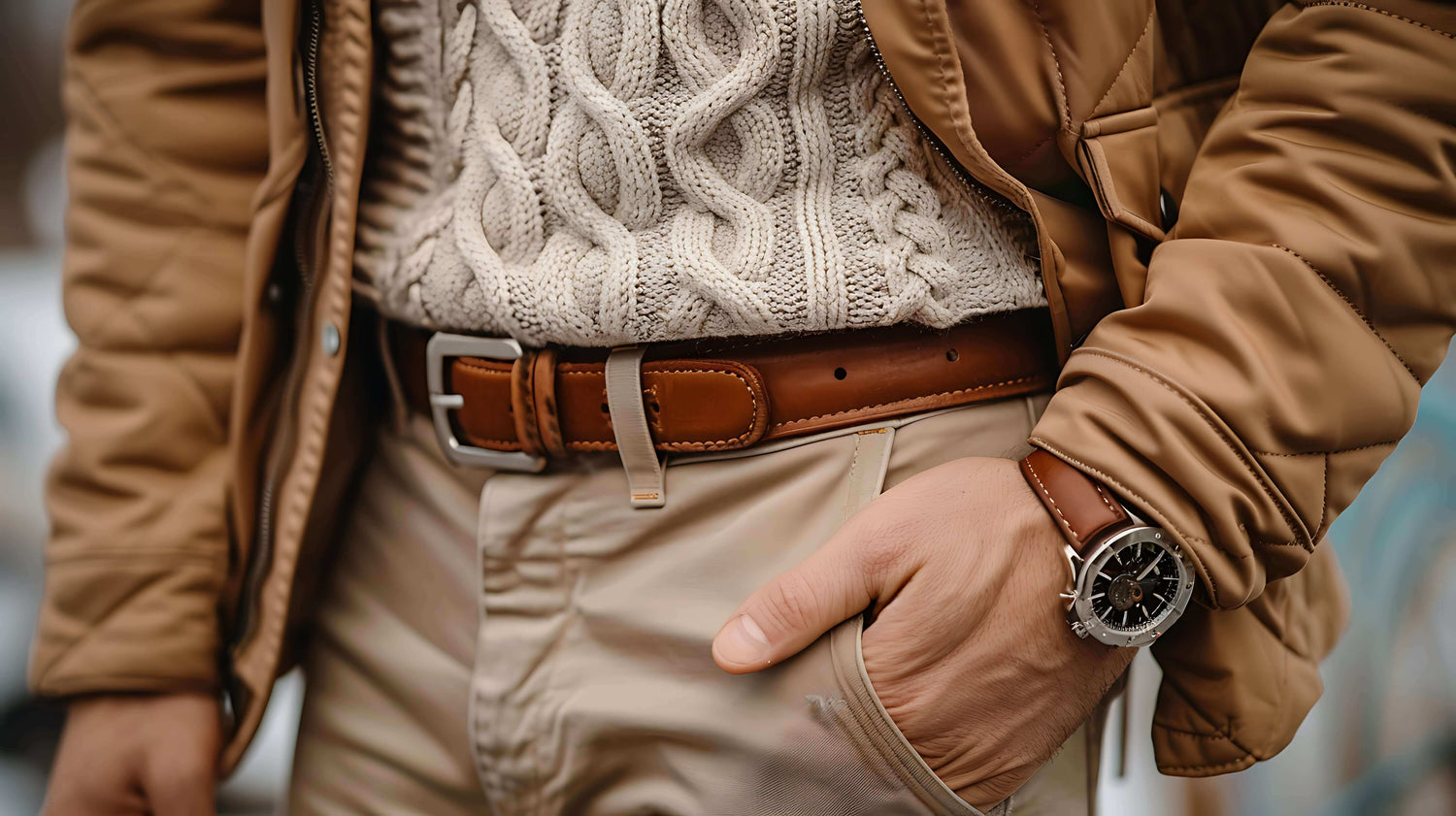


Few things make a belt feel cheap faster than a fit that will not stay put. If you are searching for How To Stop Belt Slipping, the good news is that the problem is usually simple: the wrong size, the wrong strap, or a fastening system that cannot hold consistent tension through a full day of wear.
A belt should do two jobs at once. It should support your trousers comfortably and sharpen the look of what you are wearing. When it slips, you lose both. The fit feels fussy, your waistband drops, and even a good outfit starts to look untidy. A proper fix is not about pulling tighter and hoping for the best. It is about understanding why the slip happens.
Why belts slip in the first place
Most belt slipping comes down to poor match rather than pure wear and tear. The belt may be too long, too narrow for the belt loops, too soft for the weight of your trousers, or using a buckle system that does not grip well enough. In some cases, the strap material is the issue. In others, the belt is fine but the fastening point is wrong for your body shape.
Traditional pin belts can slip when the holes are spaced too far apart. You end up choosing between slightly too tight and slightly too loose. That tiny gap matters more than people think. A belt that sits just off the right tension will move as you walk, sit, stand, and bend.
Leather also changes with wear. Good leather gets more comfortable over time, but it can relax a little. If the belt started off on the loose side, that softening can turn a decent fit into a frustrating one. If you wear heavier items in your pockets or use the same belt for jeans one day and lighter chinos the next, the change in pull can make slipping more obvious.
Start with the right belt size
If your belt is slipping, sizing is the first thing to check. Many people wear belts that are simply too long, then blame the buckle. A secure belt should fasten with enough strap to look balanced, without leaving a long tail or forcing the fastening point too close to the end.
For standard hole belts, the best fit usually places you around the middle hole, not the first or last. That gives room for natural day-to-day changes after meals, layering, or different trouser rises. If you are already using the tightest hole and the belt still shifts, the strap is too long. If you are pulling to the loosest hole because the fit feels restrictive, the size or style is wrong for your waist and wardrobe.
With cut-to-fit systems, the issue is often easier to solve. A trimmable strap lets you remove excess length and set the buckle position more precisely. That creates a neater line and more consistent hold.
How to stop belt slipping with a better fastening system
The fastening system matters more than most shoppers realise. If you are fighting with a belt every day, it may not be your waistline at fault. It may be the mechanism.
Pin buckles are classic and dependable, but they are limited by hole spacing. Ratchet and slide belts solve that by using micro-adjustments. Instead of fixed hole jumps, you get smaller fit changes, which means you can dial in the exact tension that feels secure without digging in.
That is why no-hole belts are such a strong answer for anyone dealing with constant movement or fit inconsistency. You can set the belt where your body actually needs it, not where the holes force it. If you want a closer look at how these systems compare in everyday wear, see Belt Holes vs Ratchet: Which Fits Better?.
A slipping belt buckle can also point to poor grip inside the clasp. On lower-quality belts, the locking parts wear down quickly, especially if the metal is light or poorly finished. A better-engineered buckle holds tension more cleanly and releases without chewing up the strap.
Match belt width to your trousers
Width is often overlooked, but it plays a major part in stability. A belt that is too narrow for the loops can twist, ride, and shift during the day. That movement feels like slipping even when the buckle is technically still fastened.
For jeans and heavier casual trousers, a broader belt usually gives better hold because it spreads pressure and sits more solidly in the loops. For tailoring, you still want proportion, but not at the expense of function. A dress belt that is too slim for the trouser structure can feel elegant for ten minutes and annoying for ten hours.
If you are unsure what width works best for your usual wardrobe, Belt Width Style Guide for Better Fit breaks down where different widths perform best.
The material can make or break the hold
Not all belts behave the same under tension. Soft, thin straps may look fine on a product page but struggle in daily use. The stronger the material structure, the more consistently the belt will hold shape and stay in place.
Leather is a strong choice when it is well processed and thick enough for the job. A proper leather belt moulds to your shape over time without collapsing into a limp strap. That balance matters. Too stiff, and it may feel uncomfortable at first. Too soft, and it can stretch or roll, especially if the buckle is carrying most of the load.
If you wear one belt for work, weekends, and regular commuting, material quality is not a small detail. It is the difference between a belt that settles in and one that gives up. For a closer look at what lasts under real daily wear, read Men's Belt Materials Guide for Daily Wear.
Check for stretch, wear and buckle damage
Sometimes the belt used to fit properly and has only recently started slipping. That usually means something has changed in the strap or buckle.
On a hole belt, inspect the hole you use most. If it has stretched into an oval shape, the pin may no longer sit firmly. That can create movement and make the belt feel less secure. Look at the buckle tongue as well. If it is bent or loose, it will not anchor as it should.
On a ratchet or slide belt, check the track and clasp. Dirt, wear, or damage inside the mechanism can reduce grip. If the teeth are wearing down or the buckle release feels unusually loose, the locking strength may be compromised.
Leather straps should also be checked for thinning near the buckle end. Repeated bending can weaken that section over time. Once the strap loses structure there, slipping becomes more likely because the tension is no longer being distributed evenly.
Trousers fit affects belt performance
A belt is not meant to rescue badly fitting trousers. If the waistband is far too large, the belt has to overwork just to keep everything up. That creates pressure points, bunching, and slippage because the fabric is fighting the belt all day.
The cleanest result comes when the trousers already fit reasonably well and the belt provides refinement and support. Think of the belt as a stabiliser, not a substitute for sizing. If your trousers are loose at the waist, even an excellent belt may still shift because the fabric is folding and dragging underneath it.
Rise matters too. Low-rise trousers sit differently on the body from mid-rise or high-rise pairs. A belt that behaves perfectly on one may feel less stable on another because the body shape at that point changes.
Small fixes that often solve the problem
If the belt is not worn out and the size is close, a few practical adjustments can improve hold quickly.
First, try fastening at a different point depending on the trousers. Heavy denim often needs a firmer setting than lighter office wear. Second, if you have a cut-to-fit belt, remove a small amount of length rather than tolerating a tail that throws the fit off. Third, make sure the buckle is centred and the strap is lying flat through every loop. Twisting near the front can create uneven tension that feels like slip.
If the leather feels awkward rather than loose, softness may be part of the issue. A belt that has not settled in properly can sit badly and shift as you move. If that sounds familiar, How to Soften a Stiff Belt Properly explains how to improve comfort without damaging the strap.
When it is time to replace the belt
There is a point where adjustment stops being worth it. If the belt stretches repeatedly, the buckle slips, the holes deform, or the strap has gone limp at the stress points, replacement is the sensible move.
This is where buying for performance pays off. A well-made leather belt or micro-adjustable no-hole belt is not just a style purchase. It solves a daily annoyance. Better materials, cleaner hardware, and a more exact fit give you the kind of hold you stop thinking about, which is exactly what a good belt should do.
At BeltBuy, that is the difference the better belts are built around - dependable hold, long-wear comfort, and a fit that works with your day rather than against it. If slipping has become a regular irritation, look for belts designed with structure and adjustability, not just surface appearance.
The right belt should feel secure when you leave the house and still feel right by the time you get home. If it keeps sliding, twisting, or loosening, do not just pull harder. Fix the size, fix the mechanism, or replace the weak point. Built to hold really does start with choosing a belt that can.