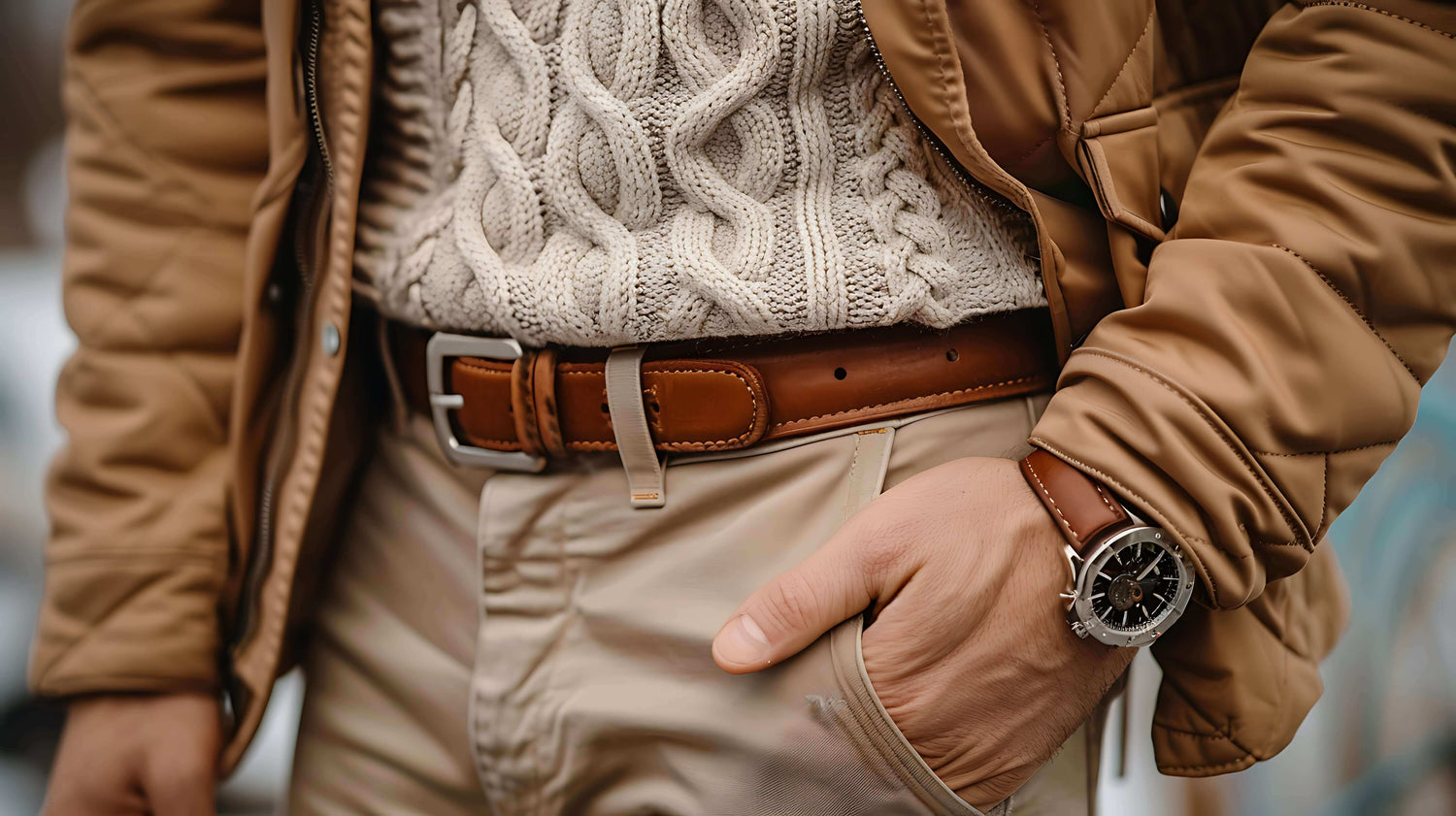


Have you been thinking about travelling to Europe or North America recently? Have you considered buying a travel belt? This article will introduce you to the eight best travel belts to help you make an informed choice.
The belt that ruins a trip is rarely the one that snaps. It is the one that digs in at security, slips loose halfway through the day, or forces you to choose between comfort and looking put together. If you are searching for the best travel belts men can rely on, the answer is not a single style. It depends on how you travel, what you wear, and how much fuss you are willing to tolerate when moving from airport queue to evening meal.
A good travel belt should do three jobs well. It should stay comfortable for long stretches of sitting and walking, hold its fit without constant adjustment, and suit more than one setting so you do not need to pack extras. Built to hold and made to last sounds simple, but travel exposes weak materials, awkward buckles and poor sizing very quickly.
What makes the best travel belts for men?
The best travel belt is not always the smartest-looking one, and it is not always the most technical either. For most men, the sweet spot sits between security, comfort and versatility. If a belt only works with cargo trousers, it is not much use on a city break. If it looks refined but creases, pinches or loosens by lunchtime, it will spend most of the trip in your bag.
Material matters first. Full grain or well-finished genuine leather brings polish and works well for business travel, dinners and smarter daywear. Nylon and tactical webbing offer lighter weight and better weather resistance, which makes sense for hiking, active holidays or rougher handling. Neither is automatically better. Leather usually wins on appearance, while performance fabrics often win on easy maintenance.
The fastening system matters just as much. Traditional pin buckles are familiar, but they can be limiting when your fit changes through the day. That happens more often on the road than at home - long flights, big meals, warm weather and hours of sitting all have a way of making a rigid fit feel worse. Ratchet and slide belts solve that neatly with micro-adjustments, letting you loosen or tighten the belt in small increments instead of jumping hole to hole.

Ratchet belts: the strongest all-round option
For many travellers, a ratchet belt is the best place to start. The no-hole design gives a cleaner look, but the real value is performance. A micro-adjustable belt can be set exactly where it feels right, then tweaked in seconds without the belt looking stretched or worn.
That makes a real difference on travel days. You can wear it snug for walking through the terminal, ease it slightly once seated, then tighten it again when you arrive. A standard belt can do the same in theory, but not with the same precision. One hole may feel too tight, the next too loose. That gap is where comfort gets lost.
Ratchet belts also tend to wear better because there are no punched holes taking repeated strain. For men who travel often, that means a smarter appearance for longer. A well-made leather ratchet belt works particularly well if your trip includes office time, restaurants or any setting where you want a polished finish without sacrificing all-day comfort.
The trade-off is that quality matters more here than with a very basic belt. A poor ratchet mechanism can feel flimsy or fail under pressure. Look for solid buckle construction, a firm locking track and a strap that feels dense rather than papery.
Leather travel belts: best for smart versatility
If your priority is packing less while still dressing well, leather remains hard to beat. One good leather belt can move between chinos, tailored trousers, dark denim and even a dressed-down blazer look. That kind of range earns its place in a suitcase.
For travel, though, not every leather belt performs equally. Stiff, over-thick straps can feel restrictive on flights and long train journeys. Very soft leather may be comfortable at first but can lose shape after repeated wear. The best option is a leather belt with enough structure to hold properly but enough flexibility to stay comfortable through movement and sitting.
A black or dark brown leather belt is usually the safest choice if you want one belt for the whole trip. Black leans cleaner and more formal. Brown gives slightly more texture and works especially well with casual outfits, boots and earth-toned clothing. If you are packing light, think less about what looks best in isolation and more about what works with the most pairs of shoes and trousers.
Tactical and nylon belts: best for active travel
Not every trip calls for polished leather. If you are heading off for outdoor use, frequent walking, or travel where practicality beats presentation, a tactical or nylon belt can make more sense. These belts are light, durable and less fussy in wet or dusty conditions.
They also tend to dry faster and shrug off rough treatment better than leather. If your days involve backpacks, trails, utility trousers or unpredictable weather, that matters. A tactical belt can also provide a more secure hold if you are carrying heavier pockets, tools or travel accessories.
The obvious compromise is style range. Some tactical belts look clean enough for casual city wear, but many still read as purely functional. If your trip includes smarter evenings or business settings, you may end up packing a second belt anyway. In that case, the tactical belt is only the best travel belt if the trip is built around activity rather than appearance.
Best features to look for before you buy
A travel belt earns its keep through details. Fit flexibility is near the top of the list. Trimmable straps are especially useful because they let you dial in your size precisely rather than settling for a close-enough fit. That is good for comfort and good for appearance.
Low-bulk buckles are another underrated feature. A huge buckle can look bold, but it also adds weight, presses awkwardly when seated and can feel cumbersome when travelling. For most men, a cleaner buckle profile is more wearable across long days and easier to pair with different outfits.
Then there is grip. A belt should hold without constant readjustment. Zero-slip performance is not just marketing language - it is the difference between forgetting your belt is there and tugging at it all afternoon. That matters whether you are walking through a city, sitting on a plane or carrying a bag across a station.
Finally, pay attention to finish and edges. Rough edges, poor stitching or cheap bonding show up fast under regular wear. Travel puts strain on accessories. If the belt already looks tired out of the box, it will not improve after a week in and out of suitcases, belt loops and hotel drawers.
Choosing the best travel belts men actually need
The phrase 'best travel belts men search for' can cover very different needs, so it helps to narrow the choice by trip type rather than chasing a single winner.
If you travel for work, go for a leather ratchet belt in black or dark brown. It gives you the widest outfit range, a smart finish and the comfort to handle long days. If your trips are mostly city breaks with casual dinners and lots of walking, a clean slide belt or understated leather belt is often the strongest all-rounder.
If you are travelling outdoors, prioritise lightweight nylon or tactical construction over polished looks. Comfort, durability and weather resistance matter more than formal versatility. And if your waist size fluctuates, either because of layering or comfort on long journeys, micro-adjustability should move from nice extra to must-have.
This is where a specialist retailer has an edge. A belt-first range tends to focus on mechanism quality, long-wear comfort and practical sizing rather than treating belts as afterthought accessories. At BeltBuy, that means options built around durability, no-hole adjustment and dependable daily performance rather than just surface styling.
Common mistakes when buying a travel belt
The first mistake is buying purely on looks. A belt can appear sharp online and still be miserable on a full day of travel. The second is choosing the wrong width. Very wide belts can feel sturdy, but they do not work with every pair of trousers. A more versatile width is usually the smarter travel choice because it lets one belt cover more outfits.
Another mistake is ignoring adjustability. Travel changes your comfort needs hour by hour. If a belt cannot respond to that, it stops being an asset and starts becoming something you endure. Lastly, do not underestimate buckle quality. If the mechanism feels cheap, the entire belt will feel unreliable, no matter how good the strap looks.
The belt worth packing is the one you forget about
That is really the test. The best travel belt is not flashy, and it does not need constant attention. It fits cleanly, moves with you, and holds its place from the first train to the last dinner. Choose for the trip you are actually taking, not the one the product photo suggests - and you will end up with a belt that works harder than half the kit in your case.