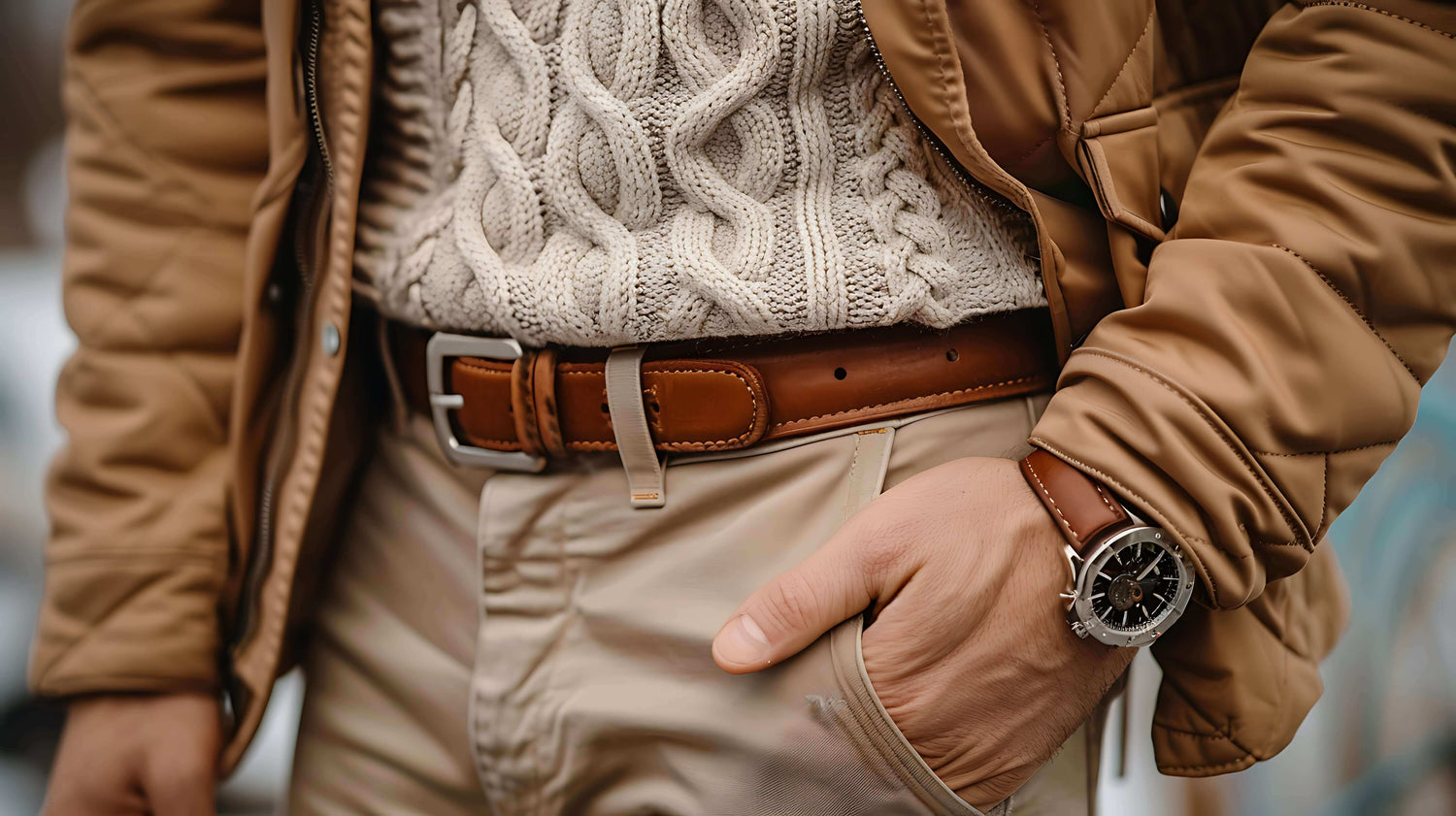


Are you struggling to choose the right colour for your belt? Worried that the wrong colour might make you look out of place in public? This article will show you exactly how to choose the right colour of belt. Let's get started!
A belt can quietly ruin an otherwise solid outfit. The shoes are right, the shirt fits, the trousers sit well - then a belt in the wrong shade cuts straight across the look and throws everything off. It is a small detail, but it carries a lot of visual weight.
If you are trying to work out the best belt colours for men, the good news is that you do not need a dozen options. Most men are better served by a tight rotation of reliable colours that cover work, weekends and smarter occasions without fuss. The trick is choosing shades that work hard, wear well and match the way you actually dress.
The best belt colours for men start with three staples
For most wardrobes, the strongest foundation is black, dark brown and tan. Those three cover the vast majority of outfits and give you enough range to dress up or down without overthinking it.
Black is the sharpest and most formal of the lot. It looks clean with black shoes, darker tailoring and monochrome outfits. If you wear business shoes, smart boots or black loafers regularly, a black leather belt is not optional - it is infrastructure. It gives a polished line through the waist and keeps smarter outfits looking intentional rather than pieced together.
Dark brown is the most versatile colour many men underuse. It works with navy, charcoal, mid-grey, olive, denim and most earth tones. It feels a touch warmer than black and often more relaxed, but it can still look properly refined with a blazer or business-casual outfit. If you only own one leather belt and your wardrobe leans less formal, dark brown is often the best place to start.
Tan brings lightness and contrast. It is especially strong with blue denim, stone chinos, lighter suiting and casual summer dressing. Tan has more personality than dark brown, but it is not loud. It works best when the rest of the outfit has some softness to it - textured shirts, suede shoes, lighter trousers or warm-weather fabrics.
Why matching matters - and when it does not
The old rule says your belt should match your shoes. That is still a very good rule, especially for smarter dress. Not because menswear needs policing, but because matching leather tones creates visual balance. When the belt and shoes speak the same language, the outfit feels finished.
That said, matching does not always mean identical. A dark brown belt with chocolate boots will usually look better than a jet black belt with the same outfit, even if the browns are not perfectly the same shade. Texture matters too. Smooth leather reads smarter, while grain, suede-effect finishes and more rugged buckles shift the look casual.
This is where men often get caught out. They focus only on colour and forget about finish. A glossy black dress belt with faded jeans and work boots can look as off as the wrong colour entirely. Likewise, a thick casual brown belt might be too heavy for tailored trousers even if the shade is right.
Best belt colours for men by outfit type
If you wear a lot of tailoring or office clothing, black and dark brown should do most of the heavy lifting. Black is the safer choice with charcoal suits, black trousers and formal footwear. Dark brown comes into its own with navy suits, blue trousers and less rigid office looks where you want polish without the harder edge of black.
For chinos, denim and everyday casual wear, brown tones usually outperform black. Medium to dark brown works brilliantly with indigo jeans, olive chinos and checked shirts. Tan feels easier with light blue denim, beige trousers and off-duty layers like polos, overshirts and casual jackets.
If your wardrobe is built around trainers, cargo trousers and practical daily wear, the question changes slightly. In that case, a tactical belt or a streamlined slide belt in black, grey or muted brown can make more sense than a traditional dress belt. The best colour is the one that disappears into the outfit while still doing the job well. Performance matters here - secure hold, easy adjustment and all-day comfort become just as important as appearance.
Black belts - clean, sharp and easy to trust
Every man should understand when black is doing the most for him. Black belts look strongest when the outfit already has contrast under control. Think black shoes, dark trousers, a crisp shirt, maybe a jacket. It is a disciplined colour. It does not soften an outfit, and it does not add warmth. What it does add is structure.
That makes black ideal for interviews, formal events, business dress and evening wear. It is also a sensible choice if you tend to wear a lot of black footwear during the week. A dependable black leather belt with a clean buckle will earn its keep quickly.
The trade-off is that black can look too stark in casual outfits built around warmer colours. With tan boots, faded denim and a brushed overshirt, black often feels disconnected. That is where brown does a better job.
Brown belts - the real everyday workhorse
Brown belts cover more ground than many men expect. A rich dark brown leather belt can sit comfortably with brogues at work and then move straight into weekend wear with jeans and boots. It has depth, warmth and a more natural relationship with common menswear colours.
If you wear navy often, brown is especially useful. Navy and brown are one of the strongest pairings in men’s style because the warmth of the leather offsets the coolness of the cloth. The same applies to olive, cream, stone and most shades of denim.
Medium brown sits in the middle and can be a smart buy if you want flexibility. Just be aware that very light brown belts can be limiting in winter, while very dark brown can start to overlap with black in formality. Neither is wrong - it depends on what you wear most.
Tan belts - best for lighter, more relaxed dressing
Tan belts can look superb when the outfit has some air in it. They work particularly well in spring and summer, with lighter chinos, pale denim, linen shirts and suede shoes. They can also lift simple casual outfits that would look flat with a darker belt.
The caution with tan is that it is more visible. Because it stands out, it needs to feel intentional. A tan belt usually looks best when there is another warm element in the outfit, whether that is the shoes, the watch strap or the tone of the jacket.
For men who mostly wear darker autumn and winter clothing, tan may be a secondary buy rather than a first purchase. For men who live in chinos, denim and lighter casual layers, it can become a favourite quickly.
What about navy, grey and other less common colours?
There is nothing wrong with owning belts beyond the classic three, but they should solve a real styling need. Navy can work with smart-casual outfits, especially if your shoes are navy too, but it is far less versatile than brown or black. Grey belts can look modern with minimalist wardrobes, though they are rarely essential.
Bolder shades, contrast stitching or statement buckles have their place if personal style is the point. Western-inspired belts, textured finishes and more expressive hardware can add character. But if you are building a dependable belt rotation rather than a collection, start with the colours that carry the most weight across the week.
Colour matters, but so does belt construction
A good colour choice cannot rescue a belt that wears badly, slips, or feels stiff by midday. The best belts earn repeat use because they do more than match your shoes. They hold shape, adjust cleanly and stay comfortable through long hours.
That is why belt design matters. A quality leather strap in the right shade will always look better over time than a cheap finish that cracks or loses colour quickly. Ratchet and slide belts are also worth considering if your fit changes through the day or you want a more precise hold than traditional holes can offer. A micro-adjustable system gives you cleaner comfort and a neater line, especially when you are moving between sitting, standing and travelling.
If you want one place to start building a harder-working rotation, BeltBuy offers options that cover classic leather shades as well as modern no-hole designs built for comfort and long wear.
How many belt colours do you really need?
For most men, two is enough to cover nearly everything - black and dark brown. Add tan if your wardrobe includes lighter casual looks, especially in warmer months. Beyond that, buy with purpose rather than impulse.
It is better to own a few belts in the right colours, materials and widths than a drawer full of poor matches. A slim formal black belt, a versatile brown leather belt and a casual tan option will outperform a stack of novelty shades every time.
The right belt colour should make getting dressed easier, not more complicated. Start with what you wear on your feet, look at the colours you reach for most, and choose belts that work as hard as the rest of your wardrobe. When the leather is right, the fit is right and the colour sits naturally with your clothes, the whole outfit feels stronger without trying too hard.