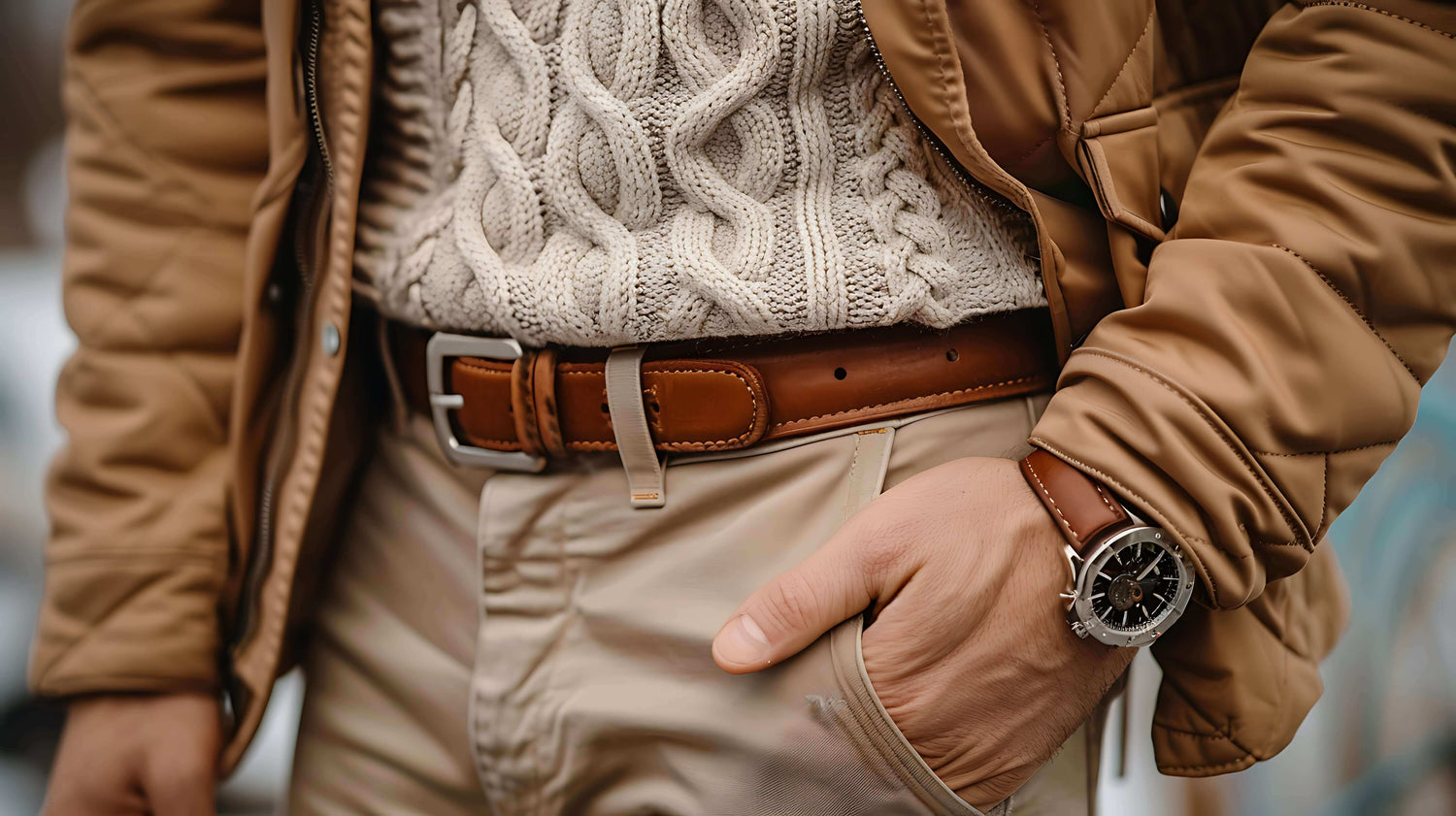


A belt that twists, sags or bites into your waist by lunchtime is not doing its job. If you carry more than just your phone and keys, the difference between an average belt and a proper tactical belt is obvious within a few hours. The right one holds steady, stays comfortable, and keeps your daily essentials where they should be without turning your outfit into full kit.
That is exactly why a tactical belt for everyday carry has moved well beyond niche utility wear. For many men, it is now the belt that handles real life best - commuting, driving, walking, working, and carrying the extras that ordinary fashion belts struggle with.
What makes a tactical belt for everyday carry different?
A tactical belt is built with performance first. That usually means stronger webbing, firmer structure, more reliable buckles, and a design that can support weight without folding over itself. For everyday carry, that matters because even a modest load changes how a belt behaves.
A folding knife, torch, multitool, compact pouch or clipped key organiser may not seem heavy on their own, but together they create pressure points. Standard belts, especially cheaper leather or thin synthetic styles, often stretch unevenly or develop soft spots. You end up tightening more than you want, and comfort gets worse rather than better.
A good tactical belt spreads that load more evenly. It gives you support without feeling like a rigid plank around your waist. That balance matters. Too soft, and your gear shifts. Too stiff, and sitting down becomes irritating after half an hour.
The real test is comfort over a full day
Many people shop by appearance first and regret it later. With everyday carry, comfort is the first filter. You are not wearing the belt for ten minutes in front of a mirror. You are wearing it through train journeys, office chairs, staircases, the school run, errands, and long hours on your feet.
That means the best tactical belt for everyday carry is usually one with controlled stiffness rather than maximum stiffness. You want enough backbone to support attached items, but enough flexibility to move naturally with your body. This is especially true if your routine shifts between standing, driving and sitting.
Micro-adjustability also makes a major difference. Traditional hole belts can leave you stuck between too tight and too loose, which becomes frustrating fast when you are carrying extra weight on the belt line. A ratchet or slide-style adjustment gives a cleaner fit through the day, particularly after meals, under layers, or during long periods of movement.
Material matters more than most buyers expect
Not all tactical belts feel the same because not all materials behave the same way. Nylon webbing remains the classic choice for a reason. It is strong, light, weather-resistant and generally excellent for utility use. A well-made nylon tactical belt feels dependable without demanding much maintenance.
That said, construction quality matters just as much as raw material. Dense weave, clean edging and secure stitching all affect long-term comfort and durability. Cheap webbing can feel abrasive, especially if the edges are rough or the belt is too thin for the load it is meant to carry.
Some buyers prefer a more refined look for mixed use, especially if they want one belt for both casual wear and smarter daily outfits. In those cases, a tactical-inspired belt with a cleaner buckle profile or a structured leather-led finish can make more sense than a pure utility design. It depends on whether your priority is maximum function or a better blend of function and style.
Buckle design can make or break the experience
People often focus on belt strap strength and overlook the buckle. That is a mistake. The buckle affects comfort at the front, ease of adjustment, how flat the belt sits under a shirt, and how quickly you can get the fit right.
Large, heavy buckles can look tough, but they are not always ideal for everyday wear. They can dig in when seated and create bulk under untucked layers or jackets. For daily use, a lower-profile buckle often works better. It still needs to lock securely, but it should not dominate the belt.
Quick-release buckles are popular for good reason. They are practical, dependable and easy to use. But not every quick-release design suits every wardrobe. If you wear tactical trousers and utility clothing most days, a more overtly rugged buckle fits naturally. If your week includes denim, chinos and knitwear, a cleaner fastening usually gives you more flexibility.
How stiff should an everyday carry belt be?
This is where many buyers get caught out. They assume firmer always means better. In reality, the right stiffness depends on what you carry and how you live.
If your everyday carry is light - perhaps keys, a compact torch and a slim multitool - you do not need an ultra-rigid belt. In fact, that level of rigidity may feel excessive. A medium-stiff tactical belt will often feel better and still provide plenty of support.
If you carry heavier kit regularly, extra structure becomes more valuable. The belt needs to resist twisting and sagging so the weight stays balanced. Even then, there is a limit. A belt that feels too hard around the waist can become a chore to wear, and anything uncomfortable eventually gets left in the drawer.
The smarter approach is to match the belt to your actual carry, not an imagined one. Buy for the day you really have, not the one that looks impressive on paper.
Style still counts - even with utility gear
A tactical belt for everyday carry does not need to look like specialist equipment. That matters for UK buyers who want practical support without looking overbuilt for a trip to the shops. The best options blend into normal wardrobes while still delivering proper performance.
Colour plays a part here. Black is the easiest all-rounder. It works with darker denim, cargo trousers and most casual outfits, and it tends to look cleaner for longer. Coyote, olive and other field-inspired shades can look excellent in the right wardrobe, but they are more obviously utilitarian.
Width matters too. A belt that is too wide for your trouser loops becomes an annoyance before you even leave the house. Most everyday users are better served by a versatile width that fits standard jeans and casual trousers easily. A tactical belt should feel like a reliable part of your wardrobe, not a workaround.
Signs you are buying a good one
A strong tactical belt usually shows its quality in small details rather than dramatic marketing claims. Look for consistent stitching, a firm but not abrasive strap, smooth adjustment, and a buckle that locks positively without rattling. The belt should feel engineered, not flimsy.
Sizing flexibility is another good sign. Trimmable designs or micro-adjust systems tend to give a better long-term fit, especially if your waist size shifts slightly through the year. Comfort is rarely about one perfect measurement. It is about having enough adjustment to get the fit right again and again.
If you are shopping at a specialist retailer such as BeltBuy, that curation helps. A belt-first store tends to focus more closely on wear performance, fit systems and material quality than a general accessories seller does.
Who should choose a tactical belt over a standard belt?
If you clip gear to your belt most days, the answer is simple. A tactical belt is the better tool. It gives you better support, less sag, and a more secure feel through the day.
It also makes sense for men who are simply tired of ordinary belts wearing out too quickly. Even without a full everyday carry setup, many buyers prefer tactical belts because they hold shape well, cope with movement, and offer cleaner adjustment. They can be a practical upgrade rather than a specialist purchase.
The trade-off is visual. A traditional leather belt still wins in fully formal settings. If you need one belt for tailoring and business wear, a tactical style is rarely the right answer. But for casual, workwear, outdoor use and daily movement, it often outperforms a standard belt comfortably.
Choosing the right tactical belt for everyday carry
Start with your routine. Think about what you actually carry, what trousers you wear most, and whether your belt needs to lean more rugged or more refined. Then pay attention to stiffness, buckle bulk, width and adjustability.
If you want one dependable belt for long days, mixed movement and practical carry, avoid anything too soft, too bulky or too aggressive in design. The best tactical belt for everyday carry is not the one with the loudest spec sheet. It is the one you forget you are wearing because it simply keeps everything supported.
That is the mark of a belt built to hold and made to last - not just in theory, but on an ordinary Tuesday when comfort matters most.