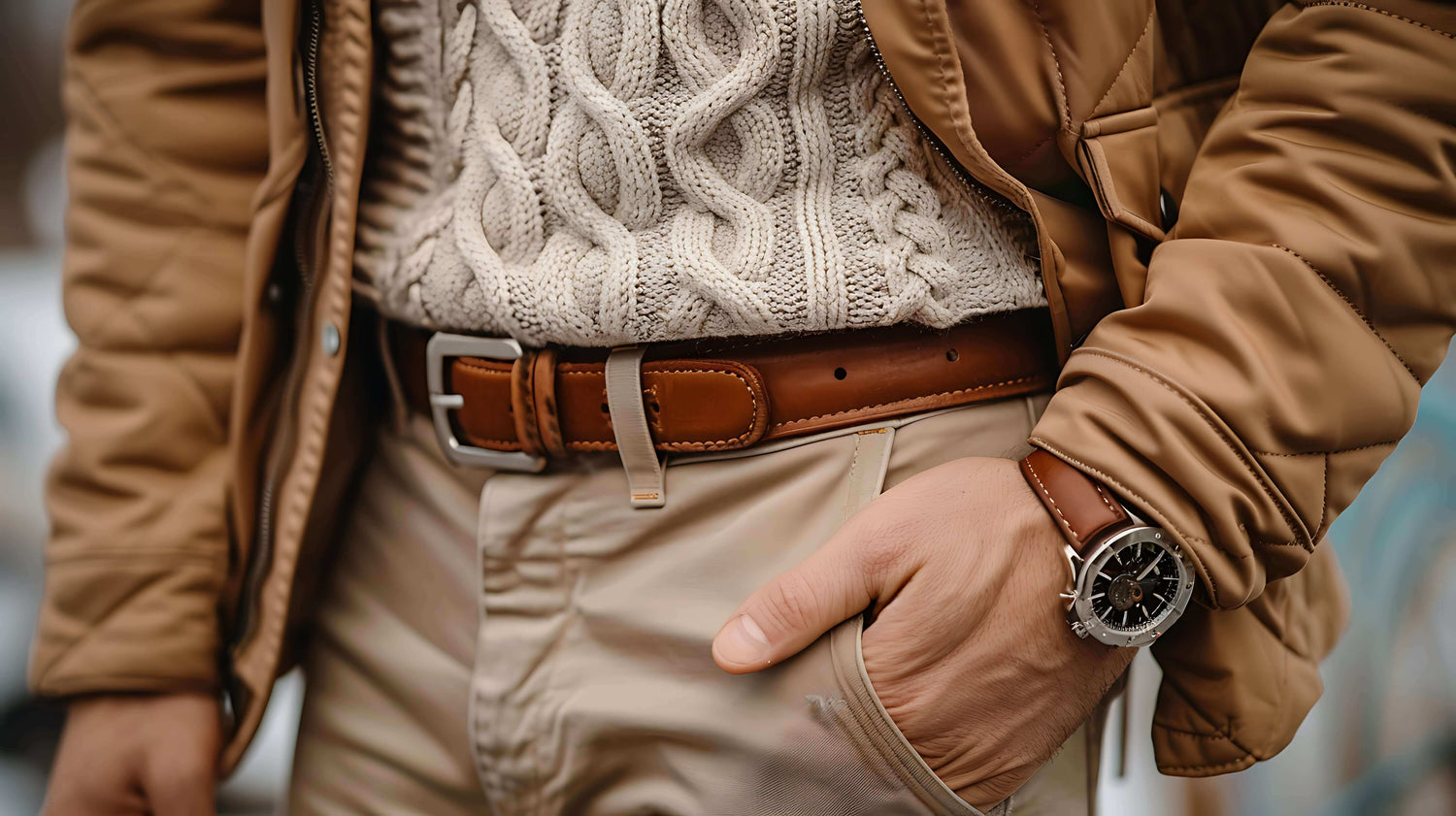


A belt that slips, cracks or loses its shape halfway through the year is a poor bargain, no matter how cheap it looked at checkout. If you're weighing up a ratchet belt against a traditional pin buckle, durability is usually the deciding factor. The fit is cleaner, the adjustment is sharper, and the comfort is hard to beat - but are ratchet belts durable enough for everyday wear?
In most cases, yes. A well-made ratchet belt is extremely durable, often more practical than a standard hole belt because it avoids one of the biggest wear points: stretched, torn holes. But that answer comes with a catch. Durability depends far less on the ratchet concept itself and far more on the quality of the strap, the strength of the track system, and how the buckle is built.
That is where the real difference lies between a belt that feels engineered for daily use and one that starts failing after a few months.
Are ratchet belts durable for daily wear?
A good ratchet belt is built for repetition. You tighten it in small increments, release it with a lever, and avoid the constant pressure that comes from forcing a prong through the same few holes over and over. That alone can help the strap keep its structure for longer.
Traditional belts often fail in familiar ways. The leather creases heavily around the most-used hole, the hole stretches out of shape, and the tongue of the buckle creates concentrated stress in one area. Ratchet belts spread that adjustment across a hidden track on the underside of the strap, which means the visible outer surface tends to stay cleaner and smarter with regular use.
For men wearing a belt five or six days a week - to the office, on the move, or across long hours of sitting and standing - that micro-adjustable fit is not just about comfort. It reduces strain. A belt that can be loosened or tightened by a few millimetres is less likely to be over-pulled, and that matters over time.
Still, not every ratchet belt deserves a reputation for longevity. Cheap versions can fail at the mechanism, delaminate at the strap, or lose grip in the buckle teeth. So the right question is not simply whether ratchet belts are durable. It is which ratchet belts are durable.
What actually makes a ratchet belt last
The strongest ratchet belts rely on three parts working together: the strap material, the adjustment track, and the buckle mechanism. If one is weak, the whole belt feels disposable.
Strap material matters more than the buckle trend
A ratchet system can only be as durable as the strap attached to it. If the belt uses poor bonded leather, flimsy split leather, or a synthetic layer that cracks quickly, the precision buckle will not save it.
Full grain and high-quality genuine leather straps generally wear best because they hold shape, resist premature cracking, and develop character rather than just looking tired. For buyers who want a smarter finish for work or formal dressing, leather remains the strongest all-round choice. Tactical and casual ratchet belts can also be very durable in reinforced nylon, especially where abrasion resistance matters more than polish.
What you are looking for is density, flexibility and clean finishing. A durable strap should feel solid without being stiff as a board. It should bend naturally, not crease sharply at first wear.
The hidden track is the heart of the system
The track on the underside of a ratchet belt is what replaces the old hole pattern. On a quality belt, that track is cleanly moulded, properly aligned, and designed to handle repeated locking without chipping or wearing down too quickly.
If the track is poorly cut or made from weak material, the buckle may begin to skip. That is when wearers start saying the belt "slips". In reality, the design is not the issue. The execution is.
A reliable track should deliver consistent clicks and a secure hold. It should not feel loose, vague or uneven when fastening.
Buckle strength separates premium from throwaway
The buckle takes more punishment than most people realise. It gets opened, closed, pressed against desks, twisted while sitting, and sometimes dropped. A durable ratchet buckle needs solid internal teeth, a dependable release lever, and a finish that can handle daily contact without looking battered too soon.
Heavier metal construction usually feels more secure than lightweight alloy copies. The mechanism should engage smoothly, not snag or grind. Good engineering is what gives ratchet belts their reputation for zero-slip support. Poor engineering is what undermines it.
Why ratchet belts can outlast hole belts
One of the clearest advantages of a ratchet belt is wear distribution. A traditional belt usually rotates between two or three holes. Those holes take all the force. Over time, the leather around them stretches, frays and distorts. Once that happens, the belt rarely looks sharp again.
Ratchet belts do not rely on that single pressure point. Because the sizing is micro-adjustable, wear is spread more evenly through the mechanism rather than concentrated on one visible part of the strap. That can help the belt maintain both performance and appearance for longer.
There is also the fit factor. Belts that are too tight or too loose wear out faster because they are constantly being forced into the wrong position. Ratchet belts allow a more exact fit throughout the day, especially after meals, during long commutes, or when waist size shifts slightly. Less forced tension often means less long-term damage.
For many men, that makes a ratchet belt feel less like a fashion novelty and more like a better-engineered everyday essential.
Where ratchet belts can wear out faster
There are trade-offs, and it is worth being straight about them.
A low-quality ratchet mechanism can fail sooner than a simple pin buckle because it has more moving parts. If the internal catch is weak, the release lever is flimsy, or the buckle is badly assembled, durability drops quickly. A classic buckle is mechanically simpler, so a poor ratchet belt may not age as gracefully as a decent traditional one.
Trimmable belts can also be mishandled. If the strap is cut badly or too short, the fit and hold can suffer. That is not a flaw in the belt itself, but it does affect lifespan.
Some very slim dress ratchet belts may prioritise a sleek silhouette over heavy-duty performance. They are ideal for tailoring and office wear, but not always the right choice for labour-intensive use. In the same way, a tactical ratchet belt built for utility may outlast a refined dress belt in rough conditions, but it will not replace it stylistically.
So yes, ratchet belts are durable - but the right belt depends on how you wear it.
How to tell if a ratchet belt is worth buying
You do not need to take a belt apart to judge its quality. A few details usually tell the story.
Start with the strap description. If the material is vague, that is a warning sign. Better belts are clear about whether they use genuine leather, premium leather or reinforced nylon, and they tend to explain how the belt is finished.
Then look at the buckle fit and function. A belt marketed around no-slip hold and micro-adjustment should feel precise, not gimmicky. If the design looks flimsy or over-styled at the expense of structure, it may not be built for repeat wear.
A useful sign is whether the brand treats belts as engineered products rather than generic accessories. At BeltBuy, for example, the focus is not just on appearance. It is on comfort, material quality, long-wear performance and a fit system that keeps working day after day.
Guarantees matter too. A retailer confident in its craftsmanship is usually more selective about what it sells.
How to make a ratchet belt last longer
Even a durable belt benefits from decent care. Leather ratchet belts should be kept dry, stored flat or gently rolled, and cleaned with the same restraint you would use for quality shoes or wallets. Soaking a leather strap or folding it sharply into drawers is an easy way to shorten its life.
It also helps to rotate belts rather than wearing one relentlessly every day. Giving the strap and buckle time to rest reduces constant stress and helps preserve shape.
Most importantly, use the release properly. Tugging the strap out without disengaging the mechanism can wear the system faster than normal use ever would. Ratchet belts are designed for convenience, but they still reward proper handling.
So, are ratchet belts durable?
If the strap is well made, the track is cleanly built, and the buckle has real strength behind it, a ratchet belt is absolutely durable enough for everyday wear. In many wardrobes, it is the smarter long-term choice because it delivers cleaner adjustment, less visible wear, and better all-day comfort than a traditional hole belt.
The weak point is never the idea of the ratchet belt. It is poor materials dressed up as convenience. Choose quality, and you get a belt that holds firmly, wears comfortably and keeps its shape through the demands of real daily use.
A good belt should do its job quietly, fit properly from morning to evening, and still look right when the rest of the outfit matters.