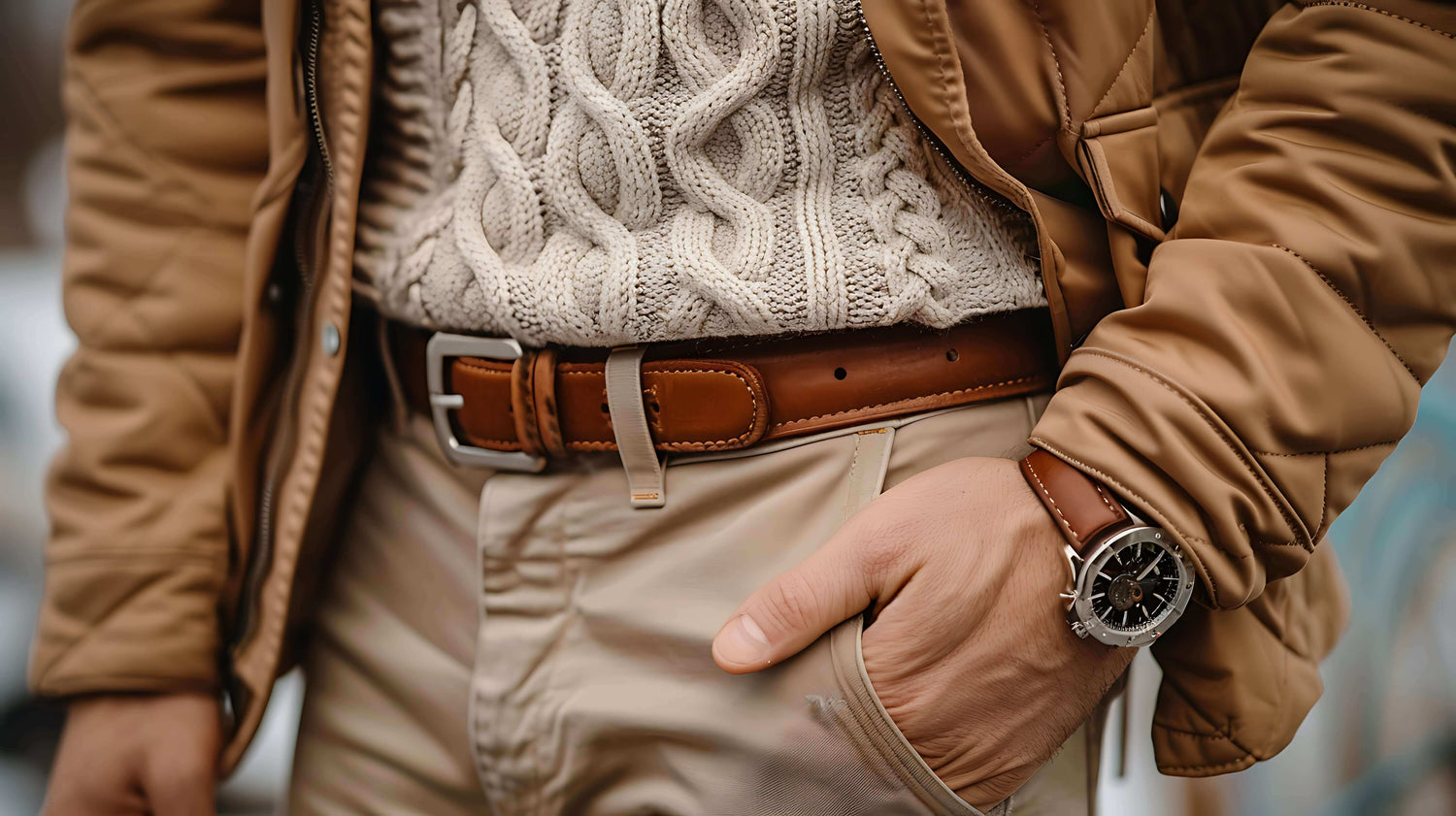


By 2 p.m., a bad belt tells on itself. You feel it when you lean into your desk, settle into the driver’s seat, or shift through another long meeting. If you’re shopping for the most comfortable belt for sitting all day, the answer is not just softer leather or a looser fit. Real comfort comes from how the belt adjusts, where it flexes, how the buckle sits, and whether the design works with your body instead of fighting it.
That matters more than most people realize. A belt can look sharp standing in the mirror and still feel miserable after six straight hours at a desk. Sitting changes the pressure points around your waist. Your midsection compresses, your waistband rises slightly, and a stiff buckle or fixed hole spacing can turn a polished outfit into an all-day annoyance.
What actually makes a belt comfortable when you sit
The first thing to understand is that comfort is mechanical. It is built into the structure of the belt. A belt that works for long hours in a chair needs controlled flexibility, precise adjustability, and a buckle profile that does not dig into your abdomen.
Traditional pin-hole belts can still be excellent, especially in premium leather, but they have one built-in limitation: adjustment jumps are fixed. If one hole feels too tight and the next feels too loose, you spend the day compromising. That trade-off gets worse when you are sitting for most of the day because even small changes in waist pressure become noticeable.
This is why ratchet belts and no-hole automatic belts have become such strong contenders for the most comfortable belt for sitting all day. Instead of locking you into wide spacing increments, they allow more precise micro-adjustment. You can tighten for a clean silhouette when you stand, then ease the fit slightly when you sit without sacrificing support or style.
Material matters too, but not in the simplistic way people assume. Extremely rigid leather can feel premium in the hand and still wear like armor at your desk. On the other hand, leather that is too soft can lose structure and start sagging. The sweet spot is full-grain or genuine leather with enough body to hold shape and enough flexibility to move naturally through the day.
The best belt styles for all-day sitting
If your day is built around office hours, commuting, travel, or extended time behind the wheel, a low-bulk ratchet belt is usually the strongest choice. It gives you a cleaner fit range, a more refined profile under tucked shirts, and easier on-the-fly adjustment. That last detail sounds small until you have worn one through a full workday. Comfort is often about small corrections, not one perfect setting.
A no-hole automatic belt delivers similar benefits. The appeal is simple: smooth adjustment, modern polish, and less pressure from being forced into a fixed hole pattern. For professionals who want comfort and class without giving up a tailored look, this style hits the balance well.
Classic leather pin belts still deserve a place in the conversation. If the leather is supple, the width is right for your pants, and the buckle is not oversized, a traditional belt can be very comfortable for sitting. But fit has to be dialed in more carefully. If you are between sizes or your waist fluctuates through the day, a fixed-hole design is less forgiving.
Tactical and nylon belts can also be comfortable, especially for travel, movement-heavy jobs, or casual wear. They tend to flex more and feel lighter. The trade-off is appearance. If you need a belt that works with dress pants, sport coats, or business-casual outfits, tactical styling may solve one problem while creating another.
Why buckle design matters more than people think
Most discomfort starts at the front. A bulky buckle presses when you bend forward, sit low in a chair, or spend hours at a desk. That pressure can make even a good strap feel wrong.
The most comfortable belts for sitting all day usually have a flatter buckle profile and a design that distributes tension smoothly across the waist. This is one reason slide and ratchet systems perform so well. They often avoid the concentrated pinch point you get from some traditional buckles.
Buckle size should also match your build and wardrobe. A large statement buckle may look great with denim or western-inspired styling, but it is rarely ideal for someone sitting through flights, commutes, or office days. For long seated wear, sleek wins.
Width, stiffness, and fit: where comfort gets won or lost
A belt that is too wide can bunch against your waistband when you sit. A belt that is too narrow may twist, shift, or feel less supportive. For most men wearing chinos, jeans, or dress-casual trousers, a standard everyday width is the safest comfort zone. It holds shape without becoming intrusive.
Stiffness is another balancing act. You want enough structure to keep your pants in place and preserve the line of your outfit. But a belt that resists every movement will feel harsher as the day goes on. The best everyday leather belts are engineered to flex just enough under pressure while still looking crisp.
Fit is where many shoppers go wrong. They buy for standing posture only. Then they sit, the waistband presses up, and the belt suddenly feels a half-size tighter. If you spend most of your day seated, your ideal fit should account for that. Micro-adjustable systems make this easy. With traditional belts, it takes more trial and error.
How to choose the most comfortable belt for sitting all day
Start with your use case. If you wear business-casual outfits five days a week and spend hours at a desk, choose a premium leather ratchet or no-hole automatic belt with a slim buckle. That combination gives you the best mix of polish, support, and pressure control.
If your wardrobe leans more classic and you prefer timeless styling, look for a genuine leather pin belt with a refined buckle and a strap that feels flexible right out of the box. Avoid anything overly thick, overly stiff, or aggressively heavy. A belt should feel substantial, not stubborn.
If you travel often, think about flexibility across different settings. You may start the morning in tailored pants, spend hours seated in transit, and end the day moving through meetings. In that case, adjustability becomes even more valuable. The ability to loosen slightly after a meal or during a long drive is not a luxury. It is the difference between a belt you wear and a belt you tolerate.
It is also worth considering your body type. Someone with a straighter build may be comfortable in a wider range of belt constructions. Someone whose waist compresses more when seated will usually benefit from finer adjustment and lower buckle bulk. There is no single answer for every body, which is why design details matter.
Signs your current belt is the problem
If you are constantly unfastening your belt in the car, at your desk, or after lunch, the issue may not be your waistband at all. It may be that your belt does not adapt well enough to real life.
Watch for pressure at the front buckle, a pinching sensation when seated, visible belt bulging under shirts, or a feeling that your belt is either too tight or too loose with no in-between. These are classic signs that the adjustment system is working against you.
Another red flag is when the belt looks worn out quickly at your most-used hole or starts creasing heavily in one spot. That usually means the belt is absorbing stress it was not designed to distribute well. Better construction and more precise adjustment tend to solve that problem.
Style still matters - maybe more than ever
Comfort should not force you into a compromise belt. The best options today are built for both performance and appearance. A well-made leather ratchet or slide belt can look just as sharp with office wear as a traditional dress belt, while giving you a noticeably better experience over a long seated day.
That is the real standard. Not just softness. Not just flexibility. The most comfortable belt is the one that keeps its shape, sharpens your outfit, and disappears when you sit because it is doing its job without demanding your attention.
At BeltBuy, that balance is exactly what a modern everyday belt should deliver: comfort and class, clean adjustment, and craftsmanship you can feel from the first wear.
If you spend more time sitting than standing, stop treating your belt like an afterthought. The right one should feel easy at 9 a.m., after lunch, and on the drive home too.