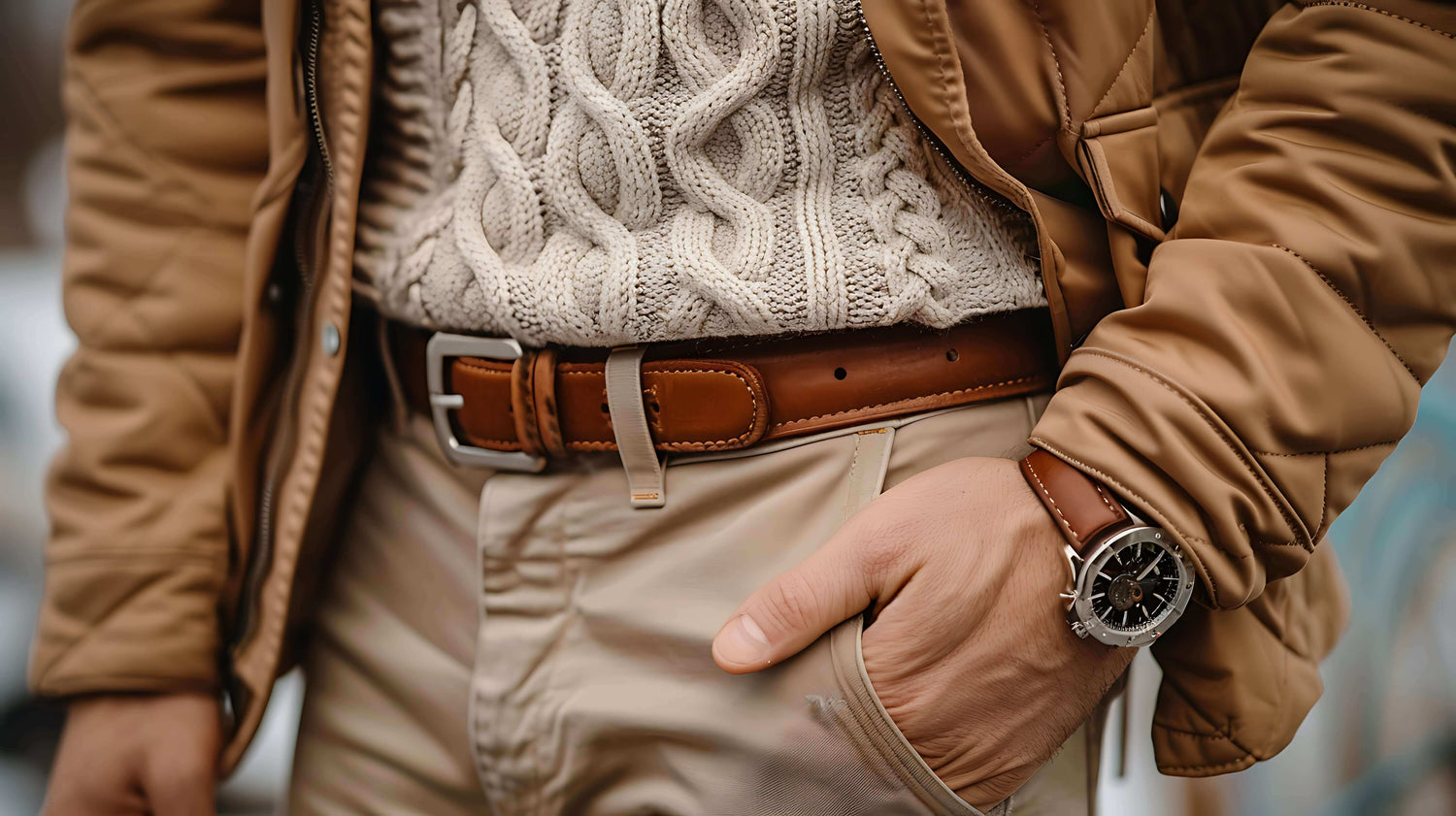


If your belt drawer is full of stiff leather, worn holes and buckles that looked good for about six months, men's belt trends 2026 offer a better direction. The shift is clear - men are buying fewer belts, expecting more from each one, and choosing styles that work harder across office wear, denim and everyday use.
That matters because a belt is one of the few accessories you actually feel all day. When the fit is off, the leather cracks, or the buckle slips, it stops being a finishing touch and becomes a nuisance. In 2026, the strongest trend is not flash for the sake of it. It is performance with style built in.
Men's belt trends 2026 are moving towards function-first style
For years, men often bought belts as an afterthought. Match the shoes, pick a width, move on. Now the market is more selective. Shoppers are asking sharper questions about comfort, adjustment, leather quality and whether a belt can handle daily wear without looking tired by season’s end.
That change is pushing a few clear winners to the front. Clean-profile leather belts are growing because they look smarter with less effort. Ratchet and slide belts continue to gain ground because micro-adjustment beats fixed holes for comfort. Tactical-inspired belts are also influencing mainstream casualwear, especially among men who want hardware that feels solid rather than decorative.
What ties these directions together is simple: belts are being judged like everyday equipment. If they look sharp and feel effortless, they stay. If they need constant adjusting or lose shape quickly, they do not.
Cleaner buckles, lower bulk, stronger finish
The oversized logo buckle is fading. In its place, 2026 leans towards cleaner metalwork with a tighter profile and a more refined finish. Brushed gunmetal, matte black and polished silver all remain relevant, but the shape is more controlled. Less show, more confidence.
This is good news for men who want one belt to cover more ground. A buckle with less visual noise moves easily from tailored trousers to dark denim without looking like it belongs to a different wardrobe. It also tends to age better. Loud buckles date quickly. Simpler hardware keeps its edge.
There is a trade-off, though. If your style is western, statement-led or built around visible accessories, a pared-back buckle can feel too safe. In that case, detail still works - just in a more deliberate way. Think textured metal, subtle engraving or a stronger frame shape rather than anything oversized or gimmicky.
Better fit is no longer a niche feature
One of the most important shifts in men's belt trends 2026 is the move away from one-size-near-enough thinking. Men want precision. Not because it sounds technical, but because a better fit changes how a belt feels over a full day.
This is where ratchet and slide belts keep winning attention. A no-hole system allows micro-adjustment in small increments, so the fit can respond to sitting, standing, commuting and long hours without that too-tight or too-loose compromise. For men whose waist size changes slightly through the week, or who simply want a cleaner line at the front, this is more than a convenience feature. It is a comfort upgrade.
Traditional pin-buckle leather belts still have a firm place, especially in formal and heritage styling. But they are under more pressure to justify themselves with thicker leather, cleaner edges and better finishing. If a standard belt offers only the old familiar format and nothing else, it will struggle against belts that fit more precisely and wear more comfortably.
Leather gets richer, not louder
Leather remains central in 2026, but the emphasis is shifting towards texture, finish and durability rather than high-shine novelty. Men are looking for leather that feels substantial in the hand, bends without going limp, and develops character instead of just looking worn out.
That means full grain and strong top grain leathers continue to lead, particularly in black, deep brown, tan and darker espresso tones. The colours are classic, but the finish matters more than before. Smooth leather with a slight natural grain, edge painting that does not flake, and stitching that supports rather than decorates are all signs of a belt made to stay in rotation.
Heavily artificial finishes are losing favour. They can look sharp on day one, but if the top layer starts to split or crease badly, the belt quickly feels disposable. Men are becoming more aware of that difference. A belt should soften with wear, not surrender to it.
For smarter wardrobes, black leather remains the safest anchor. For casual and business-casual use, richer browns are becoming more versatile, especially when paired with textured shoes, suede boots or dark indigo denim.
Casual belts are getting tougher and more refined
Casual belts in 2026 are not just dress belts made rougher. They have their own direction. Stronger webbing, tactical influences, firmer buckles and utility-led construction are all moving into the mainstream, but with cleaner styling than true military kit.
That means men want casual belts that can handle hard use without looking clumsy. A tactical belt with dependable support and secure fastening appeals because it solves a practical problem. It holds steady, copes with movement, and feels built rather than flimsy. Yet the belts gaining traction are the ones that balance that toughness with wearable design.
This matters if your wardrobe sits between jeans, work trousers, overshirts and trainers. In that space, a belt should look intentional without becoming the centre of attention. Utility is welcome. Overbuilt hardware that dominates the outfit is less useful unless that is your specific look.
Width and proportion matter more than trend cycles
A lot of style advice around belts gets lost in colour and buckle talk, but proportion is where many outfits are won or lost. In 2026, men are getting better at matching belt width to trouser style and body frame.
Slimmer belts work well with smarter trousers, lighter tailoring and cleaner silhouettes. Mid-width belts remain the all-rounder for denim, chinos and everyday office-casual dressing. Wider belts still have a place in workwear and more rugged casual wardrobes, especially when paired with heavier fabrics and boots.
The key is not following one width because it is fashionable. It is choosing a belt that looks anchored to the outfit. A narrow belt on heavy jeans can feel undersized. A thick workwear belt on dress trousers can look blunt. The strongest style in 2026 is balance.
One-belt wardrobes are out. Smarter rotation is in.
Men are becoming less interested in owning a pile of cheap belts that all do a mediocre job. The smarter approach is a tighter rotation with clear roles. One sharp black belt for formal or office wear, one rich brown leather belt for versatile smart-casual use, and one casual or tactical option for daily comfort covers most wardrobes far better than five random belts bought in a rush.
This trend fits the way people actually dress. Most men do not need a huge belt collection. They need a few dependable choices that hold shape, feel good and make getting dressed easier. That is why quality is becoming part of the trend conversation. A belt that lasts is not just better value. It also looks better because the materials, fit and finish stay consistent over time.
At BeltBuy, that is exactly where the strongest demand is heading - belts that earn daily wear rather than simply fill a category slot.
How to buy into men's belt trends 2026 without wasting money
The easiest mistake is chasing trend language instead of checking how the belt performs. Start with your real wardrobe. If you wear tailored trousers most days, put your money into refined leather and a lower-profile buckle. If your week is split between commuting, casual dressing and long hours on your feet, a ratchet belt may give you more day-to-day value than another fixed-hole leather style.
Pay attention to the details that affect lifespan. Good leather should feel dense, not cardboard-stiff. Buckles should close securely without wobble. Edges should look finished and even. If the belt is trimmable or designed for micro-adjustment, that is a genuine practical advantage rather than a novelty feature.
It also helps to think seasonally, but not too literally. You do not need separate belts for every month. You do need tones and textures that sit naturally with heavier winter layers and lighter spring clothing. Matte black, deep brown and versatile tan remain strong because they move across those shifts without fuss.
The best belts of 2026 are not trying too hard. They fit properly, wear comfortably and look sharper the longer they stay in your wardrobe. That is the kind of trend worth backing.