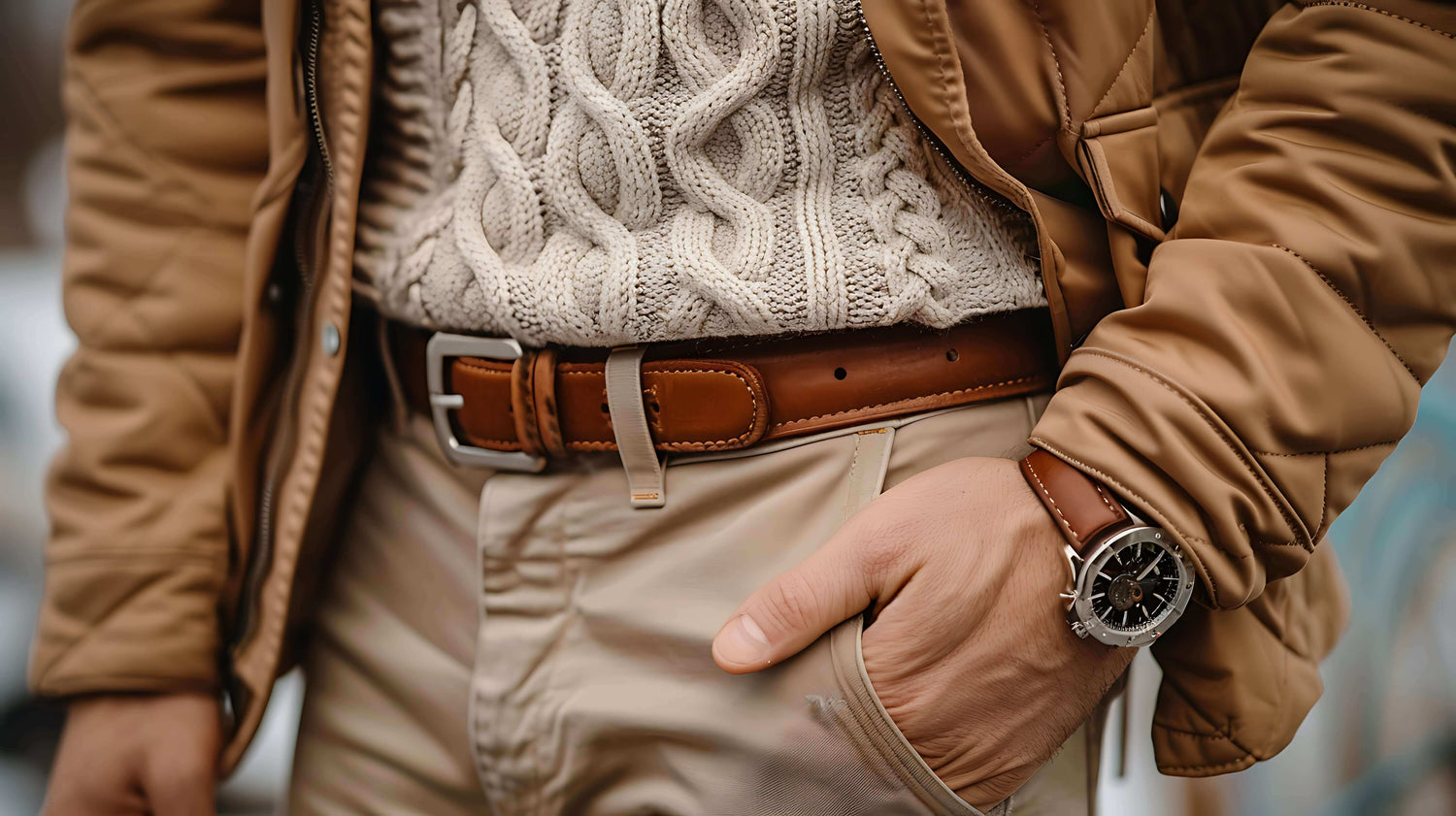


A belt can look sharp on day one and still be the wrong buy by week three. The usual problem is not the buckle or the colour - it is the material. This men's belt materials guide is built to help you choose a belt that feels right at the waist, holds its shape under daily use, and actually suits how you dress.
Some materials are all about polish. Others are built for flex, movement and hard wear. The trick is not chasing a single “best” option. It is matching the material to the job.
Men's belt materials guide: what really matters
When most men compare belts, they start with appearance. That makes sense, but it only tells half the story. The material affects how the belt bends, how quickly it creases, how it copes with weight in the waistband, and whether it still feels comfortable after ten hours of sitting, walking and standing.
A good belt should do three things well. It should support your trousers without slipping, stay comfortable through the day, and keep its finish without looking tired too quickly. Different materials handle those demands very differently.
If you wear one belt for the office, dinner and weekends, leather often wins because it balances structure with style. If your belt takes more abuse - outdoor work, travel, long driving days, casual wear - nylon or canvas can be the smarter choice. If you want convenience above all, the strap material matters just as much as the buckle system, especially with ratchet and slide belts.
Leather belts: the benchmark for everyday style
Leather remains the standard for a reason. A well-made leather belt has weight, texture and presence. It sits neatly with tailored trousers, works with chinos, and still looks right with dark denim. It also tends to mould to the wearer over time, which improves comfort when the leather quality is strong enough.
That said, “leather” is not one single thing. The grade and finish make a real difference.
Full grain leather
Full grain leather is the toughest and most characterful option. It keeps the outermost layer of the hide, so you get natural grain, stronger fibres and better long-term durability. It usually feels firmer at first, but that is part of the appeal. Over time it softens without losing its backbone.
For men who want one dependable belt for regular wear, full grain is often the best investment. It handles age well and develops a richer surface rather than simply wearing out. The trade-off is price. Better leather costs more, and it can take a little longer to break in.
Top grain leather
Top grain leather is slightly more processed. The surface is sanded and refined for a cleaner, more uniform finish. It still offers good durability, but it usually feels smoother and a bit more polished straight away.
This makes it a strong option for smart office wear or dress belts where consistency matters. If you prefer a sleeker look over raw character, top grain is often the better fit.
Genuine leather
Genuine leather sounds premium, but the term can be misleading. It is real leather, yet it generally sits lower on the quality ladder than full grain or top grain. It can still work well for lighter use or budget-conscious buying, but it tends to crease and tire more quickly.
That does not mean every genuine leather belt is poor. Construction still matters. A well-cut genuine leather strap with a solid buckle can outperform a badly made belt with a better label. Still, if durability is the priority, moving up a grade usually pays off.
Bonded leather
Bonded leather is made from leather fibres and scraps combined with adhesives. It is the least durable leather-based option and usually the first to crack, peel or delaminate under heavy use. It may look acceptable when new, but it rarely gives the long wear most buyers want.
If you are buying for regular use, this is the material to approach carefully.
Ratchet belt straps: why the backing matters
Ratchet belts and slide belts have become popular for good reason. The micro-adjustable fit is more precise, more comfortable and far easier to fine-tune than fixed holes. But the strap material still decides whether that clever fit system feels premium or flimsy.
Many ratchet belts use leather on the outside with a reinforced backing inside. That construction helps the belt keep a neat profile while supporting the track system. If the leather is too thin or the backing too stiff, the belt can feel awkward. If the balance is right, you get smooth adjustment, strong hold and all-day comfort.
For men whose waist size shifts during the day, or who simply prefer a cleaner fit, this material-plus-mechanism combination is hard to beat. At BeltBuy, this is exactly why ratchet styles appeal to buyers who want comfort without sacrificing a sharp finish.
Nylon belts: practical, light and hard-wearing
Nylon belts are built for function first. They are light, strong and resistant to moisture, which makes them a reliable choice for travel, outdoor wear, tactical use and casual outfits. They also tend to dry quickly and cope better than leather in wet or dirty conditions.
Comfort is a major plus here. A good nylon belt flexes naturally and feels less rigid around the waist, especially if you move a lot through the day. It is also less likely to mark or scuff in the way polished leather can.
The trade-off is style range. Nylon looks intentionally casual. Some tactical designs lean heavily into utility, which is exactly the point, but they will not pair well with formal trousers or a dressed-up shirt. If your wardrobe is mostly denim, cargos and workwear, nylon can be ideal. If you need one belt for smarter settings, it is rarely the only belt you should own.
Canvas belts: easy-going and casual
Canvas sits close to nylon in use, but the feel is different. It tends to look softer, more relaxed and a bit more textured. That makes canvas belts a natural match for laid-back outfits, summer dressing and everyday casual wear.
They are comfortable and often very affordable, but they are not usually the longest-lasting choice for heavy daily use. Canvas can fray, stretch or lose its crispness over time, particularly if the weave is loose or the hardware is basic.
For occasional casual wear, that may not matter. For men who expect one belt to do everything, canvas can feel underpowered.
Synthetic and faux leather: appearance first, lifespan second
Synthetic materials can imitate leather from a distance, and in some fashion-led belts that is enough. They are often cheaper, available in a wide range of finishes, and easy to wipe clean.
The issue is wear. Many synthetic belts look tidy at first but struggle with repeated bending. Cracking, peeling and edge wear are common, especially at stress points near the buckle and the most-used notch area. If your priority is a low upfront cost or a short-term styling piece, synthetic can do the job. If you care about long wear and comfort, real leather usually justifies the extra spend.
How to choose the right belt material for your routine
The best material depends on how you actually use your belt, not how you imagine using it. For office wear and smarter outfits, full grain or top grain leather gives the most dependable mix of polish and strength. For all-day comfort with better fit control, a leather ratchet belt makes strong sense.
If your belt goes through rough conditions, nylon is usually the practical winner. It handles movement, moisture and abrasion better, and it does not ask for much maintenance. For easy casual dressing, canvas works well, though it is better as a secondary belt than your only one.
This is also where buckle design matters. Heavier materials need buckles that feel proportionate. A sturdy leather strap paired with weak hardware undermines the whole belt. The reverse is true as well - a strong buckle on a poor strap will not save the belt for long.
Care affects performance more than most buyers think
Even the best belt material will wear badly if treated poorly. Leather benefits from dry storage, occasional conditioning and a bit of breathing room between wears. Folding it tightly or leaving it in damp conditions shortens its life. Nylon and canvas are lower maintenance, but they still last longer if dried properly after exposure to rain and grime.
Another overlooked point is rotation. If you wear the same belt every single day, it takes all the strain. Alternating between two good belts often gives better long-term value than grinding one into the ground.
What to avoid when comparing materials
Be wary of vague product descriptions. If a listing simply says “leather” without explaining the grade, that tells you less than it should. If the price seems unusually low for a supposedly premium belt, there is usually a reason.
Look for material clarity, decent strap thickness, solid buckle construction and a finish that matches the purpose. A dress belt should feel refined, not cardboard-stiff. A tactical belt should feel secure, not bulky for the sake of it. Good materials are not just about toughness. They should make the belt easier to wear.
A better belt starts with a better material choice. Pick the one that matches your day, your wardrobe and the level of wear you expect, and you will feel the difference every time you fasten it.