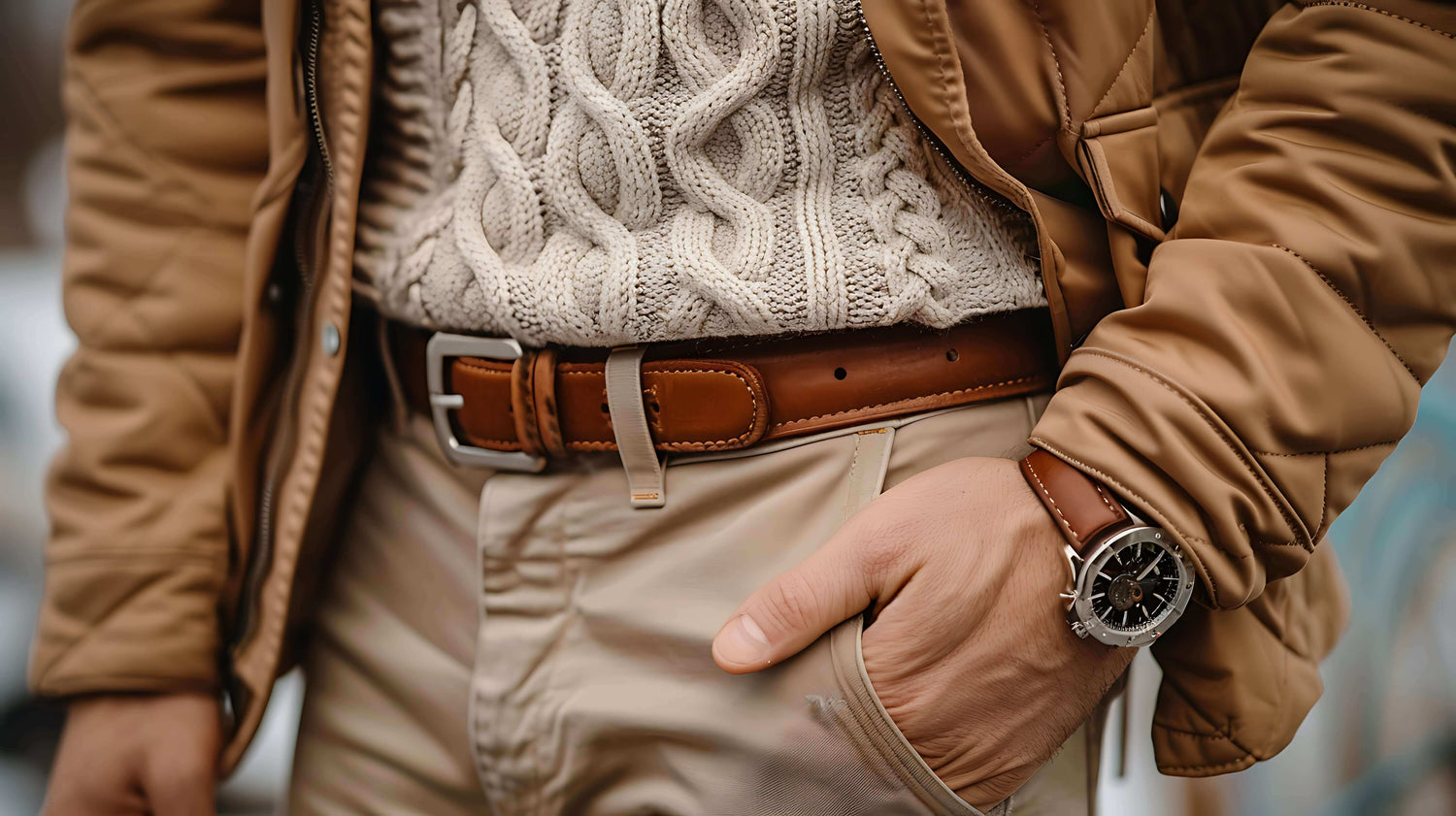


A good leather belt usually shows its age in the same three places - the curve near the buckle, the holes or track, and the finish along the edges. Most of that wear comes from use, but poor storage speeds it up. If you want to know how to store leather belts so they keep their shape, stay supple and look sharp for longer, the answer is simpler than most people think: avoid pressure, avoid damp, and give the leather room to rest.
Leather is tough, but it is not indestructible. It responds to tension, humidity, heat and friction. Store a belt badly for months - folded too tightly in a drawer, crushed under denim, or left near a radiator - and the result is often a permanent bend, surface cracks or a buckle that scuffs the leather beside it. Store it properly, and even an everyday belt can stay smart and comfortable for years.
Why belt storage matters more than people think
A leather belt is not just a strip of material with a buckle on the end. It is a shaped, finished accessory designed to flex around the waist and then recover. Good leather does that brilliantly, but only if it is not constantly forced into awkward angles when off your body.
The common mistake is treating belts like socks or ties - something to stuff into any spare corner. That works for a while, especially with cheaper belts, but premium leather holds memory. If it spends long periods sharply folded or twisted, that memory starts to show. The belt may no longer lie flat, the tongue area can become overstressed, and dress belts in particular start looking tired well before their time.
There is also the hardware to consider. Buckles, clasps and ratchet mechanisms can rub against the leather finish if belts are piled together carelessly. A belt built for daily wear should feel dependable every time you reach for it. Storage plays a bigger part in that than most wardrobes get credit for.
How to store leather belts day to day
For most people, the best method is hanging. If you wear several belts through the week, hanging them keeps them visible, easy to grab and less likely to develop deep curves.
A dedicated belt rack is ideal, but it is not essential. A wardrobe hook, a rail organiser, or even a sturdy hanger with rounded hooks can work well. The key is to let each belt hang naturally from the buckle or a wide loop without being sharply creased. Gravity helps the leather stay straight, which is exactly what you want between wears.
If hanging is not practical, rolling is the next best option. Roll the belt loosely from the buckle end or strap end, depending on the design, and never force a tight coil. The roll should be relaxed, not compressed. Then place it in a drawer or storage box where it will not be squashed by heavier items.
What you should avoid is folding a belt in half and stuffing it into a drawer. That hard centre bend creates stress in one spot, and over time the leather often tells on you.
Hanging leather belts
Hanging suits most full-grain and genuine leather belts, especially everyday men’s belts, smart office styles and longer straps that are worn often. It helps maintain a clean line and keeps the buckle from pressing into the leather body.
If your belt has a weightier buckle, make sure the hook or rack is smooth. Rough metal edges can scratch the finish near the buckle end. Spacing matters too. If belts are crammed together, they rub and twist, which defeats the point of hanging them neatly in the first place.
Rolling leather belts
Rolling works well for travel, seasonal storage and wardrobes with limited hanging space. It is also a sensible option for softer leather belts that flex easily without fighting the shape.
The trick is not to roll too tightly. Tight rolling can create a strong curl that takes time to relax when you wear the belt again. A loose, natural coil protects the strap while taking up less room than hanging.
The best place to keep them
Cool, dry and shaded beats warm and convenient. Leather does not enjoy heat sources, steamy bathrooms or windowsills that get direct sun. If you store belts in those conditions, the natural oils in the leather can dry out more quickly, leaving the surface dull and less flexible.
A bedroom wardrobe or chest of drawers is usually ideal. If your home tends to get humid, avoid sealed plastic containers for long-term storage. Leather needs a little airflow. A fabric-lined drawer, open organiser or breathable storage box is far better than trapping belts where moisture can build up.
This matters even more if you rotate belts seasonally. A belt you do not wear for three months still needs the right environment. Long-term neglect is often what causes a belt to emerge looking warped, dry or oddly stiff.
How to store different types of leather belts
Not all belts behave the same way. A structured formal belt and a casual distressed leather belt may both be leather, but they do not always need identical treatment.
Smooth dress belts benefit from careful hanging or loose rolling because the cleaner finish tends to show marks more easily. If the surface is polished, keep it away from buckles or metal accessories that might scratch it.
Thicker casual belts and workwear styles can handle a bit more structure, but they still should not be sharply bent. Their weight means they need proper support if hung, otherwise the area near the buckle can become overstrained.
Ratchet and slide belts deserve a little extra care around the track system. Keep them free from lint, avoid crushing the buckle against the strap, and store them so the mechanism is not under pressure. Tactical belts and utility styles are often more forgiving, but if they include reinforced sections or specialist hardware, it still pays to keep them flat or hanging cleanly.
Women’s statement belts, especially rhinestone or embellished styles, need separation from other accessories. Stones, studs and decorative buckles can snag on leather or fabric if tossed into a shared drawer. These are best stored individually or with soft dividers.
Clean before you put them away
Storage starts before the belt goes back in the wardrobe. If you hang up a belt with sweat, dust or surface grime still on it, that build-up sits on the leather day after day.
After wearing, give the belt a quick wipe with a soft dry or slightly damp cloth, depending on the finish. If it has been through a particularly hot day or picked up marks, clean it properly before storing it. Let it dry naturally before it goes back on a hook or into a drawer. Never put damp leather straight into enclosed storage.
Conditioning is not something you need to do constantly, but occasional care helps. If the leather starts to feel dry, a suitable leather conditioner can restore suppleness. Just do not overdo it. Too much product can leave residue and soften the belt more than you want, especially on structured dress styles.
Mistakes that shorten a belt's life
The biggest storage mistake is pressure. Heavy clothes thrown on top of belts, overpacked drawers and cramped wardrobe corners all create unnecessary stress. Leather can take daily wear, but constant compression off the body is another matter.
The second is heat. Radiators, airing cupboards and sunny shelves may seem harmless, yet they can dry leather out surprisingly quickly. Once a belt loses too much moisture, the finish can become brittle and the edges may start to crack.
The third is neglecting the buckle. Metal parts can tarnish, scratch surrounding leather or create dents if the belt is stored carelessly. A little space between belts goes a long way.
Long-term storage without damage
If you are putting a leather belt away for months, clean it first, condition it lightly if needed, and store it in a breathable dust bag or soft cotton pillowcase. Keep it hanging or loosely rolled in a box where it will not be crushed.
Avoid plastic wrap or airtight tubs for long periods, especially in fluctuating temperatures. They can trap moisture and create a stale environment that leather does not love. Natural materials and a stable room temperature are the safer choice.
For collectors or anyone with several premium belts, a simple organisation system makes a real difference. Sort by use - work, casual, occasion, utility - and give each belt its own place. That not only protects the leather but makes getting dressed quicker. A belt should feel ready when you are.
At BeltBuy, that is the whole point of a well-made belt: dependable comfort, strong finish, and style that holds up under real life. Storage is part of that performance.
A leather belt earns its keep every time you wear it, so give it the same respect when it comes off. Hang it or roll it gently, keep it cool and dry, and let the leather rest in its natural shape - your belt will look better, fit better and last far longer because of it.