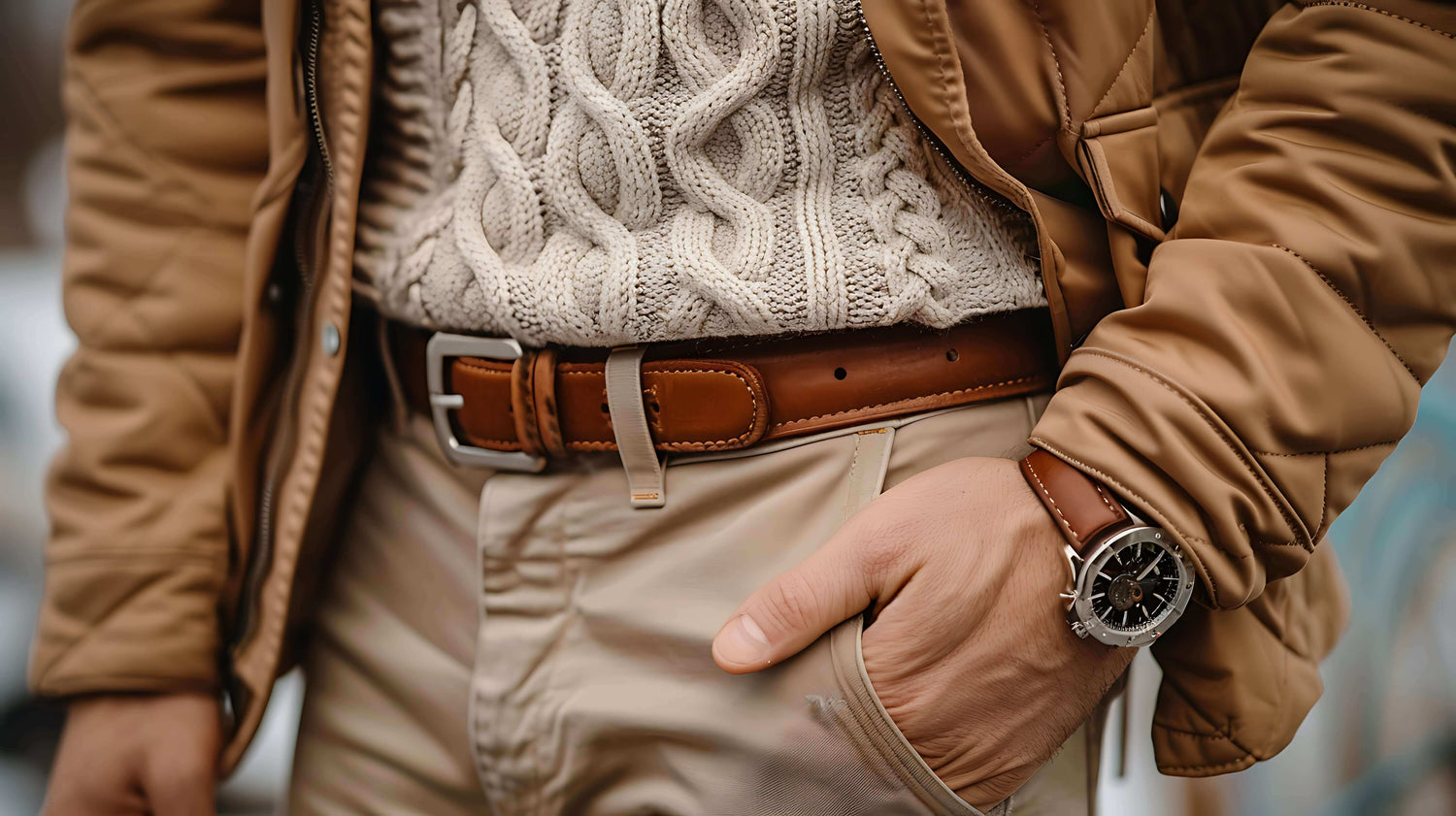


That moment when a new belt looks spot on but feels like it was cut from a plank is frustrating. If you are wondering how to soften a stiff belt without cracking the leather, ruining the finish or stretching it out of shape, the good news is that most belts respond well to a careful break-in. The trick is knowing what the belt is made from and resisting the urge to force it.
A good belt should feel supportive, not hostile. Stiffness is common in thicker full-grain and genuine leather belts, especially styles built for daily wear, office dressing or heavier-duty use. That firmness is often a sign of substance and durability, but comfort matters just as much. A belt needs to hold its shape, sit cleanly through the loops and still move with you through a full day.
Why a belt feels stiff in the first place
Most stiff belts are new leather belts with dense fibres, firm tanning and a finish designed to protect the surface. That is not necessarily a flaw. In many cases, it means the belt has been built to last. Heavier leather starts firmer because it has more structure, and that structure is exactly what stops a belt from sagging, curling or looking tired after a few months.
The problem comes when that structure translates into pinching at the waist, resistance when threading it through loops, or a belt tongue that feels awkward to fasten. Some belts also sit in storage for a while before wear, which can leave the leather feeling less flexible than it should. Synthetic belts can go stiff too, but they do not soften in quite the same way and usually need a gentler approach.
How to soften a stiff belt without damaging it
The safest method is gradual conditioning followed by regular wear. Start by laying the belt flat and checking for any care advice from the maker. If it is leather, wipe it with a dry or slightly damp soft cloth to remove any dust. You do not want to rub conditioner into surface grime.
Next, apply a small amount of leather conditioner to a clean cloth rather than directly onto the belt. Work it in with light, even pressure across both sides, paying a bit more attention to the strap bend and the area around the holes if it is a traditional belt. Avoid soaking it. Too much product can darken the leather, weaken the fibres or leave the belt greasy.
Once conditioned, leave the belt to rest naturally for several hours. The leather needs time to absorb the treatment. After that, gently flex the strap by hand. You are not trying to fold it sharply. Just bend it back and forth in broad, smooth motions to loosen the fibres. Think controlled movement, not brute force.
Then wear it. Body heat and normal movement do more for a belt than most shortcuts. A few days of use often softens the strap where it matters most - around the waist, at the fastening point and through the belt loops.
The best products to use
A proper leather conditioner is usually the best option for real leather belts. Leather cream or balm can also work well if it is designed for finished leather. If you have a smooth dress belt, use something light and non-waxy. If the belt is thicker, more rugged or more workwear-led, a richer conditioner may help, but still use it sparingly.
Avoid household oils. Olive oil, coconut oil and similar internet favourites can stain leather, go rancid or soften it unevenly. Petroleum-heavy products are also best avoided unless the belt maker specifically recommends them. A belt is not a pair of old boots. It sits against clothing and often shows prominently, so any blotching or residue is hard to ignore.
What not to do when softening a belt
People often damage a good belt by trying to rush the process. Heat is the biggest mistake. Hairdryers, radiators and direct sunlight can dry the leather out while making it feel temporarily more pliable. That may seem like progress, but it often leads to cracking, surface dullness or a warped shape later on.
Water is another risky shortcut. Soaking a belt or heavily wetting it can distort the strap, weaken the finish and leave marks once it dries. A tiny amount of moisture on a cloth for cleaning is fine. Saturating the belt is not.
Twisting the strap aggressively is also a bad idea. A belt is built to bend around the waist, not to be wrung out like a tea towel. Overhandling can damage the structure that gives it a clean line and reliable hold.
Can you roll a belt to soften it?
Gently rolling a leather belt can help a little, but only after conditioning and only with care. Roll it loosely from one end, hold it for a moment, then unroll it and repeat in the other direction. This can encourage flexibility without creating hard creases. Tight rolling, especially on dry leather, is where problems start.
If the belt is thick and premium, expect some resistance. That is normal. A well-made strap should soften into comfort while keeping enough backbone to look sharp.
How to soften different belt types
Not every belt should be treated the same way. Full-grain and genuine leather belts usually respond well to conditioner and wear. Suede belts need suede-safe products only, and many patent or heavily coated fashion belts should not be conditioned at all because the finish sits on top of the material.
Ratchet belts and slide belts need a little more care around the backing and buckle mechanism. You can soften the strap itself if it is leather, but keep creams and balms away from the track system on the reverse. Product build-up there can affect performance. These belts are prized for smooth micro-adjustment, so you do not want to sacrifice function for softness.
Tactical belts are a different category again. Many are made from webbing, reinforced synthetics or mixed materials. If one feels stiff, break it in through wear rather than leather treatment. A fabric-safe cleaner and simple flexing are usually enough. The same goes for belts built more for utility than polish.
How long does it take to break in a stiff belt?
It depends on the material, thickness and construction. A standard leather dress belt may start feeling better after two or three wears. A heavier belt made with thick leather can take a week or two of regular use to relax properly. That is not a sign that anything is wrong. In many cases, slower softening means the leather has the density to age well.
If a belt still feels uncomfortably rigid after conditioning and a fair break-in period, the issue may not be stiffness alone. It could be the wrong size, poor hole placement, a buckle that sits awkwardly, or a strap width that does not suit your trousers. Comfort comes from the whole design, not just the softness of the leather.
When a stiff belt is worth keeping
A belt that starts firm but settles beautifully is often a better long-term buy than one that feels overly soft from day one. Soft leather can be comfortable immediately, but if it lacks structure, it may stretch too quickly, curl at the edges or lose its shape. The best belts strike a balance - enough firmness to support the fit, enough flexibility to wear comfortably.
That matters even more if you wear a belt daily for work, commuting or long hours on your feet. A belt should not just complete an outfit. It should perform. Strong leather, clean finishing and a well-designed fastening system all play into that.
If you are shopping for a replacement, it makes sense to look for belts described in terms of leather quality, construction and wear comfort rather than just appearance. At BeltBuy, that balance between durability and all-day comfort sits at the heart of the range, especially in everyday leather and ratchet styles designed to hold firmly without feeling unforgiving.
A quick check before you start
Before you soften any belt, make sure it is actually stiff and not simply undersized. If you have to force the fastening or the strap pulls harshly across the waist, no amount of conditioner will solve the real problem. The right belt should fasten cleanly, sit securely and feel better with wear, not like a daily battle.
A quality belt does not need dramatic treatment. It needs a measured hand, the right care product and a little patience. Give the leather time to loosen naturally, and it will usually reward you with a fit that feels more personal every time you wear it.
When a belt starts to mould to your movement rather than fight it, that is when it earns its place in your wardrobe.