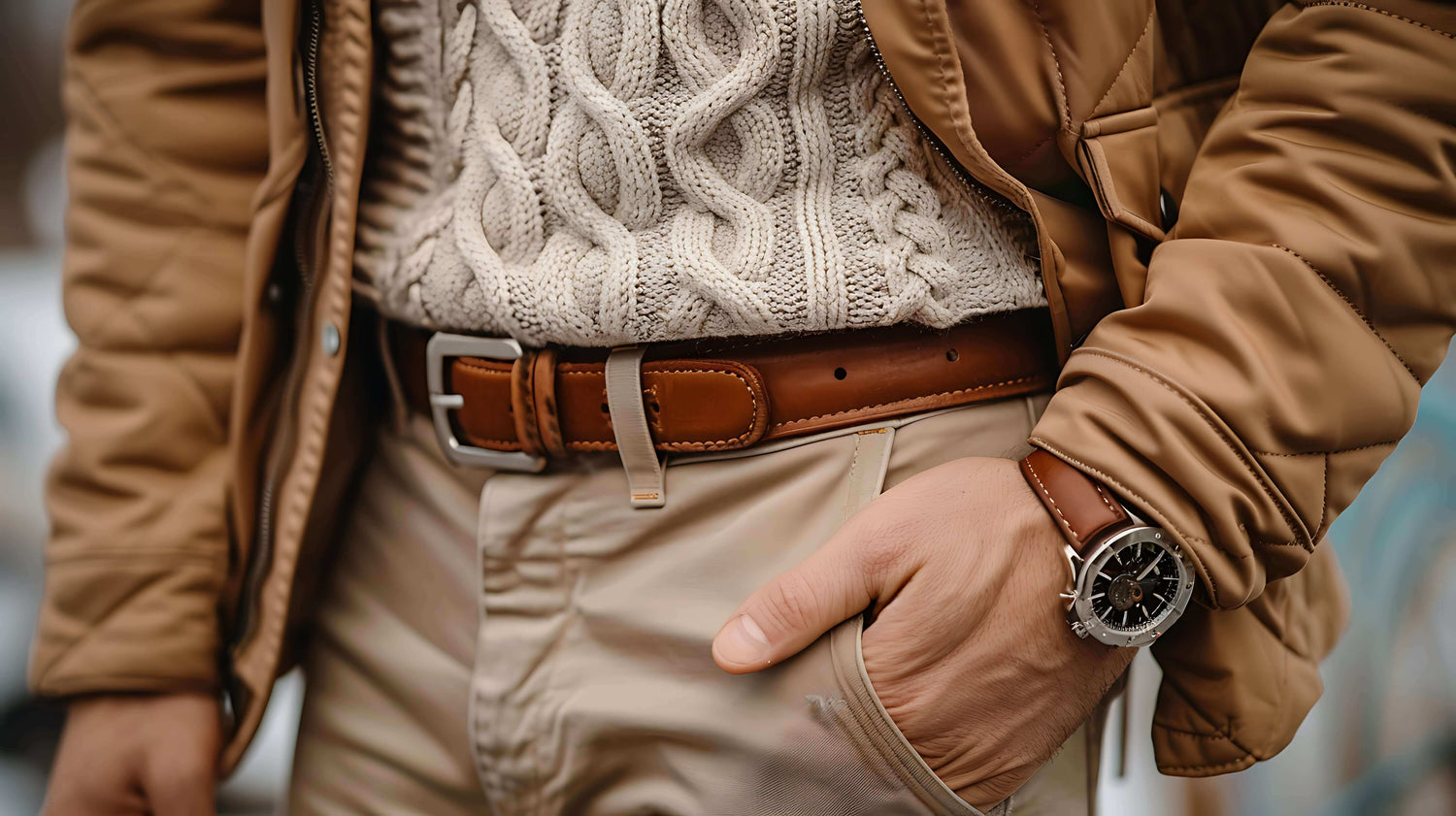


A stiff new leather belt can look flawless and still feel like it belongs on a store display instead of your waist. If you're wondering how to break in leather belt styles without ruining the shape, the answer is simple: use it, soften it gradually, and avoid shortcuts that trade comfort for damage.
A quality leather belt is built to hold structure. That firmness is part of what gives it clean lines, reliable support, and a polished look with jeans, chinos, or dress pants. But premium leather also needs a little time to learn your movement. The goal is not to make the belt floppy. The goal is to help it flex naturally where your body bends, sits, and walks.
Why a leather belt feels stiff at first
Real leather is a performance material. It starts with natural density, then gains even more structure from tanning, finishing, edge treatment, and reinforcement. A new belt often feels firmer near the buckle end and around the adjustment holes because those areas take the most stress.
That initial stiffness is usually a good sign, especially with full-grain or genuine leather belts designed for everyday wear. A belt with substance tends to age better, hold its shape longer, and resist the sagging, curling, and weak spots you see in lower-grade options. Breaking it in is about controlled softening, not forcing it past its design.
How to break in a leather belt without damaging it
The safest method is also the most effective: wear it consistently for short stretches at first. Put it on for a few hours, let the leather warm with body heat, and allow it to flex through normal movement. After a few wears, the belt starts to relax in the exact places it should.
If the belt feels uncomfortably rigid on day one, gently roll it in your hands. Do not fold it sharply in half or twist it hard. Instead, bend it along its natural curve from end to end with light pressure. Think of it as encouraging flexibility, not trying to overpower the leather.
Another smart move is to fasten the belt at your usual hole and leave it around a pair of pants overnight. This helps the strap settle into a wearable curve without adding stress. It is especially useful for dress belts and structured casual belts that need a little shaping before they feel natural.
What to use to soften leather - and what to skip
A small amount of leather conditioner can help, but only if the belt truly needs it. Dry leather benefits from conditioning. A brand-new belt with a finished surface may not need any product at all. Too much conditioner too soon can make the strap overly soft, darken the color, or weaken the crisp profile that makes a premium belt look sharp.
If you use conditioner, apply a very light amount with a soft cloth and test a hidden section first. Let it absorb fully, then buff off any residue. One light treatment is usually enough for break-in. More is not better.
Skip household hacks like soaking the belt in water, blasting it with a hair dryer, or rubbing in oils not made for leather. Water can warp the structure. Excessive heat can dry out the fibers and lead to cracking. Random oils can stain the finish and leave the belt greasy or uneven. A leather belt should age with character, not with damage.
How long does it take to break in a leather belt?
Most leather belts start feeling better after three to seven wears. Heavier, thicker belts can take longer, especially if they are built for work, travel, or daily carry. Slimmer fashion belts and softer leather styles usually break in faster.
It also depends on how you wear it. If you rotate several belts during the week, break-in takes longer simply because the leather gets less time on the body. If you wear one belt daily, you may notice a real difference in just a few days.
There is a trade-off here. Fast softening is not always a win. A belt that breaks in too quickly can also lose structure too quickly. The best leather belts get more comfortable while still looking clean and holding their line.
How to know you're doing it right
A properly broken-in leather belt feels easier to fasten, curves naturally around your waist, and flexes when you sit without digging in. It should still look refined. The edges should stay neat, the holes should remain clean, and the buckle area should not look stretched or distorted.
You may also see the leather develop slight creasing where it bends most. That is normal. Good leather records wear in a controlled, attractive way. Deep cracks, severe rippling, or an uneven surface are not part of healthy break-in. Those signs usually point to too much force, too much moisture, or poor material quality.
Common mistakes that ruin a new belt
The biggest mistake is trying to speed everything up. Leather responds best to steady wear and light handling. Aggressive bending can create weak points before the belt has a chance to shape naturally.
Another mistake is wearing the belt too tight during break-in. A belt pulled harder than necessary puts extra strain on the holes, the stitching, and the area near the buckle tongue. That can leave permanent stretching or cause the belt to break in unevenly. Aim for secure, not restrictive.
Storage matters too. If you leave a new leather belt crumpled in a drawer or hanging in a humid closet, you are not giving the material much of a chance to settle well. Store it flat or loosely rolled in a dry, room-temperature space. Good habits off the body support better performance on the body.
Does every leather belt break in the same way?
Not at all. A casual full-grain belt with noticeable thickness will usually need more time than a sleek dress belt. A lined belt may hold structure longer. A softer fashion belt may feel comfortable sooner but show wear faster. Even the finish matters. Smooth polished leather, textured leather, and distressed leather all respond a little differently.
Buckle design changes the experience too. Traditional prong belts break in around the holes and buckle fold. Ratchet and no-hole designs shift some of that wear pattern because the adjustment system spreads pressure differently. If you are working with a classic leather strap, expect the most shaping near your preferred fastening point.
That is one reason buying from a belt specialist matters. Better construction gives you a more predictable break-in and longer-term comfort. At BeltBuy, the difference is in the balance: enough structure to look sharp, enough flexibility to wear well, and enough craftsmanship to improve instead of falling apart.
When a leather belt stays uncomfortable
If a belt still feels harsh after repeated wear, the issue may not be break-in at all. The width might not match your pants well. The size could be off. The leather may be too thick for the look and use you want. Or the belt could simply be poor quality, with a coated surface that never really softens the way real leather should.
Fit is especially important. A belt should fasten comfortably around the center hole or close to it. If you are always using the first or last hole, the belt is not set up for balanced wear. That affects comfort, appearance, and how evenly the leather shapes over time.
If the belt fits correctly and the material is good, patience usually solves the problem. Leather is one of the few wardrobe materials that gets more personal with use. It adapts to your routine, your posture, and your pace.
A better break-in leads to better wear
A leather belt should not feel broken down. It should feel broken in. There is a difference. One loses integrity. The other gains comfort while keeping its edge.
Treat your belt like a crafted essential, not an afterthought. Wear it regularly, bend it gently, condition only when needed, and let the leather settle at its own pace. A good belt rewards that patience with better fit, better comfort, and the kind of finish that looks even stronger after real use.