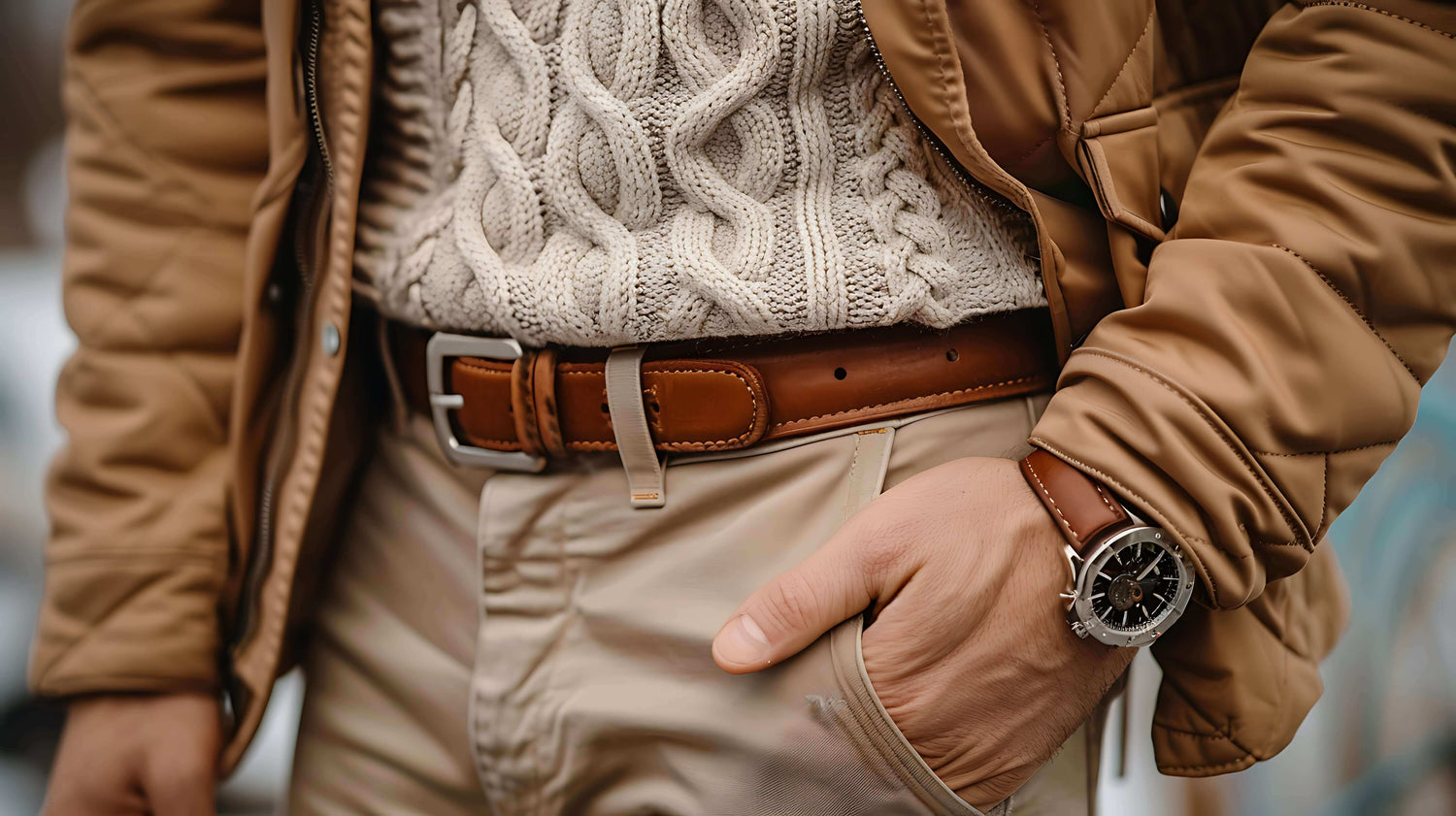


A belt can look sharp on day one and still disappoint by month three. The difference usually comes down to leather grade, not just color, buckle style, or price tag. This guide to belt leather grades is built to help you spot what lasts, what only looks premium at first, and what actually makes sense for the way you wear a belt.
If you wear a belt every day - to the office, on the road, with denim, or for formal events - the leather matters more than most shoppers realize. Good leather holds shape, develops character, and feels better over time. Lower-grade leather often cracks, stretches awkwardly, or peels where the belt bends most. Knowing the grade gives you a much clearer read on value.
Why belt leather grades matter more than the label
Leather terminology gets messy fast. Many shoppers assume that if a belt says real leather or genuine leather, it must be a strong, long-lasting option. Technically, that label means the material is real leather. Practically, it tells you almost nothing about how premium it is.
A belt is a stress item. It bends, pulls, twists, and rubs against belt loops all day. That means the best belt leather needs more than surface appeal. It needs density, fiber strength, and enough integrity to resist premature wear. A wallet can hide weaker leather for longer. A belt cannot.
That is why grade matters. It is less about marketing language and more about how the hide was processed, how much of the natural grain remains, and whether the leather can handle repeated flex without losing structure.
The guide to belt leather grades, from best to budget
Not every wardrobe needs the same belt, and not every good belt needs the highest possible grade. Still, it helps to know the standard hierarchy.
Full-grain leather
Full-grain leather is widely considered the top tier for belts. It uses the outermost layer of the hide and keeps the natural grain intact. Because that grain has not been sanded away, the leather retains its strongest fibers.
For belts, that strength matters. Full-grain leather usually feels substantial, breaks in instead of breaking down, and develops a rich patina with wear. It may show natural markings, which is often a good sign rather than a flaw. Those slight variations speak to authenticity and character.
The trade-off is that full-grain belts can feel firmer at first, and they usually cost more. But if you want a belt that can handle frequent wear while aging with class, this is the benchmark.
Top-grain leather
Top-grain leather sits just below full-grain. It also comes from the upper portion of the hide, but the surface is sanded or corrected to remove imperfections. That creates a more uniform look and often a smoother finish.
For some shoppers, that consistency is a plus. A top-grain dress belt can look cleaner and more refined right out of the box, especially in polished business styles. It is still a high-quality leather, and in many cases, it performs very well for daily wear.
The main compromise is long-term character and a bit of fiber strength. Because the natural grain has been altered, top-grain leather may not age with quite the same depth as full-grain. Still, it remains one of the best choices for customers who want comfort, class, and dependable durability.
Genuine leather
Genuine leather is where confusion starts. The term sounds premium, but as a grade, it usually refers to leather made from lower layers of the hide or from leather that has been heavily processed. It is real leather, but it is not the highest-quality cut.
That does not make every genuine leather belt a bad buy. A well-made genuine leather belt can still serve well for lighter or occasional use, especially if construction is solid and the strap is thick enough. For someone building a rotation on a budget, it can be a reasonable entry point.
The issue is expectation. Genuine leather often lacks the same long-term resilience, edge retention, and aging quality as full-grain or top-grain. If you wear the same belt five days a week, the gap becomes obvious faster.
Bonded leather
Bonded leather is the budget end of the spectrum. It is made from leather scraps and fibers that are shredded, mixed with adhesives, and formed into a sheet with a finished surface.
From a distance, bonded leather can look convincing. Up close and over time, it usually tells a different story. For belts, bonded leather is the weakest option because the material does not handle repeated bending well. Cracking, peeling, and delamination are common.
If durability matters at all, bonded leather is rarely the smart buy. A lower-cost belt made from better construction and more honest materials will often outperform it.
What leather grade means for everyday belt performance
A belt is not judged in a display photo. It is judged after weeks of wear, when the holes stretch, the edges rub, and the strap starts responding to pressure. That is where grade turns into real-world performance.
Full-grain belts tend to keep their body longer. They resist floppy sagging and usually form to your wear pattern in a way that feels custom rather than worn out. Top-grain belts offer a cleaner finish and often a slightly easier break-in. Genuine leather can work, but it tends to show fatigue sooner under heavy use.
If you are shopping for a work belt, travel belt, or daily office belt, it makes sense to prioritize leather that can handle repetition. If you want a fashion belt you wear occasionally with certain outfits, you may have more flexibility.
Leather grade is only part of the story
A high-grade hide can still become a mediocre belt if the construction is weak. That is the part many shoppers miss.
Thickness and cut
A quality belt should have enough thickness to hold shape without feeling bulky. Too thin, and even good leather can stretch or curl. The way the strap is cut also matters. Clean, even edges and a solid profile usually signal better workmanship.
Stitching and edge finishing
Stitching should be straight, tight, and purposeful. On some premium belts, minimal stitching is fine if the leather and build are strong. On others, stitching adds reinforcement. Edge finishing matters too, because rough or poorly sealed edges tend to fray and dry out faster.
Buckle quality
A premium leather strap paired with a weak buckle is a mismatch. Daily belts need hardware that can handle repeated fastening without loosening or scratching excessively. For ratchet and slide belts, the track system and locking mechanism are just as important as the leather facing.
Lining and backing
Some belts use layered construction with a leather top and reinforced backing. That is not automatically a bad thing. In fact, for certain engineered belt designs, it can improve stability and comfort. What matters is whether the materials are honest, well-matched, and built for the intended use.
How to choose the right leather grade for your style
The best grade depends on how you wear your belt, not just the top line on a product page.
For everyday business and casual wear, full-grain is the strongest long-term investment. It delivers durability and a refined look that works with denim, chinos, and dress pants. For a polished dress belt with a smoother, more uniform finish, top-grain is often the sweet spot.
For gift buying, genuine leather can still make sense if the belt is well-made and attractively finished, especially when the recipient rotates several belts instead of relying on one. For trend-led or occasional styles, the smartest move is to focus on appearance and expected wear frequency rather than chasing the highest grade every time.
If you are buying a belt for performance, such as frequent travel, long office days, or all-day movement, prioritize structure as much as leather type. A stylish belt should still feel engineered for real life. That is where a specialist retailer like BeltBuy has an advantage - belts are treated as essential gear, not an afterthought.
Quick signs a leather belt is worth your money
You do not need to be a tannery expert to shop smarter. Look for clear leather descriptions instead of vague claims. Check whether the brand specifies full-grain or top-grain rather than hiding behind generic real leather language.
Pay attention to the surface. Leather that looks overly plasticky or perfectly artificial may be covering lower-quality material. Feel matters too. Better leather usually has density and life to it, not a paper-thin stiffness or foam-like softness.
Finally, judge the belt as a whole product. Strong hardware, clean finishing, and confident material disclosure usually point to a brand that understands craftsmanship and stands behind it.
The right belt should do more than hold up your pants. It should bring comfort, structure, and polish to the way you dress every day. Once you understand leather grades, you stop guessing and start choosing belts that earn their place in your rotation.