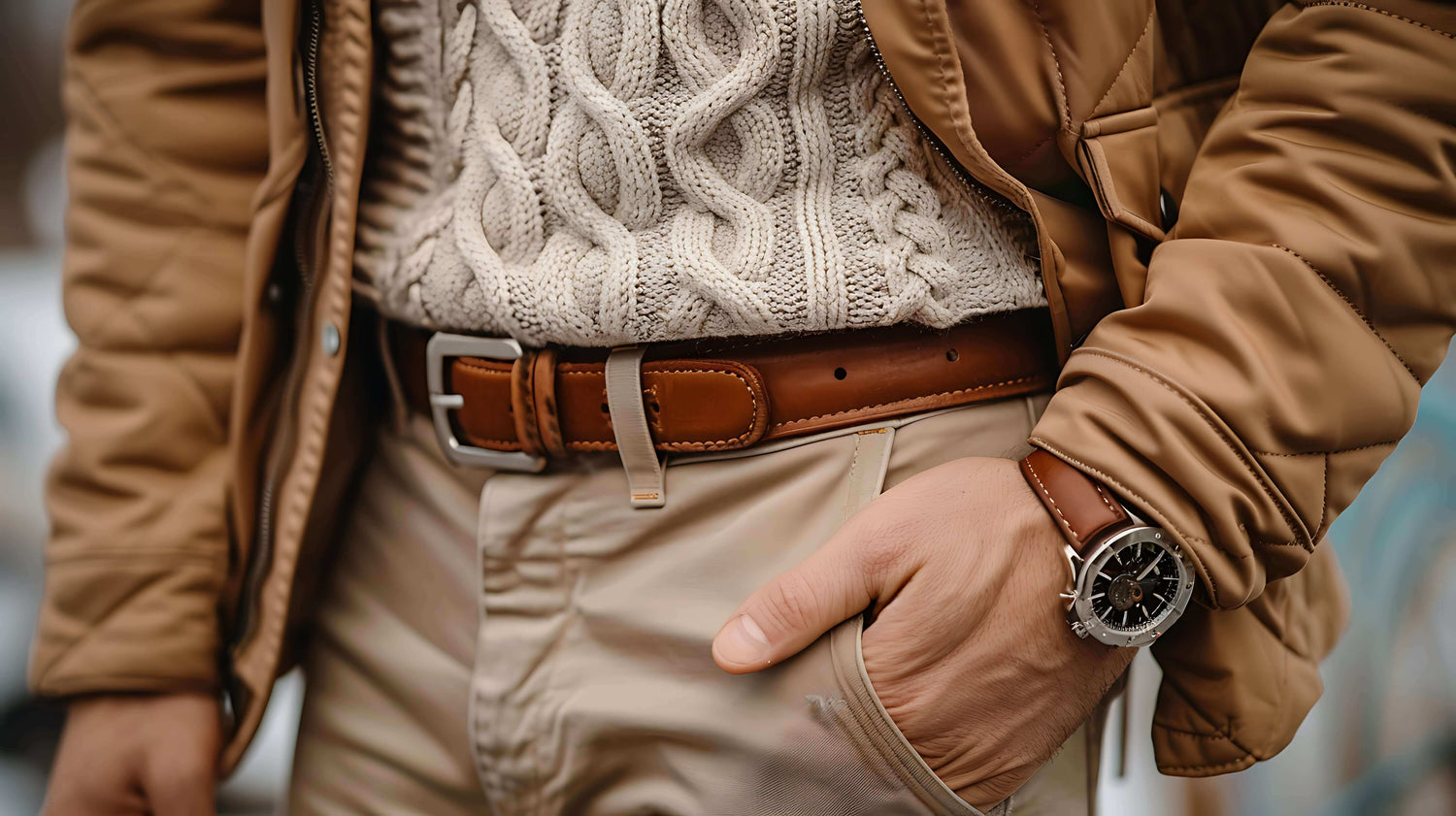


By half eight, a poor belt has already started its shift against you. It digs when you sit, loosens when you move, and leaves your waistband doing half the job on its own. That is why comfortable work belts men actually want to wear are not a small upgrade - they change how your trousers sit, how your back feels, and how settled you stay through a long day.
A work belt should do two things at once: hold firmly and feel easy. If it only grips, it becomes stiff and tiring. If it only feels soft, it slips, twists or stretches out too quickly. The sweet spot is support with flexibility, and that comes down to the right mix of material, adjustment system, width and buckle design.
What makes a work belt genuinely comfortable?
Comfort starts with pressure. A belt should spread pressure evenly around the waist rather than creating one harsh point at the front or sides. That usually means a strap with enough structure to support trousers properly, but not so much rigidity that it feels like a hard band when you bend or kneel.
The next factor is adjustment. Traditional pin-hole belts can work well, but they give you fixed spacing between sizes. On a workday, your comfort can shift by the hour depending on movement, layers, meals and posture. If the belt is slightly too tight, you feel it all day. If it is one hole too loose, your trousers start dropping and you keep hitching them up.
That is where micro-adjustable designs stand out. Ratchet and slide belts allow smaller changes in fit, which can make a dramatic difference in comfort. Instead of forcing your waist into rough sizing steps, they let the belt follow you more closely.
Material matters too. Cheap synthetic straps often feel either flimsy or oddly rigid, with a plasticky finish that traps heat and rubs. Better leather has more give, better recovery and a more natural feel against the body. For tougher environments, tactical webbing belts can be a smart option, but only when the weave is dense, smooth and strong enough to avoid curling.
Comfortable work belts for men: choosing the right type
There is no single best belt for every job. A warehouse shift, a trade role, an office commute and a delivery round all place different demands on the belt. The key is choosing for the way you move.
Leather work belts for daily wear
For men who need a belt that moves easily from work to everyday life, leather is often the strongest all-rounder. A well-made leather belt has body, so it supports trousers properly, but it also softens in a good way over time. It becomes more personal to your shape rather than simply wearing out.
The trade-off is that not every leather belt is built for hard use. Fashion belts can look smart but feel too thin for long wear. A proper work-ready leather belt should have a sturdy strap, neat edge finishing and a buckle that does not wobble or strain under tension. If you spend your day standing, walking or driving, this sort of belt often gives the best balance of polish and performance.
Ratchet belts for changing comfort through the day
If your main complaint is that belts never feel quite right, ratchet belts deserve attention. Their no-hole design allows more precise fitting, which means less digging after lunch, less slack when you are active and less need to constantly adjust.
This is especially useful for men whose waist size fluctuates slightly, or for anyone layering shirts, thermals or workwear across the seasons. A good ratchet belt does not just feel modern - it solves a very old problem. It lets you tune the fit instead of settling for almost right.
Tactical belts for utility and movement
For more physical jobs, tactical belts can be extremely comfortable when chosen properly. The best ones offer secure hold without the sharp stiffness some heavy-duty belts are known for. They suit men who carry tools, clip-on items or simply need a belt that stays put through lifting, crouching and constant movement.
The caution here is bulk. Some tactical belts are overbuilt for ordinary wear, with oversized buckles or very stiff webbing that can become annoying in a van seat or at a desk. If your work is mixed rather than fully manual, a lighter tactical style may be the better call.
The small details that make a big difference
A lot of belt discomfort comes from details buyers often overlook. Width is one of them. A belt that is too narrow can feel sharp under load, while one that is too wide may not sit cleanly through your trouser loops. For most work trousers, a medium-width strap gives the best blend of support and compatibility.
The buckle shape matters just as much. Large chunky buckles can press into the stomach when sitting or leaning forward. Low-profile buckles are often better for comfort, especially for drivers, desk-based workers and men who alternate between sitting and standing.
Edge finishing is another quiet but important feature. Rough or poorly cut edges can chafe fabric and feel abrasive through the day. Smoother edges, better stitching and cleaner leather processing all contribute to a belt that feels more refined in wear, not just better-looking in the hand.
Fit is where comfort is won or lost
Even the best belt can feel wrong if the fit is off. Men often buy belts too long, too short or in a size that only works when standing upright in a changing room. Real life is less flattering and more demanding.
A comfortable belt should fasten with enough room to adjust both tighter and looser. You do not want to be at the absolute end of its range from day one. If the design is trimmable, that adds another level of control. It allows the strap to be set properly to your waist rather than forcing you into a generic size bracket.
This matters even more with work belts because they are worn for hours, not for a dinner out or a quick meeting. A slight fit issue becomes a persistent nuisance by mid-afternoon. Better sizing and finer adjustment are not luxury extras. They are what keep the belt wearable.
When comfort and durability need to work together
There is a common mistake in belt shopping: assuming softer always means more comfortable. For a short period, perhaps. Over months of wear, a belt that stretches too easily or folds under tension becomes frustrating. It slips, loses shape and stops supporting your trousers properly.
True comfort is long-wear comfort. It is the belt that still feels dependable after repeated use, not the one that feels soft in the first five minutes. That is why craftsmanship matters. Better leather selection, stronger buckle hardware and more thoughtful construction give the belt staying power. It keeps its shape, tracks with your movement and avoids becoming another disposable accessory.
That balance sits at the heart of what specialist retailers like BeltBuy focus on - belts built as everyday essentials, not afterthoughts. When the design starts with wearability, the difference shows quickly.
How to tell when your current belt is the problem
Not every discomfort at the waist comes from your trousers. Sometimes the belt is the culprit, and the signs are easy to miss because they build gradually.
If you are always adjusting through the day, if the belt leaves a deep pressure line at the front, if the strap twists near the buckle, or if your trousers feel secure only when the belt is uncomfortably tight, the belt is not doing its job well. The same goes for belts that crack, curl or lose their finish quickly. Those are not cosmetic issues alone. They usually point to a belt that will only become less comfortable with time.
A better belt should feel secure without becoming the thing you are most aware of. That is the aim. Reliable hold, easy movement, and a fit that does not fight you.
Comfortable work belts men should prioritise by job type
For office-based or smart-casual work, leather with a clean, lower-profile buckle is usually the safest choice. It gives structure, looks sharp and wears well across long seated periods.
For trade and hands-on roles, a sturdier leather work belt or a well-balanced tactical belt makes more sense, depending on how much movement and load your day involves. For men whose comfort changes constantly because of posture, travel or fluctuating waist fit, ratchet belts are often the smartest answer.
There is no prize for choosing the toughest-looking belt if it makes everyday wear harder. The right belt is the one that supports your routine without demanding attention from it.
A comfortable work belt should feel like part of the job done properly - secure, hard-wearing and easy from the first hour to the last. If yours pinches, slips or keeps asking to be adjusted, it is not just old. It is costing you comfort you do not need to give up.