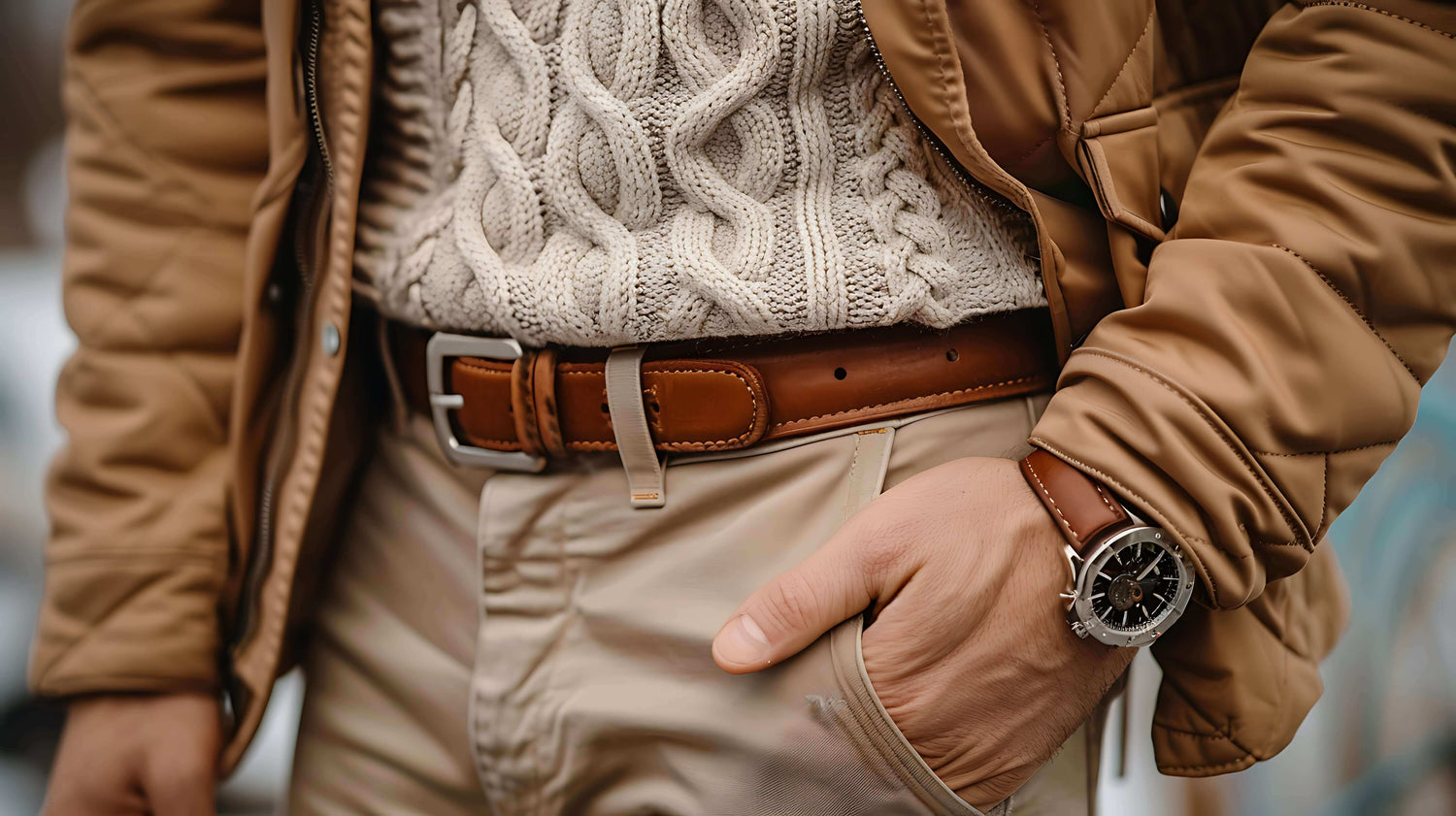


A work belt gets tested fast. It has to hold up through long hours, keep its shape under pressure, and still look sharp enough to wear from the jobsite to dinner without looking beat up by noon. That is why finding the best men's leather work belt is less about chasing trends and more about choosing the right build, leather, and fit for how you actually move through the day.
What makes the best men's leather work belt
A great work belt does two jobs at once. First, it supports your pants consistently without sagging, twisting, or stretching out too soon. Second, it brings clean structure to your outfit, whether you wear work chinos, denim, cargo pants, or office-ready trousers.
The best belts do not feel flimsy in the hand. They feel dense, balanced, and intentional. A quality leather work belt should have enough body to stay upright when threaded through belt loops, but not so much stiffness that it digs into your waist every time you sit, bend, or drive.
This is where material and construction matter more than flashy hardware. Full-grain and top-grain leather usually outperform lower-grade bonded options because they resist cracking better and age with more character. A belt that starts out strong tends to stay strong, and that consistency matters when it is part of your everyday rotation.
Leather quality matters more than most shoppers think
If you want a belt that lasts, start with the leather. Genuine leather can mean different things across the market, so it pays to look beyond the label and pay attention to thickness, finish, and overall feel.
Full-grain leather is typically the strongest option. It keeps the natural grain intact, which gives it durability and a more authentic finish. Top-grain leather can also be an excellent choice for a work belt, especially if you want a smoother, more refined look with solid durability. Lower-end corrected leather and bonded leather often look decent at first, but they usually show stress faster around the holes, edges, and buckle fold.
There is also a style trade-off here. If your workday leans more rugged, a thicker, more textured leather belt will feel right at home with denim and boots. If your day moves between warehouse floor, sales meetings, and dinner plans, a smoother leather with a cleaner edge can give you more versatility without losing toughness.
Belt width changes comfort and performance
Width is one of the most overlooked details in any leather work belt. It affects support, comfort, and how the belt looks with your pants.
For most men, 1.5 inches is the sweet spot. It is wide enough to feel substantial and stable, but still versatile enough to work with jeans, work pants, and many business-casual options. A 1.25-inch belt can look cleaner and more dressy, but it may not feel as grounded for heavier daily wear. A 1.75-inch belt offers more utility-minded presence, though it can feel bulky and may not fit every pant loop.
If you carry tools on your belt, wear heavier pants, or simply prefer a more planted feel, a wider belt can make sense. If your job requires a polished appearance, sticking to a standard width usually gives the best mix of comfort and class.
Buckle design is not just about looks
A belt buckle takes more abuse than people realize. It gets pulled, twisted, leaned on, and adjusted all day. Weak hardware can ruin an otherwise good belt.
Traditional frame buckles remain a strong choice for leather work belts because they are simple, proven, and easy to maintain. Solid-feeling metal with a smooth tongue and secure prong matters. Cheap buckles tend to feel hollow, loosen over time, or show finish wear too quickly.
This is also where personal preference comes in. Some men want a classic single-prong buckle that looks timeless with almost anything. Others prefer a ratchet or no-hole design for micro-adjustability and all-day comfort. That can be especially useful if your day includes lots of movement, driving, lifting, or long hours on your feet. A ratchet leather work belt offers a cleaner adjustment experience and can help reduce the pressure points common with fixed holes.
Neither option is automatically better. It depends on whether you value traditional styling most or want precise fit control throughout the day.
Fit is where a good belt becomes a great one
Even premium leather will disappoint if the fit is off. A belt that is too short strains at the buckle and looks awkward. Too long, and you get extra tail that flops around or throws off the whole silhouette.
For a classic work belt, the best fit usually places the buckle pin or fastening point near the middle setting, giving you room to adjust tighter or looser as needed. That matters more than people think. Weight fluctuation, heavier layers, and even how much you move during the day can change how a belt feels from morning to evening.
This is one reason adjustable leather belts have become such a strong choice for modern workwear. More precise sizing means less compromise. You are not stuck choosing between one hole that feels too tight and another that feels too loose.
A proper fit also helps preserve the belt itself. Belts worn under constant over-tension tend to crease harder, stretch faster, and wear unevenly around the buckle area.
The best men's leather work belt should match your real workday
Not every work belt needs the same features. The right choice depends on where you wear it, what you wear it with, and how much performance you expect from it.
If you work in an office with occasional travel and client meetings, a sleek leather belt with a refined buckle and moderate thickness is probably the smart play. It looks polished, feels comfortable under long sitting hours, and still has enough structure for everyday wear.
If your day is more active, with standing, walking, bending, and constant movement, you may want a thicker leather strap and a more adjustable closure. Comfort under motion becomes more important than a dressier finish.
If you split time between practical tasks and polished settings, versatility should lead the decision. That means neutral leather tones like black, dark brown, or rich tan, clean stitching, and hardware that feels substantial without looking oversized.
Signs a leather work belt is built to last
There are a few details that separate a belt that lasts a season from one that earns a permanent place in your closet.
Start with the edges. Cleanly finished edges tend to hold up better and look sharper over time. Then check the stitching. Tight, even stitching around the buckle area adds reinforcement where belts often fail first. The buckle attachment should feel secure, not loose or thin.
Leather thickness matters too, but thicker is not always better. A belt can be too rigid if it is built like a piece of saddle gear but worn for everyday business-casual use. The best construction balances durability with flexibility, so the belt feels strong without fighting your movement.
The finish should also wear well. Good leather develops character. Bad leather just looks tired. There is a difference between natural patina and premature breakdown.
Style still matters, even in a work belt
A work belt should perform, but it should also complete your look. The strongest belts bring discipline to an outfit. They sharpen denim, add structure to chinos, and make boots feel more intentional.
That matters because most men are not buying separate belts for every scenario. They want one or two dependable options that can handle weekday wear, weekend errands, travel, and occasional dress-up moments. A well-made leather work belt gives you that range.
That is where thoughtful design earns its place. Clean lines, strong leather, and comfortable adjustment make the belt feel like part of the outfit, not an afterthought. BeltBuy has built its reputation around that exact idea - belts as engineered essentials with comfort, durability, and style working together.
How to choose with confidence
If you are deciding between several options, think in terms of wear frequency. The belt you wear four or five days a week deserves better leather, better hardware, and a better fit system than a belt you only use occasionally.
Choose a color that matches the shoes or boots you wear most. Pick a width that suits your usual pants. Decide whether classic holes or a ratchet-style adjustment better fits your day. Then focus on construction quality instead of getting distracted by novelty.
A belt should make daily dressing easier. It should feel dependable when you cinch it in the morning and comfortable enough that you forget about it by midday. That combination is what separates a decent belt from the best men's leather work belt for your routine.
The right one does not just hold your pants up. It brings structure, confidence, and staying power to everything else you wear.