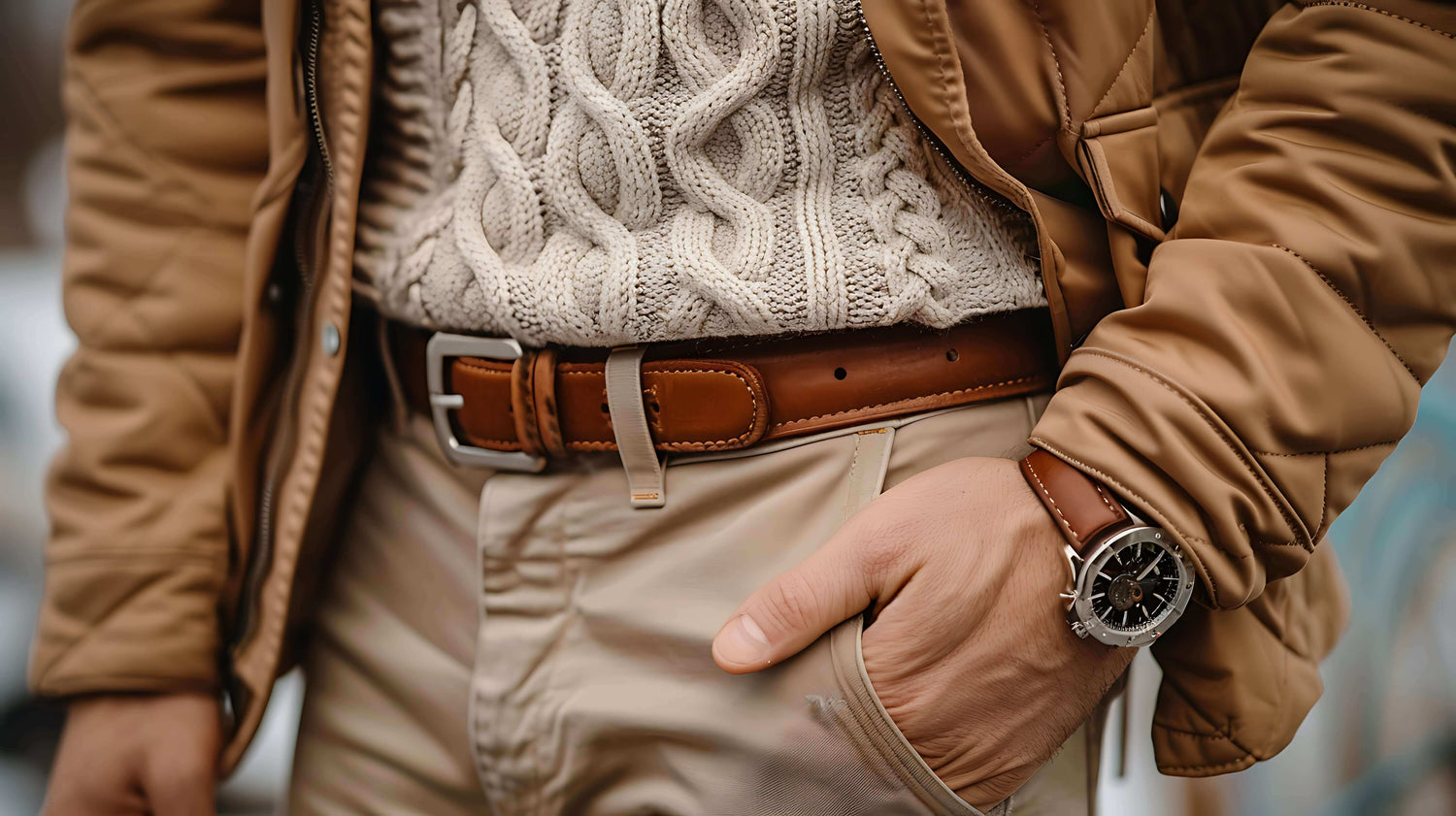


A belt that twists, stretches out, or digs into your waist by noon has no place in a work rotation. The best belts for workwear do more than hold up your pants - they carry weight, keep their shape, and still look sharp after long shifts, daily commutes, and repeat wear. That balance of toughness and polish is what separates a forgettable belt from one you reach for every morning.
Workwear means different things depending on the job. For some people, it is raw denim, chore coats, and boots. For others, it is office-ready trousers, a button-down, and a clean leather shoe. The right belt has to match the workload and the look. A heavy-duty belt that feels perfect with cargo pants can look too aggressive with tailored slacks, while a dress belt may look refined but fold under the pressure of all-day movement.
What makes the best belts for workwear?
It starts with structure. A workwear belt needs enough body to support your waistband without rolling over at the edges. Genuine leather is a strong choice because it shapes to the wearer over time while keeping a premium, pulled-together look. But not all leather belts are equal. Full-grain and top-grain options generally wear better than corrected or overly bonded styles, especially if the belt is expected to handle daily use.
Width matters more than most shoppers think. A narrower belt can work well in business-casual settings, especially with chinos or trousers, because it slides cleanly through smaller belt loops and keeps the profile refined. A wider belt usually performs better in more rugged wardrobes because it distributes pressure better and feels more stable with heavier pants. If your workwear leans industrial, outdoorsy, or tool-carrying, extra width can be a real advantage.
Adjustment is another big factor. Traditional pin-buckle belts are familiar and dependable, but they lock you into fixed holes. That can become frustrating when your fit changes throughout the day, especially if you are bending, lifting, driving, or layering. Ratchet and no-hole automatic belts solve that problem with micro-adjustability. They give you a cleaner fit and a more comfortable one, which matters when a belt is on your body for eight, ten, or twelve hours.
Then there is hardware. Buckles take a beating in work settings, and cheap metal finishes tend to scratch, chip, or loosen faster than expected. A belt can be made from great material, but if the buckle feels flimsy, the whole thing performs below its price. Good workwear belts feel engineered from end to end.
The best belt style depends on how you work
There is no single winner for every wardrobe. The best choice depends on whether your day calls for polished structure, flexible comfort, or utility-first performance.
For office and business-casual workwear
If your workday includes meetings, commuting, and a tucked-in shirt, a genuine leather belt with a clean buckle is usually the strongest option. This is where craftsmanship shows. A smooth or lightly textured leather strap in black, brown, or deep tan brings comfort and class without looking overbuilt.
For this setting, slimmer profiles often look best. They pair easily with dress pants and chinos, and they add structure without overpowering the outfit. A ratchet belt is especially strong here because it keeps the front clean and modern while giving you precise adjustment. That polished surface matters when the rest of your look is intentional.
The trade-off is that ultra-refined belts are not always the best choice for physical work. If you regularly carry gear on your waistband or spend a lot of time crouching and moving, you may want more thickness and reinforcement than a dress-leaning belt typically offers.
For trades, warehouse, and physically demanding jobs
This is where sturdier leather belts and tactical-inspired designs earn their place. Work pants are heavier. Movement is constant. The belt needs to stay secure without feeling stiff enough to fight against your body.
A thicker leather belt with strong edge finishing and a dependable buckle gives you the support you need while still looking clean off the clock. If your day involves more strain, tactical belts or reinforced nylon options can make sense too, especially if moisture, abrasion, or weather is part of the job. They are practical, often lighter than expected, and built with utility in mind.
That said, tactical belts are not the most versatile style choice. They perform extremely well, but they can read too casual or too aggressive in settings where appearance matters. If your workwear needs to bridge jobsite function and after-hours polish, a premium leather belt often gives you better range.
For travel-heavy and on-the-go workdays
If your job keeps you moving through airports, in and out of cars, or across client visits, comfort becomes just as important as durability. This is where slide belts and ratchet belts stand out. They are fast to adjust, easy to wear for long stretches, and less likely to leave you stuck between too-tight and too-loose.
The convenience is not small. Micro-adjustability helps when you are sitting for hours, walking long distances, or changing layers through the day. A belt that adapts quickly is one less thing to think about, and that is exactly what great workwear should do.
Material choices that actually matter
Leather still leads for a reason. It looks better longer, pairs with more outfits, and develops character instead of just wearing out. For workwear, genuine leather is often the sweet spot between durability, style, and value. It has the backbone to handle regular use while still bringing a premium finish that elevates everyday clothing.
If you want the most timeless option, choose a leather belt in a versatile neutral with a buckle finish that complements your shoes or watch. Black is sharp and reliable. Brown is slightly more relaxed and often more flexible across denim, khakis, and boots. Tan can look excellent in casual workwear but tends to feel less formal.
Nylon and webbed materials have their place too. They excel in environments where sweat, water, and abrasion are a daily issue. They are also lighter and often easier to clean. The downside is style. Even a very well-made nylon belt rarely delivers the same finished, premium appearance as leather.
Fit is where comfort and performance meet
A belt can be made from premium material and still disappoint if the fit is off. Too tight, and it becomes distracting by mid-morning. Too loose, and it shifts, sags, and stops doing its job. The best workwear belt should feel secure when you stand, comfortable when you sit, and stable when you move.
This is why adjustable systems have become so popular. They remove the frustration of fixed holes and let you fine-tune your fit throughout the day. That matters for workers who are constantly active, but it also matters for anyone who wants a cleaner silhouette. A better fit simply looks better.
If you wear your belt every day, durability at the stress points is essential. Look closely at where the strap meets the buckle, how the edges are finished, and whether the belt is designed to resist stretching over time. These details are easy to overlook online, but they are exactly what determines whether a belt still feels solid six months from now.
Style still counts in workwear
Workwear has always been about function, but modern workwear buyers expect more than pure utility. They want one belt that can move between weekday demands and weekend wear without missing a step. That is why design matters.
A belt should complement the rest of your wardrobe, not just survive it. Clean lines, quality leather, and thoughtful hardware give a belt staying power because they work across more outfits. You can wear that same belt with jeans, chinos, field pants, or tailored casual trousers and still feel put together.
That is also where a specialist retailer earns attention. A focused assortment makes it easier to choose belts designed around real use instead of generic basics. BeltBuy leans into that difference with styles built for comfort, adjustability, and long-term wear, without giving up the premium look that makes a work outfit feel finished.
How to choose the right one
Start with your most common work pants, not the belt itself. If you wear chinos and trousers most days, choose a slimmer leather belt with a polished buckle. If denim, cargos, and heavier fabrics dominate your week, go with a more substantial strap that can handle the extra load.
Then think about movement. If your day is active and your fit changes as you sit, stand, lift, and drive, a ratchet or no-hole automatic belt will usually feel better than a standard pin buckle. If your priority is classic styling and simplicity, a traditional leather belt still delivers.
Finally, be honest about how much abuse the belt will take. If it will face rough conditions every day, utility-focused materials may outperform dressier designs. If you need one belt to cover work, travel, and everyday wear, premium leather with flexible adjustment is often the smartest investment.
The best workwear belt is the one that disappears when you wear it and proves itself over time. Choose one with real structure, smart adjustment, and enough style to carry your look with confidence, because the belt you trust on your busiest days should work as hard as you do.