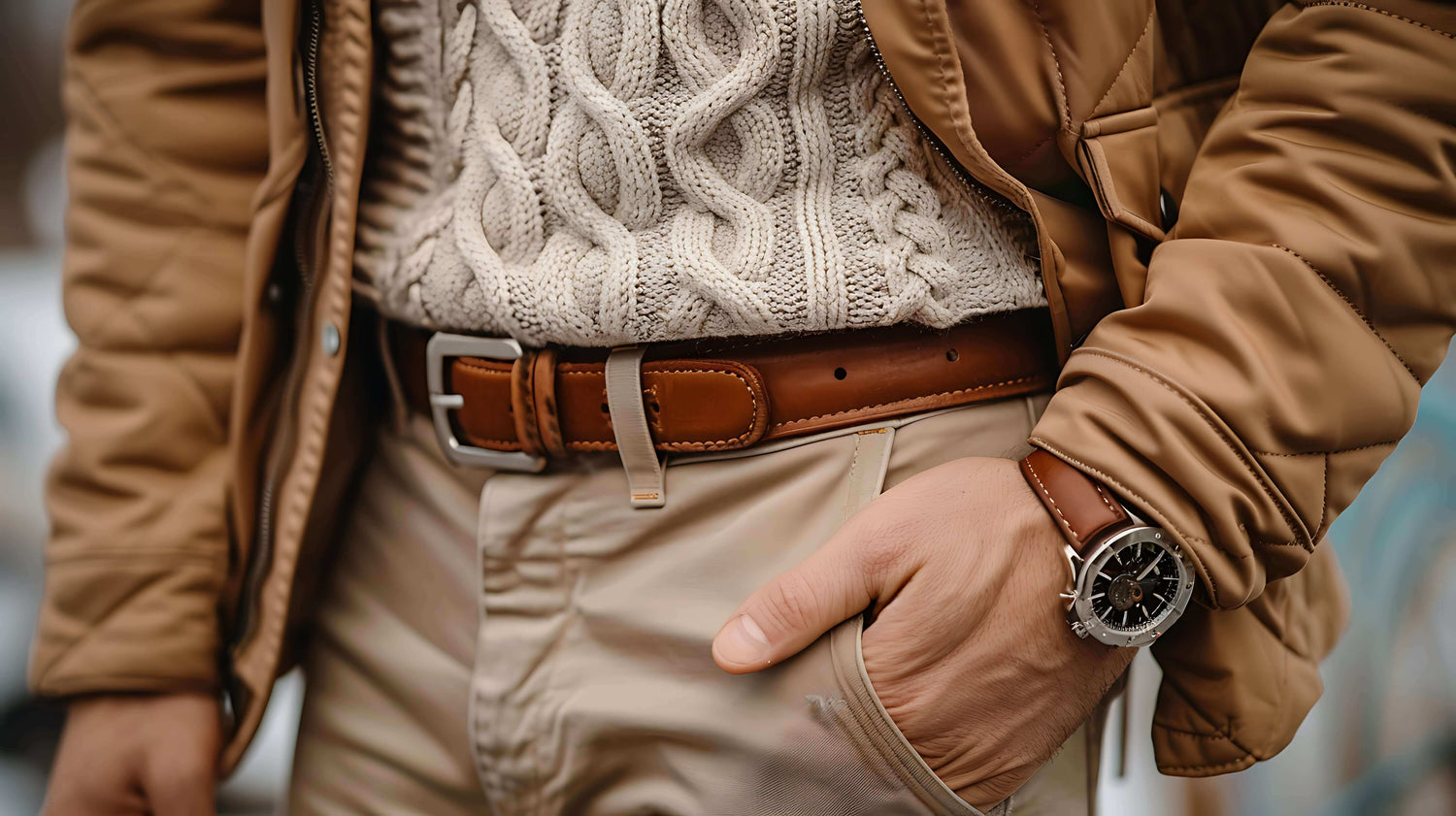


A weak belt can spoil a sharp office outfit faster than scuffed shoes. You notice it when the leather creases too early, the buckle looks bulky under a tucked shirt, or the fit shifts by midday. In a work setting, the right belt is not there to shout. It is there to hold clean lines, sit comfortably for long hours, and finish the outfit with quiet confidence.
If you are looking for the best belt for office wear, the answer is usually not the flashiest option or the cheapest one. It is the belt that matches your office dress code, feels right from morning commute to late meeting, and keeps its structure after repeated wear. That means paying attention to material, buckle design, width and adjustment system, not just colour.
What makes the best belt for office wear?
Office belts do two jobs at once. First, they need to be practical. A belt should support your trousers properly, sit flat at the waist and stay comfortable whether you are standing, driving or spending most of the day at a desk. Second, it needs to look polished enough for professional settings.
That balance matters. A belt that is too casual can make tailored trousers look unfinished. One that is too stiff or too ornate can feel uncomfortable and look out of place in a modern office. The best office belts tend to share a few traits - clean design, dependable leather or leather-look finish, restrained hardware and a fit that does not force you into one awkward notch all day.
This is why many men now lean towards refined ratchet belts or well-made classic leather belts rather than basic cheap hole belts. Better adjustment gives you better comfort, especially through long workdays, business lunches and the small waist changes that happen naturally across the week.
Leather is still the office standard
For most professional wardrobes, leather remains the safest and strongest choice. It looks smarter, ages better and carries the right level of structure for office trousers, chinos and formalwear. A good leather belt should feel substantial without being heavy, with a smooth or lightly textured finish that complements polished shoes.
Black leather is the obvious choice for formal offices, particularly if you wear black Oxfords, Derbies or loafers. It is clean, reliable and easy to pair with charcoal, navy and black tailoring. Brown leather works brilliantly in more flexible workplaces, especially with tan or dark brown shoes, mid-grey trousers and navy separates. If your office leans business casual, a rich brown belt can soften the look without losing polish.
The key is finish. For office wear, smoother leather usually looks smarter than heavily distressed leather. A rugged grain can work in smart-casual environments, but for boardrooms, client meetings and formal offices, cleaner leather wins.
Buckle choice matters more than most people think
A bulky buckle can throw off the whole front of your outfit. It adds visual weight where you do not want it and can bunch under shirts or jackets. Office belts look best with low-profile buckles that feel refined rather than decorative.
A classic frame buckle in brushed silver or polished metal is a safe option. It suits traditional office dressing and does not date quickly. If you prefer a more engineered fit, a slim ratchet buckle can be an excellent choice for modern workwear, provided it is understated. The advantage is simple - micro-adjustment gives you a more precise fit than fixed holes, which means less pinching and less sagging.
That extra comfort is not a small detail. A belt that feels fine at 8am can feel restrictive after lunch. A micro-adjustable belt lets you ease the fit subtly without sacrificing a tidy look. For many office workers, that makes a ratchet or slide belt one of the strongest contenders for the best belt for office wear.
Width and proportion keep it smart
An office belt should usually stay within a fairly narrow lane on width. Around 3 to 3.5 cm is the sweet spot for most men’s office trousers. It fits standard belt loops neatly and looks balanced with tailoring and smart chinos. Go much wider and the belt starts to look casual. Go too narrow and it can seem flimsy unless you are wearing very tailored formal trousers.
Proportion also depends on your build and the cut of your clothes. Broader men often suit a belt with a little more presence, while slimmer dressers may prefer something more streamlined. The point is not to stand out. The point is to look intentional.
Best belt styles for different office dress codes
Not every workplace expects the same thing, so the best office belt depends partly on where and how you work.
Formal office
If you wear a suit most days, choose a black or dark brown leather belt with a simple buckle and a smooth finish. Keep the strap sleek and avoid visible branding, contrast stitching or oversized hardware. This is where classic dress belts perform best.
Business casual office
If your daily uniform is chinos, Oxford shirts and loafers, you have more room to move. Brown leather, deep tan or darker textured finishes can all work well. A smart ratchet belt fits neatly into this space because it blends polish with day-long comfort.
Hybrid or creative workplace
If the office dress code is more relaxed, you can introduce a little more character through texture or tone. That said, there is still a difference between relaxed and sloppy. Tactical belts, canvas belts and heavily distressed leather tend to sit better outside the office than in it. For work, keep the line clean.
Ratchet belt or traditional belt?
This is where it gets practical. Traditional pin belts still have a place, especially if you prefer timeless styling and a familiar feel. A well-made leather pin belt is dependable, smart and easy to pair with formal wardrobes.
But there is a reason ratchet belts have gained serious ground. They offer micro-adjustment, a cleaner strap surface with no visible holes, and a more consistent fit throughout the day. For office wear, that can be a genuine upgrade rather than a gimmick. You get comfort without losing structure.
The trade-off is style preference. Some people still prefer the look and ritual of a classic buckle. Others want the ease of a modern no-hole system that sits neatly and adjusts in seconds. Neither is wrong. The best choice depends on whether your priority is tradition, flexibility or a bit of both.
How to spot quality before you buy
A belt is handled every single day, so quality reveals itself quickly. Cheap belts crack, stretch badly and lose shape around the holes or buckle point. Better belts feel more controlled. The leather is firmer, the edge finishing is cleaner, and the buckle has enough weight to feel durable without becoming bulky.
Look closely at the strap finish, stitching and buckle connection. The belt should feel built, not flimsy. If it is marketed as leather, the texture and finish should support that claim rather than hiding behind overly glossy coating. If it is a ratchet belt, the track system should feel secure and smooth, not plasticky or loose.
This is also where specialist retailers have an edge over generic accessories sellers. A belt-focused shop such as BeltBuy is built around fit systems, leather quality and everyday performance, not just appearance on a product grid.
Colour matching without overthinking it
The old rule still works - match your belt as closely as possible to your shoes. It is not about exact perfection, but the closer the tone and finish, the more pulled together the outfit looks.
If you wear black shoes, choose black. If you wear dark brown shoes, go dark brown. Tan can work with lighter brown footwear in smart-casual offices, though it is usually less versatile in formal settings. If your wardrobe rotates between black and brown shoes through the week, owning two good office belts is often smarter than trying to make one do everything.
Comfort is not a luxury at work
Office wear has changed. Even in smart environments, people expect clothing to perform better through longer, more varied days. You might be commuting, sitting for hours, walking to meetings, then heading straight out in the evening. A belt that digs in or slips around your waist becomes irritating very quickly.
This is why fit should be treated as seriously as appearance. A belt should feel secure, not restrictive. It should hold your waistband properly without forcing pressure into one point. Trimmable sizing, flexible adjustment and strong but not rigid leather all make a difference here.
The best office belt is the one you stop thinking about once it is on. It just works.
The smartest buy for most people
If you want one answer, here it is. For most UK professionals, the best belt for office wear is a slim leather belt in black or dark brown with a clean, understated buckle and a precise fit system. In a more traditional wardrobe, that may be a classic pin buckle. In a modern work routine, a refined ratchet belt often gives the better all-day experience.
Buy for the office you actually dress for, not the one in your head. If your workwear is sharp and formal, stay classic. If your days are longer, more flexible and more comfort-driven, a polished no-hole belt may suit you better.
A good office belt does not need to demand attention. It just needs to hold its line, wear well and make the rest of your outfit look more certain.