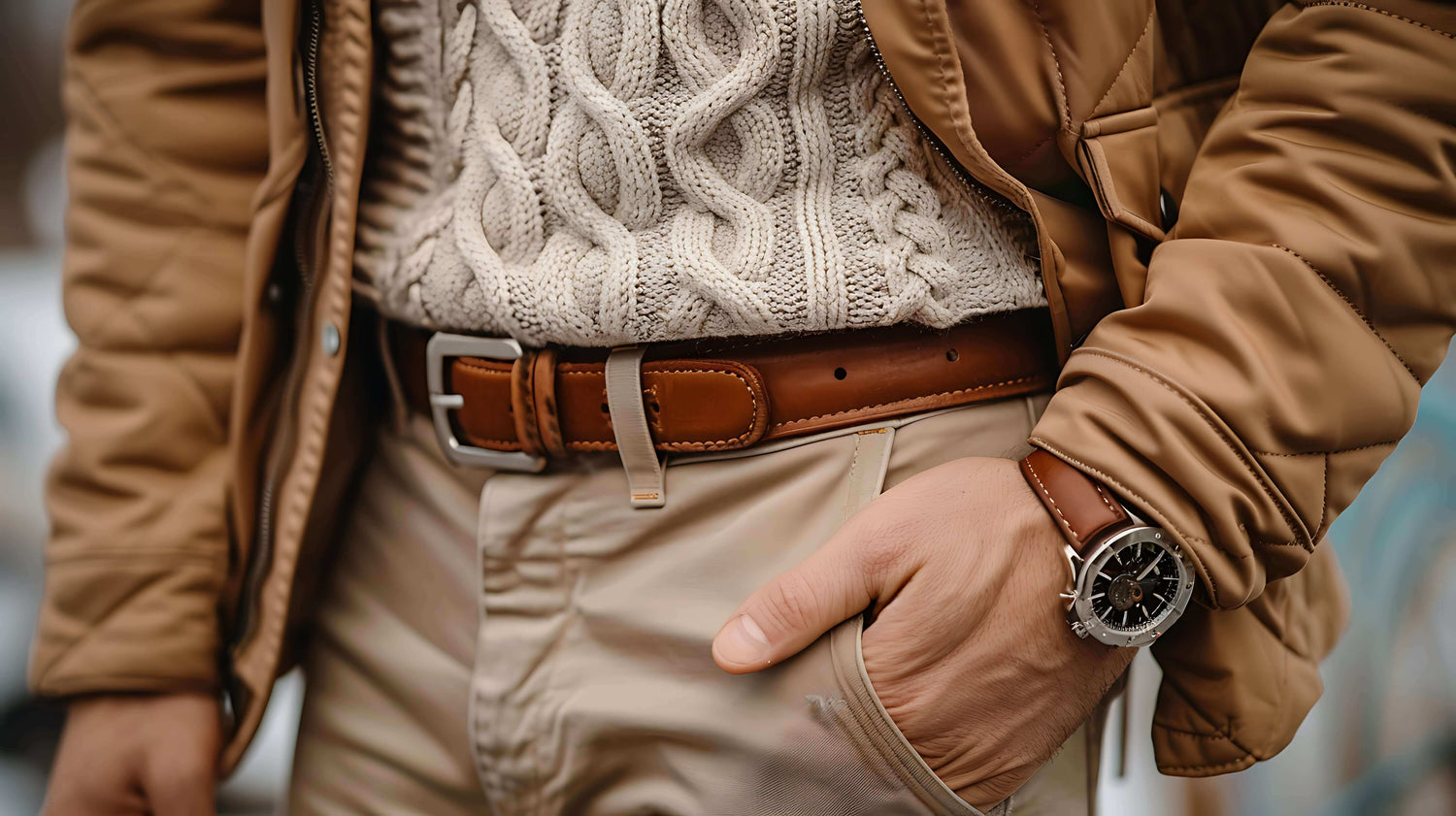


Getting a belt to sit right over a fuller midsection can turn into a daily annoyance fast. It digs in when you sit, slips when you walk, and somehow feels too tight and too loose at the same time. That usually is not a trouser problem. It is a belt problem.
The best belt for big belly comfort is usually one that adjusts in small increments, flexes with movement, and avoids the pressure points that come with traditional hole belts. Fit matters more than fashion gimmicks here. A belt should hold your trousers where you want them, stay comfortable through a full day, and still look sharp when your shirt is tucked in.
What makes the best belt for big belly comfort?
A bigger stomach changes how a belt sits and works. Instead of resting neatly around a flatter waist, the belt often follows a rounder line and deals with more movement as you stand, sit, drive, and bend. That is why some belts feel fine for ten minutes and unbearable by lunchtime.
The biggest issue is pressure. Standard belts with fixed holes only give you a small number of sizing options, so you end up choosing between one notch that pinches and another that lets your trousers drift. For many men, especially if weight shifts during the day or trousers sit slightly below the belly, that fixed-hole design is the reason the belt never feels quite right.
Material matters too. A stiff, low-grade strap can bite into the stomach and crease badly. A better leather belt has more structure, but it should still break in properly and move with you rather than fighting your shape. Buckle size also plays a part. Large, bulky buckles can jab the front of the stomach, especially when sitting at a desk or behind the wheel.
Why ratchet belts often work better
If you are looking for the best belt for big belly wear, a ratchet belt is usually the strongest option. The reason is simple. It gives micro-adjustment instead of fixed holes.
That means you can loosen or tighten the belt in very small increments throughout the day without the awkward gap between sizes. After lunch, on a long commute, or during a day with plenty of movement, that extra flexibility makes a real difference. You get a secure hold without over-tightening.
A ratchet belt also spreads wear more evenly. Traditional hole belts weaken around the holes first, especially when put under regular tension. A no-hole system avoids that stress point, so the strap keeps its cleaner look for longer. For shoppers who want comfort and durability in one belt, that is hard to ignore.
The trade-off is that not all ratchet belts are made equally. A weak track system or poor buckle mechanism can fail early. The better versions use sturdy hardware, a reliable locking action, and a strap with enough backbone to support your trousers without feeling rigid.
Leather or stretch - which is better?
This depends on how you dress and how much structure you want.
Leather is still the best all-round choice for most men. A good leather belt looks smarter, lasts longer, and gives a more polished finish with chinos, jeans, and work trousers. For a fuller midsection, quality leather also offers support. It holds shape better than flimsy synthetic material and tends to sit more cleanly under tucked shirts or knitwear.
Stretch belts can feel easier at first because they move with the body. If comfort is your only concern, they can be useful for casual wear. But stretch on its own can become a problem. If the belt gives too much, your trousers may start slipping, and the whole thing can feel less stable by the end of the day.
For that reason, many larger men do best with a leather ratchet belt rather than a fully elastic one. You get a firm hold, a smarter finish, and small fit changes when needed. It is a practical middle ground between comfort and control.
The best belt width and buckle style
Wider is not always better. A very thick belt can feel heavy and restrictive across the front of the stomach, especially if your trousers already sit snugly. In most cases, a standard width around 35 mm works well because it balances support with comfort.
The buckle should be low-profile and easy to operate. If the buckle sticks out too far, it can press into the belly when seated and create a noticeable bulge under clothing. A cleaner, flatter buckle shape usually feels better and looks neater.
This is where belt design becomes more than style. Good hardware changes the wearing experience. A compact buckle paired with a micro-adjust strap can turn a belt from something you tolerate into something you barely notice.
Sizing mistakes that ruin comfort
A lot of men buy belts the way they buy fashion accessories - by guessing. That is exactly how you end up with a belt that never sits right.
If you carry weight around the stomach, your belt size may not match your trouser label neatly. Trousers can sit below the belly, at the waist, or somewhere in between. The right approach is to measure where you actually wear the belt, not where you assume your waist is.
Trimmable belts are especially useful here. They let you customise the strap length rather than settling for a near-enough fit. That is valuable if your size sits between standard options or changes over time. A belt should adapt to your body, not force you into a fixed setting that feels wrong from day one.
It is also worth thinking about daily fluctuation. Some men need a belt that works across office wear, weekend denim, and heavier winter layers. A micro-adjustable system handles that better than a rigid single-size hole belt.
Style still matters
Comfort should lead, but style still counts. The right belt can make a fuller frame look more put together. The wrong one can draw attention for all the wrong reasons.
Simple is usually stronger. Clean leather, a refined buckle, and a proper fit create a better line through the waist than oversized buckles or flashy detailing. Dark brown and black remain the most versatile choices because they work across smart and casual wardrobes without fuss.
If you wear tailored pieces for work, a smooth leather finish gives the sharpest result. If you live in jeans and boots, a more textured leather can add character without looking overdone. Either way, a specialist belt built for regular wear will outperform a cheap fashion belt very quickly.
What to avoid if you have a bigger midsection
Some belts fail because they are simply designed for display rather than daily use. Thin, flimsy straps twist too easily and provide little support. Overly stiff synthetic belts can feel harsh against the body and crease in unattractive ways. Huge buckles often become irritating after an hour of sitting.
Traditional hole belts are not automatically bad, but they are less forgiving. If you already know that one notch feels too tight and the next too loose, you are dealing with a design limitation rather than a personal fit problem.
It is also wise to avoid belts that promise comfort but skimp on materials. Cheap bonded leather, weak stitching, and lightweight buckles rarely hold up under regular pressure. A belt worn every day needs proper construction. Built to hold really does matter here.
So what should you buy?
For most men, the best belt for big belly support and comfort is a leather ratchet belt with a low-profile buckle and a trimmable strap. That combination gives you the neat look of leather, the flexibility of micro-adjustment, and the long-wear comfort that standard belts often miss.
If your wardrobe is mostly smart-casual or business casual, go for a full-grain or genuine leather ratchet style in black or brown. If your priority is weekend comfort with jeans or utility trousers, a sturdier casual leather strap or a well-made tactical-inspired belt may suit you better, provided the buckle is not too bulky.
At BeltBuy, the strongest options for this kind of fit are belts built around no-hole adjustment and durable leather straps because they solve the real issue - inconsistent pressure across a changing waistline. You are not just buying a belt. You are buying better fit, better hold, and less hassle every morning.
A good belt should never be the part of your outfit you keep adjusting all day. Get the fit right, choose proper materials, and your belt stops fighting your shape and starts working with it.