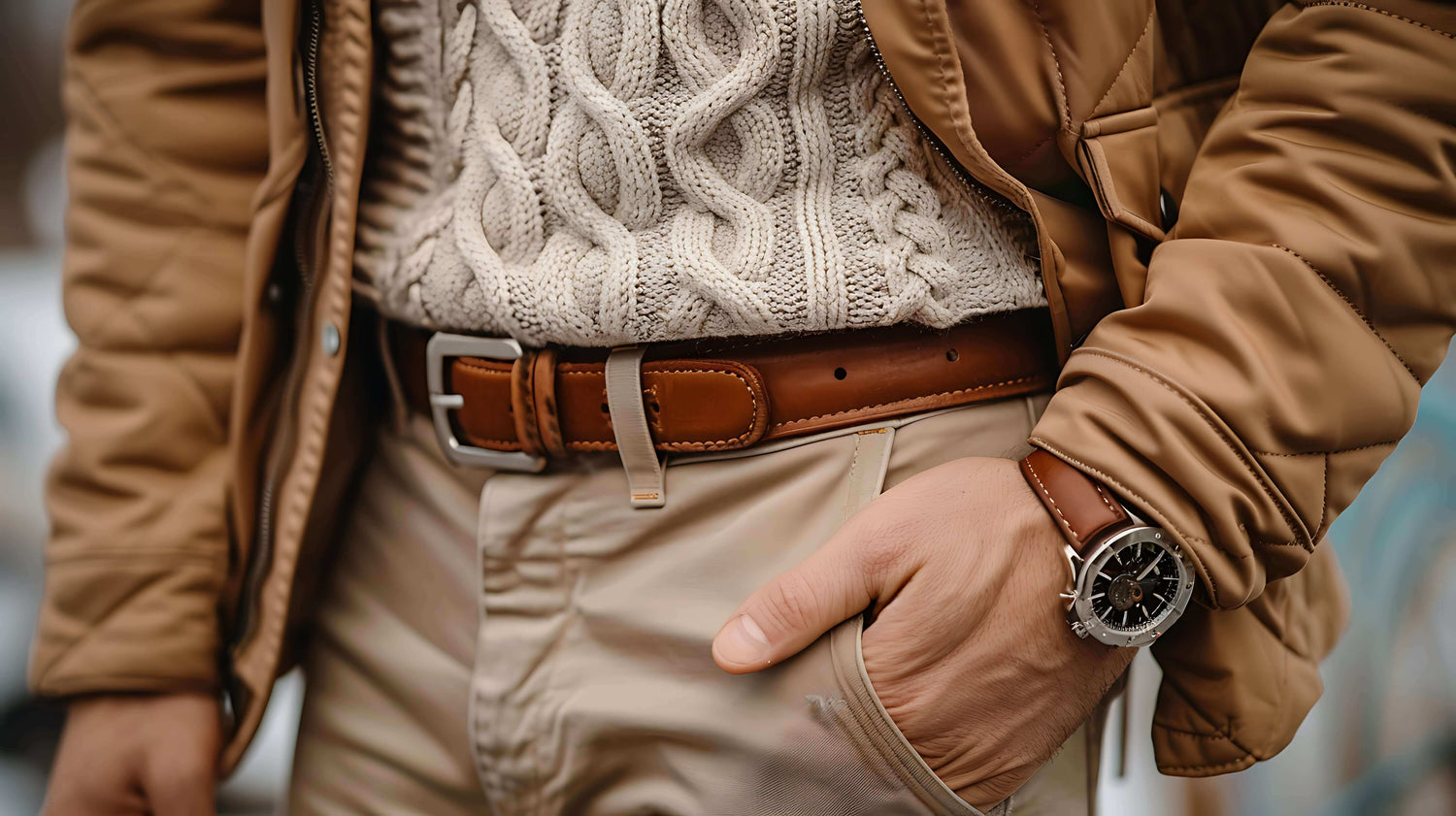


A belt can be cut from excellent leather and still feel wrong if the buckle is doing the heavy lifting badly. That is why Belt Buckle Types Compared matters more than most shoppers realise. The buckle affects comfort at the waist, how precisely the belt fits, how clean it looks under a shirt, and how well it holds up after months of daily wear.
If you are choosing between a classic dress belt, a modern ratchet belt, a rugged work belt or a statement style, the buckle is not just decoration. It is the mechanism that decides whether your belt pinches, slips, sits flat or adjusts exactly when you need it to. Get the buckle right and the whole belt performs better.
Why the buckle matters more than most people think
Most people shop belt-first and buckle-second. In practice, the buckle often decides the wearing experience. A heavy buckle can pull the front of the belt down. A prong system gives you fixed hole spacing, which is familiar and reliable but less precise. A ratchet or slide mechanism gives micro-adjustment, which is often the difference between a belt feeling acceptable and genuinely comfortable across a full day.
Style matters too. A low-profile buckle works better with tailoring and cleaner outfits. A larger plate buckle makes more of a statement and suits casual or western looks. Tactical buckles are built for grip and security, but they can feel too bulky for office wear. The right choice depends on how you dress, how long you wear the belt, and whether you care most about polish, comfort or utility.
The main belt buckle types compared
There are a handful of buckle types worth knowing, and each one suits a different use case.
Frame buckles
This is the traditional buckle most people know. A metal frame holds a prong, and that prong passes through one of the belt holes. It is straightforward, proven and still the standard for many leather belts.
Frame buckles work well because they are simple to use and easy to style. On formal and smart-casual belts, they look clean and familiar. They also tend to be easier to repair or replace than more complex systems. The trade-off is fit precision. You are limited to the spacing of the holes, so if you sit between two sizes, the belt may feel either slightly tight or slightly loose.
For office wear, formal outfits and everyday leather belts, this is still a strong choice. If sharp dressing is the priority, a classic frame buckle remains hard to beat. Pair it with the right width and finish and it will do its job without shouting for attention.
Plate buckles
Plate buckles attach at the belt end and fasten with a hook or clasp mechanism, usually onto the other end of the strap. They are more decorative and often associated with western belts, fashion-led styles and larger statement looks.
This type is less about subtlety and more about visual impact. A plate buckle can transform a simple leather strap into the focal point of an outfit. That makes it ideal for expressive casual wear, but less suited to business clothing where a smoother, lower-profile buckle usually looks better.
Comfort depends on the design. Some plate buckles are broad and solid, which adds presence but can feel bulky when sitting. If the goal is personality over minimalism, plate buckles deliver. They are especially effective on statement belts, including embellished and rhinestone styles. If that is your lane, our guide on How to Wear Rhinestone Belts with Style can help you get the balance right.
Box-frame buckles
A box-frame buckle usually works with a webbing or fabric strap. Instead of a prong going through holes, the strap passes through the frame and is held by friction, teeth or an internal grip system. You often see this on military-inspired, casual and utility belts.
The appeal is speed and flexibility. Adjustment is more fluid than with fixed holes, and the look is practical rather than polished. That said, not all box-frame buckles are created equal. Cheaper versions can lose grip over time, especially if the internal teeth wear down or the strap material smooths out.
For casual wear, travel and lighter utility use, box-frame buckles are useful and easy to live with. For heavier daily strain or a more refined look, other buckle types usually perform better.
Ratchet buckles
Ratchet buckles have changed what many buyers expect from a belt. Instead of holes, the strap uses a hidden track system on the underside. The buckle locks into that track and adjusts in small increments, usually far more precisely than a traditional hole belt.
The big benefit is fit. Micro-adjustment means you can tighten or loosen the belt by tiny amounts rather than jumping a full hole at a time. That matters during long office days, meals out, commuting and travel, when your waist comfort changes more than you think. Ratchet belts also keep the front looking cleaner because there are no visible holes stretching over time.
There are trade-offs. A ratchet buckle is more mechanical, so quality matters. Poorly made versions can wear prematurely or feel flimsy in the release lever. But when the build is right, this is one of the best buckle systems for comfort, consistency and a secure hold. If you want a closer look at how this style performs in real wear, read Slide Belt Buckle Review: Worth It?.
Automatic and slide buckles
These sit close to ratchet buckles and are often grouped together. In many cases, a slide buckle is simply a design variation within the no-hole category. The belt slides through, locks internally and releases via a trigger or lever.
What sets them apart is the wearing feel. Good slide buckles are smooth, fast to adjust and low-fuss. They suit men who want a neat leather belt with modern performance rather than old-school hole spacing. They also work well for shoppers whose waist size fluctuates or who prefer trimmable belts for a better custom fit.
For many daily wear customers, this is where comfort and convenience meet. The buckle is doing more engineering work, but the outward look can still be clean enough for smart dressing.
Clamp and tactical buckles
Tactical buckles are built for support, security and function first. They often use heavy-duty clamp systems, quick-release metal hardware or reinforced fastening designs made for movement and load-bearing use.
These buckles are ideal when you need stability, especially on tactical or work belts carrying tools or handling tougher conditions. They are also popular with buyers who like the confidence of a zero-slip feel. The downside is bulk. Tactical buckles are rarely the best choice under a fitted shirt or with formal trousers.
If your priority is performance over polish, this style makes sense. If you need something for mixed use, you may find a sleeker ratchet or leather frame buckle easier to wear across more situations.
Which buckle is best for comfort?
For pure day-long comfort, ratchet and slide systems are usually ahead. The reason is simple: small adjustments matter. A belt that can be eased by a few millimetres after lunch or tightened slightly when walking feels better than one locked into fixed hole spacing.
Traditional frame buckles are still comfortable when the sizing lands perfectly, but they give you fewer options. Tactical buckles can feel secure but may be overbuilt for ordinary wear. Plate buckles depend heavily on their size and weight. They can look excellent, though comfort is not always their strongest point.
If comfort is your main concern, it is worth reading Best Belt For All Day Comfort. The buckle type plays a major part, but so do strap flexibility, width and overall belt construction.
Which buckle looks best with smarter outfits?
For formal and business-casual wear, keep it clean. A classic frame buckle in a modest size remains the safest and sharpest option. Slimmer ratchet buckles also work well, especially when they avoid chunky hardware and shiny, over-styled finishes.
Plate buckles and tactical systems usually look too casual or heavy with tailoring. They can work in the right outfit, but they are specialist choices rather than wardrobe basics. If you wear dress trousers often, choose a buckle that sits flat, feels balanced and does not dominate the front of the outfit.
Durability and long-term wear
The simplest buckle designs often last longest, provided the materials are sound. A solid frame buckle with a sturdy prong has fewer moving parts, so there is less to go wrong. Ratchet and slide buckles can also wear very well, but only if the mechanism is properly made. Precision is an advantage in fit, yet it depends on decent engineering.
Tactical buckles are built tough, though the surrounding strap and overall belt design still matter. Plate buckles tend to be durable enough, but their size and weight can place more stress on the belt end over time.
This is where craftsmanship counts. Good metal finish, strong joining points, smooth release action and a belt strap matched properly to the buckle all make a difference. On leather belts especially, the buckle should complement the leather rather than overpower it. For a closer look at leather quality itself, Top Grain Vs Full Grain Leather Belts is a useful next read.
So which buckle should you buy?
If you want one belt for smart everyday wear, a classic frame buckle is still a dependable choice. If you care most about exact fit, long-hour comfort and modern convenience, a ratchet or slide buckle usually gives you more for daily use. If your belt is part of the outfit statement, a plate buckle brings presence. If you need hard-wearing support and security, tactical buckles are built for that job.
The best answer is not the flashiest buckle or the most traditional one. It is the buckle that matches how you actually live in your belt - at a desk, on the move, dressed up, dressed down or carrying more than your trousers. Choose for real wear, not just first impressions, and the belt will earn its place quickly.